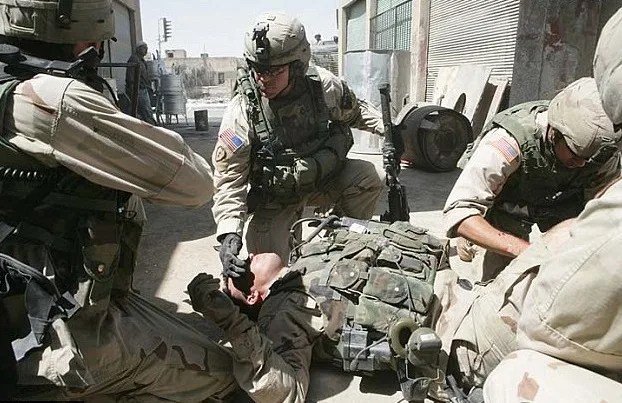
Over 30,000 American military veterans are sleeping outside tonight. Donald Trump's answer, per his own budget, is to fund exactly zero new homes for them. His administration's backup plan, according to a leaked VA document, is to lock some of them up against their will.
The Promise vs. The Plan
Trump pledged to house 6,000 homeless veterans. That number, which the administration announced with considerable fanfare, has not been backed by a single dollar in the president's proposed budget, according to NPR. Zero. Not a rounding error. Not a funding shortfall. Zero.
What the administration has been quietly working on instead is something called 'Safe Harbor.' NPR obtained leaked slides this winter describing a VA proposal that would fold veterans into Trump's broader push to institutionalize homeless people against their will, an agenda he formalized last year in an executive order titled 'Ending Crime and Disorder on America's Streets.' The executive order leans hard into involuntary commitment as the solution to street homelessness. Safe Harbor, as described in those slides, extends that logic to veterans.
Doug Collins Says Don't Worry About the Thing He Won't Explain
VA Secretary Doug Collins showed up to the National Coalition for Homeless Veterans conference last month and insisted everyone was misreading the situation. The leaked slide deck, he said, was just a proposal. The memorandum of understanding his agency signed with the Justice Department about state court guardianship for veterans has nothing to do with Safe Harbor, he insisted. Nothing to see here.
What Collins did acknowledge is that the guardianship program targets veterans in VA facilities who, in his words, 'are not in a position to actually make competent choices for their own healthcare.' The idea is that courts would appoint outside representatives to make medical decisions for those veterans. Collins framed this as compassionate. Critics noticed that the documentation, as NPR reports, originally linked the program directly to Trump's executive order on involuntary commitment of homeless people.
Collins also blamed a leaker and accused Rep. Mark Takano, the lead Democrat on the House Veterans Affairs Committee, of distorting the leaked materials. 'Somebody in our building leaked it to the Hill,' Collins said. His defense of the program's intent and his simultaneous refusal to fully disclose what the program does is a neat trick if you can pull it off.
The Part Where Veterans Advocates Start Sweating
Ann Oliva, CEO of the National Alliance to End Homelessness, did not mince words when NPR asked her about it. 'What the administration has said publicly on this proposal is at odds with the documentation on the project and its pilot program,' she said. The original documentation, she noted, was directly linked to Trump's executive order calling for involuntary commitment of homeless people. 'I think it's disingenuous for anybody from the VA to say that this was meant for a completely different population.'
Jess Finucan, director of policy and advocacy at Iraq and Afghanistan Veterans of America, tried to be charitable. She told NPR she wants to believe the guardianship program is genuinely meant to help hospitalized veterans who lack family support. But the program's stated scope covers homeless veterans and those at risk of homelessness too. 'I think it's really a slippery slope,' she said. That is advocacy-speak for: we are alarmed and trying to be polite about it.
Rep. Takano, for his part, is not being polite. He told NPR that the VA has stonewalled every attempt to get clarity. 'I've given VA multiple opportunities at public hearings and in congressional requests to clarify its intent, and it refuses to do so,' he said. His staff is now collecting information from whistleblowers about how the guardianship program is actually being used.
What Actually Works (And What the Budget Kills)
Here is what the data shows. Veteran homelessness is down significantly over the past decade. The experts who study this credit two things: robust federal funding and a philosophy called 'housing first,' which offers people housing without demanding they prove sobriety or mental health stability as a prerequisite. You give someone a home, stability follows. Forty years of evidence backs this up.
NPR rode along with Pedro Jauregui and Veronica Hood, outreach workers with U.S. Vets in Long Beach, California, both military veterans themselves. Jauregui described spending a full year visiting one homeless veteran before the man would even talk to him without threats. Coffee, doughnuts, consistent human contact. Eventually the veteran came indoors, got sober, and started using VA benefits to go to college. 'We build relationships and then we use whatever we can to get the veteran the help he needs,' Jauregui said. This approach is slow, unglamorous, and it works. It is also not what the Trump administration is funding.
The Dingo Take
Let's be very clear about what is happening here. The Trump administration made a loud, politically convenient promise to house thousands of homeless veterans. Then it submitted a budget that funds none of it. Then a plan surfaced, in the administration's own documents, to pursue involuntary institutionalization of homeless people, a category that explicitly includes veterans. Then the VA signed a memorandum with the Justice Department about removing veterans' legal autonomy through court guardianship. Then the administration's response to all of this was: the leaked document was just a proposal, the MOU is unrelated, and the Democrat who asked questions is lying. That is a lot of 'nothing to worry about' for a situation with this much paper trail.
The guardianship industry, as Rep. Takano pointed out, is rife with fraud and exploitation. There are documented cases across the country of conservators and court-appointed guardians draining the assets and overriding the rights of vulnerable people with little oversight and less accountability. Putting the VA in a pipeline to those courts, for veterans who are homeless or at risk of homelessness, is not compassion dressed up in bureaucratic language. It is a mechanism for stripping rights from people who already have very few.
These are people who served in uniform and came home broken in ways the country never fully bothered to fix. The outreach workers who actually help them do it one cup of coffee at a time, one returned visit after another, because trust is the only tool that works. The Trump administration's answer is to cut the funding for that work and replace it with court orders. If you want to know how much this administration values veterans versus how much it likes using them as a prop, the budget is right there. It says zero.

Comments