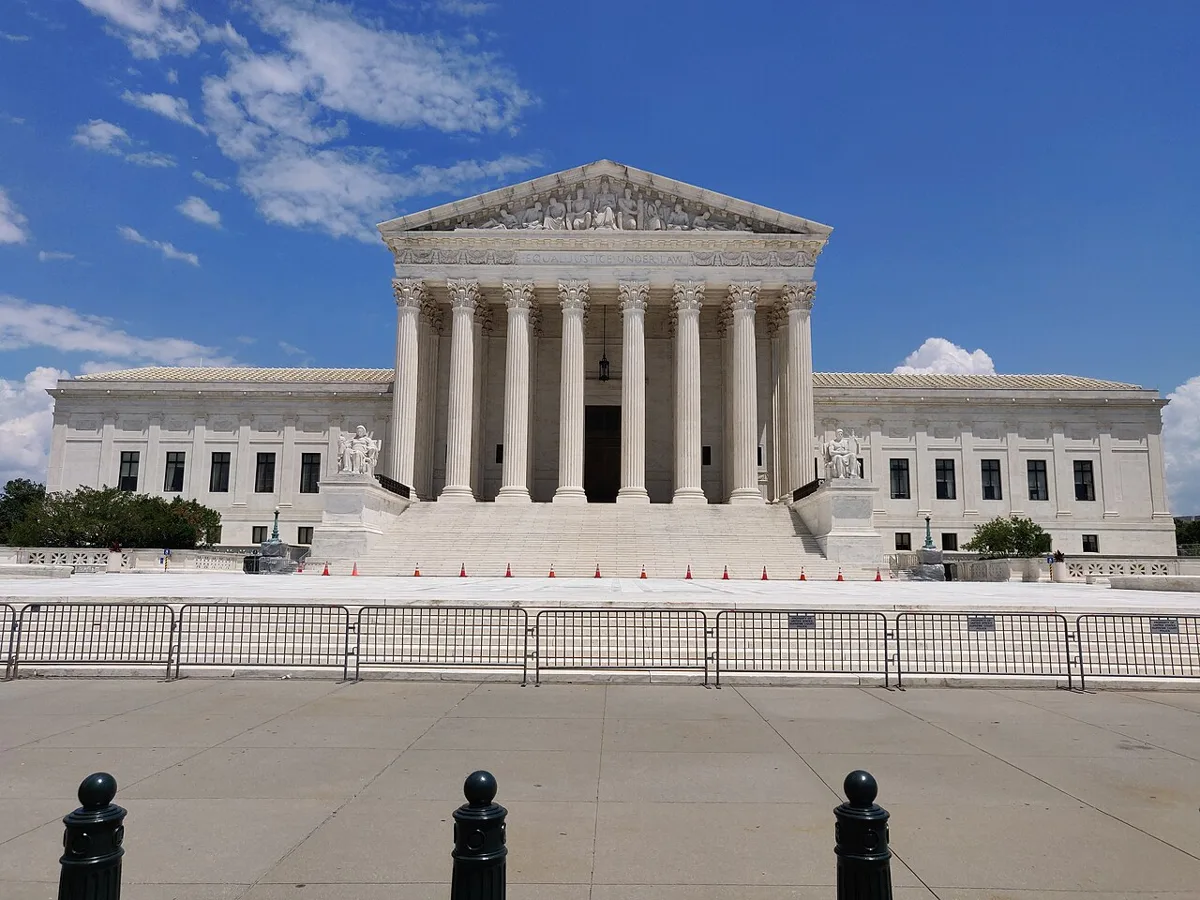
The Supreme Court looked at a case involving healthcare workers who got fired for refusing the COVID-19 vaccine on religious grounds, shrugged, and walked away. On Monday, the court declined to take up the dispute, leaving intact lower court decisions that upheld New York's pandemic-era mandate and the firings that came with it. The mandate itself has been dead since 2023, but the legal wreckage from it is still very much with us.
What Actually Happened Here
Back in 2021, the New York Department of Health issued an emergency rule requiring all licensed healthcare workers to get fully vaccinated against COVID-19. The reasoning was pretty straightforward: hospitals and nursing homes were killing fields during the pandemic, and unvaccinated staff were a genuine threat to patients who had no choice but to be there.
The rule did allow employers to offer certain accommodations to workers with religious objections. What it did not allow was a blanket exemption, meaning you couldn't just say 'my religion won't let me get vaccinated' and keep showing up to the ICU. A group of unnamed workers at New York-Presbyterian Healthcare System, Trinity Health, and Westchester Medical Center Advanced Physician Services asked for exactly that kind of full exemption. Their employers said no. Then their employers fired them.
According to CBS News, the workers then sued Governor Kathy Hochul, other state officials, and their former employers, arguing the firings violated Title VII of the Civil Rights Act, which prohibits religious discrimination in the workplace and requires employers to provide reasonable accommodations unless doing so creates an undue hardship.
The Legal Argument They Were Making
The workers' core argument was actually legally interesting, even if you think they were wrong on the merits. They claimed that Title VII, as a federal law, should override New York's state mandate. Federal law beats state law. That's basic constitutional stuff. Their argument was that the 2nd Circuit's ruling essentially let states write rules that gave employers cover to ignore their federal obligations to accommodate religious employees.
'State laws that are contrary to federal nondiscrimination laws must yield to the demands of federal law,' they wrote in their Supreme Court filing, as CBS News reports. They argued New York's mandate gave employers a legal excuse to rubber-stamp every single religious accommodation request as denied, with zero individualized analysis of whether an accommodation was actually feasible.
That's not a crazy argument on its face. Title VII genuinely does require employers to engage in a case-by-case analysis. The question was whether New York's rule made that analysis impossible, or whether it just ruled out one specific type of accommodation.
What New York and the Hospitals Said Back
The employers and state officials pushed back hard on how the workers were framing the rule. The healthcare facilities argued, per CBS News, that state law didn't prohibit all religious accommodations, only 'complete exemptions.' There's a difference, they said, between 'you cannot get any accommodation' and 'you cannot get the specific accommodation of simply not being vaccinated while continuing to work with vulnerable patients.'
Governor Hochul's office made the same point. The rule allowed employers to move unvaccinated workers into roles where they wouldn't be exposing immunocompromised patients or nursing home residents to potential infection. That, they argued, was a legitimate accommodation under Title VII. Just not the one the workers wanted.
'The rule thus allowed religious accommodations, albeit not petitioners' preferred accommodation, in accordance with Title VII,' state officials wrote in their filing. Which is a polite way of saying: you can have a workaround, you just can't have the specific workaround where an unvaccinated person has unsupervised access to people on oxygen.
The Mandate Is Already Dead, So Why Does This Matter
New York's COVID-19 vaccine mandate for healthcare workers was repealed in October 2023, after the Biden administration formally ended the federal COVID-19 public health emergency. The rule is gone. Nobody is being fired under it today.
But the workers who were fired under it are still fired, and their legal claims are still alive, or were until the court declined to step in. The Supreme Court's refusal to take the case leaves the 2nd Circuit's ruling standing, which means those workers have no federal remedy for their terminations. CBS News confirmed the court turned away the case on Monday without comment, which is standard practice for cert denials.
The broader question of how courts should balance state public health mandates against federal anti-discrimination protections doesn't go away just because this particular mandate was repealed. The next pandemic is not going to ask permission before it arrives, and the legal framework for how employers handle vaccination requirements is going to matter again.
The Dingo Take
Let's be honest about what's actually being argued here. A group of healthcare workers decided that their personal religious beliefs exempted them from a basic infection-control requirement in facilities full of people who were already sick and dying. Not 'please move me to a role where I'm not in the COVID ward.' Not 'can I work remotely on administrative tasks.' A complete exemption from vaccination while continuing to work in the same environment as before. The hospitals said no. The courts agreed. The Supreme Court didn't want to touch it.
The genuinely thorny legal question, about whether state mandates can effectively nullify Title VII's individualized accommodation requirement, deserved more serious engagement than it got. But the workers' framing kept collapsing that distinction between 'no accommodations at all' and 'no complete exemptions.' New York wasn't saying employers couldn't try to work something out. It was saying you can't just let unvaccinated people roam a hospital ward and call it a religious accommodation.
The cold reality is that the pandemic exposed how badly Americans had broken their relationship with the concept of shared public health responsibility. These cases were never really about Title VII. They were about a significant number of people who decided that their individual preferences, dressed up in religious language, outweighed the safety of every patient on the floor. The courts, at every level, were not impressed. Neither are we.



Comments