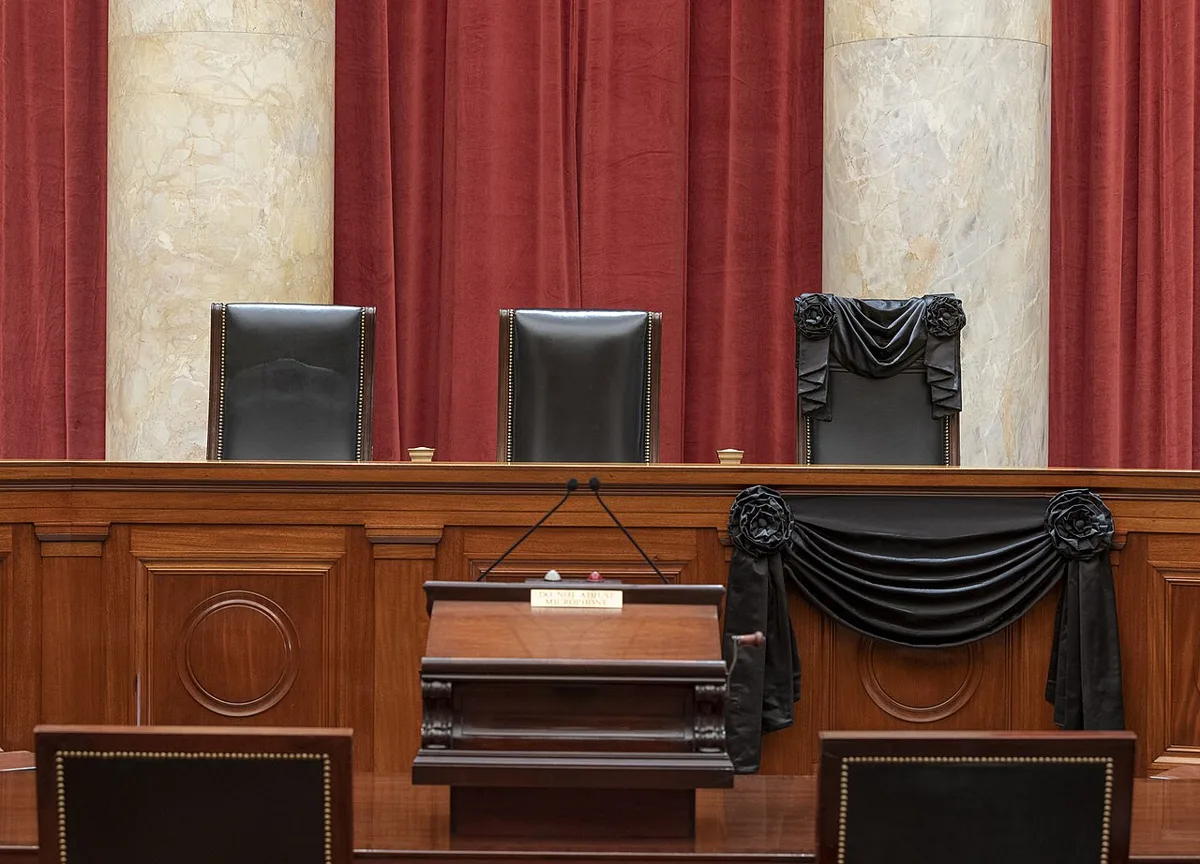
The Supreme Court just handed Donald Trump the keys to the entire executive branch, striking down nearly all limits on his ability to fire federal agency leaders and possibly every single government employee beneath them. Monday's ruling reversed a 90-year-old precedent protecting the independence of regulatory agencies that govern roughly a third of the American government. Trump, never one to miss an opportunity to post, called it a "BIG WIN" on Truth Social.
What the Court Actually Did
Chief Justice John Roberts wrote the majority opinion for the court's six conservative justices, with the three liberals dissenting. The decision struck down longstanding protections for multi-member and term-limited agency heads who could previously only be fired for misconduct or malfeasance. Now, the president can fire them whenever he wants, for whatever reason he wants.
The ruling is rooted in what legal scholars call the unitary executive theory, which holds that all executive power flows from and to the president alone. Harvard law professor Daniel Tarullo, in an interview with NPR, put it plainly: the court has "essentially eliminated independent agencies from the United States government." Not reformed them. Not restructured them. Eliminated them, as independent entities, full stop.
Roberts leaned on a quote from George Washington to make his case, arguing the president must have the assistance of officers he can trust. Which sounds reasonable until you think about what it actually means in practice: one person, accountable to no institutional check, pulling the strings on the agencies that regulate your food, your air, your retirement savings, your medications, and your workplace safety.
How Far Down Does This Go? Nobody Knows.
Here is the part that should make you put down your coffee. NPR reports that it remains genuinely unclear whether this ruling gives the president power to fire not just agency heads, but the career specialists working beneath them. We are talking about nuclear weapons experts, weather forecasters, Social Security case workers, public health scientists, accountants. People who have been protected from political firing since the Civil Service Reform Act of 1883.
Jacob Huebert, a senior litigation counsel for the conservative New Civil Liberties Alliance, which filed a brief in support of Trump's position, says yes. The president controls all of it, top to bottom. "Whether those are officials high up in an agency or down low in an agency," Huebert told NPR, they are ultimately controlled solely by the president.
That is not a fringe legal position anymore. That is the argument the winning side just made to the highest court in the country. The people who calculate whether a bridge will collapse, whether a drug will kill you, whether a hurricane is coming, could now serve entirely at the pleasure of whoever happens to be president.
The Biggest Power Grab Since the Immunity Ruling
To understand the scale of what just happened, consider that NPR is reporting this is the greatest expansion of presidential power since the Supreme Court ruled two years ago that former presidents are broadly immune from prosecution for their official acts. That ruling was already a jaw-dropper. Monday's decision may be bigger in terms of practical, day-to-day consequences for how the government actually functions.
Prior to this ruling, no president had ever tried to seize control of this much of the administrative state. Not Nixon. Not Reagan. Not any of them. And the court's conservatives didn't just allow it. They enshrined it.
Tarullo made a point worth sitting with: regulatory policy has already whipsawed back and forth between administrations in recent years. That whiplash effect is almost certainly going to get worse now, as presidents of both parties figure out they can torch and rebuild the administrative state every four to eight years. The agencies designed to provide continuity and expertise across political cycles now exist at the mercy of whoever won the last election.
The One Guardrail They Left Standing
In a second decision issued the same day, the court took a strikingly different position on the Federal Reserve. Trump had tried to fire economist Lisa Cook, the first Black woman appointed to the Fed's board of governors, accusing her of mortgage fraud. The court refused to remove her, sending the case back to lower courts and instructing them to check whether the stated reasons for firing were pretextual. Subsequent reporting has strongly indicated the fraud charges against Cook are without merit.
The vote was 5 to 4, with Justice Brett Kavanaugh joining Roberts and the three liberals in the majority. Justice Clarence Thomas dissented, blasting the majority for what he called second-guessing the Constitution. Roberts, in his opinion, noted that the last time the United States ditched an independent central bank, what followed was an era of "ruinous financial panics" that eventually forced the creation of the Federal Reserve in 1913.
So the court drew one line. One. The Fed gets to stay independent, apparently, because even this majority remembers what happened the last time the country tried running monetary policy through raw political will. Everything else? Fair game.
Sotomayor's Dissent Says the Quiet Part Out Loud
Justice Sonia Sotomayor, writing for the three dissenting liberals, accused the majority of dismantling a democratic regime that has been in place for generations and replacing it with "the majority's theory of unitary, total executive control." The result, she wrote, is "a president who emerges with far greater power than ever before."
That is not hyperbole from a liberal justice blowing off steam. That is a factual description of what the ruling does. The agencies targeted by this decision regulate securities markets, workplace safety, communications, consumer financial products, and much more. They were designed to function with some insulation from political pressure precisely because their decisions are supposed to be based on evidence, not on what is convenient for whoever holds the White House.
The Dingo Take
Let's be honest about what this ruling is. It is the judicial arm of a political movement handing its preferred leader a set of tools that no president in American history has ever held. The six conservative justices, several of whom were appointed by Trump himself, just ruled that the entire machinery of the federal government serves at the president's pleasure. The word for a government where all executive power flows from and back to one person, answerable to no institutional constraint, is not "republic."
The Federal Reserve carve-out is the fig leaf. Look, we're glad Cook keeps her seat. But the court protected the institution most directly wired to the financial interests of the wealthy while torching the agencies that protect workers, consumers, and the environment. That is not a coincidence. That is a priority list.
Tarullo is right that future Democratic presidents will theoretically inherit these same powers. That argument is supposed to be reassuring. It isn't. A system where the administrative state gets dismantled and rebuilt every four years based on who won Pennsylvania is not a functional government. It is a demolition derby with briefcases. And the court just handed out more cars.




Comments