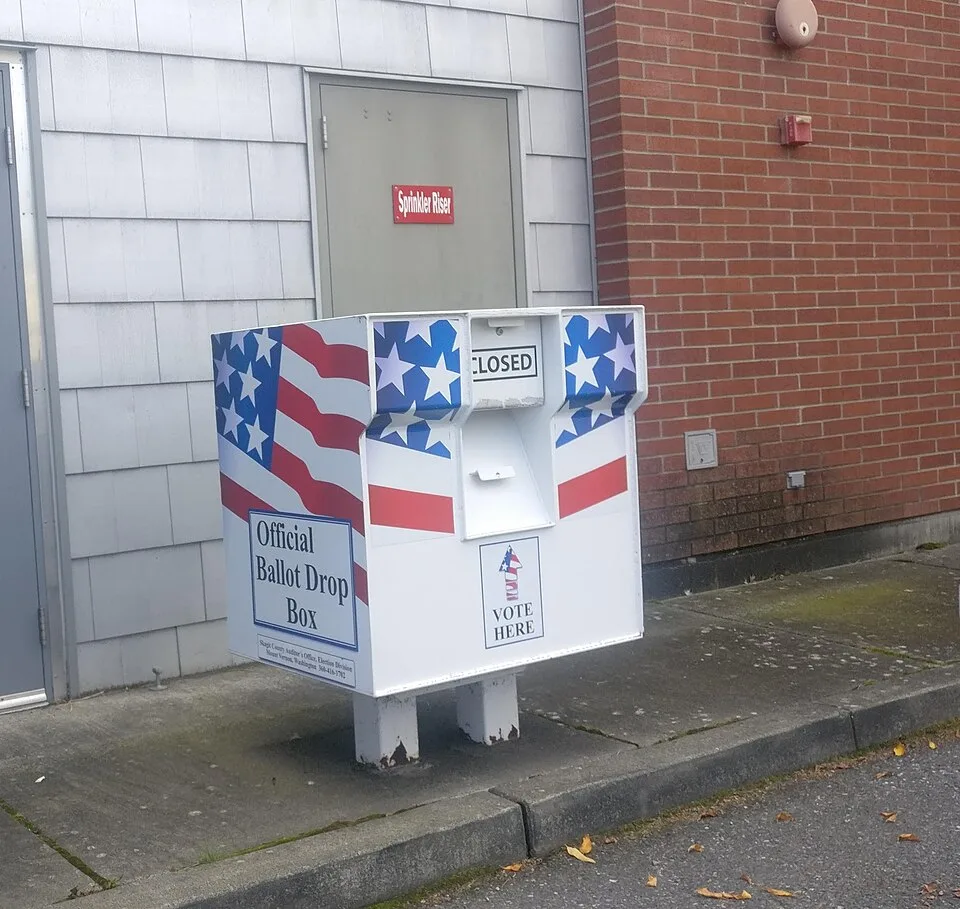
The Supreme Court ruled Monday that states can count mail-in ballots postmarked by Election Day and received up to five business days later, handing the Republican National Committee a clean loss just months out from the midterms. The 5-4 decision in Watson v. RNC saw Chief Justice John Roberts and Justice Amy Coney Barrett break from their conservative colleagues to side with the court's three liberals. Donald Trump, who personally directed his Justice Department to back the challengers, is not going to take this well.
What the Court Actually Decided
The case centered on a Mississippi law that gives election officials up to five business days after Election Day to receive mail ballots, so long as those ballots carry an Election Day postmark. The RNC sued Mississippi, arguing that federal law sets the end of an election and that states can't extend it by accepting ballots that arrive after polls close.
The court, per the New York Post, concluded that nothing in federal law actually requires all ballots to be in hand by Election Day itself. That's the whole ruling. The RNC's constitutional theory lost. The ballots count.
Justices Neil Gorsuch, Samuel Alito, Clarence Thomas, and Brett Kavanaugh dissented. Based on oral arguments in March, that outcome surprised exactly no one. Those four had signaled their skepticism of the Mississippi law pretty openly from the bench. What was always uncertain was Roberts and Barrett, who stayed poker-faced through arguments and, it turns out, were quietly getting ready to torch the RNC's case.
How Big a Deal Is This, Actually
Pretty significant. According to NPR, eighteen states and territories currently have mail ballot grace periods on the books, with the majority of those being Democratic-led states including California, Illinois, and New York. A ruling the other way would have thrown all of those laws into immediate legal jeopardy, right before November.
To get a sense of the real-world stakes here, look at Washington State. Secretary of State Steve Hobbs said last year, per NPR, that more than 250,000 ballots postmarked on time arrived after Election Day during the 2024 election alone. In rural areas where mail delivery is slower, this isn't a procedural quirk. It's the difference between your vote counting and not counting.
California, as the New York Post notes, is the most visible example of how these laws play out in practice. Major races there routinely go uncalled for a week or more after Election Day as late-arriving ballots get processed. Republicans have spent years framing that as suspicious. What it actually is, is math.
Trump's Long War on the Mailbox
This ruling lands squarely in the middle of a years-long campaign by Trump to strangle mail-in voting. According to NPR, the RNC and the Trump campaign filed legal challenges against Mississippi's grace period law ahead of the 2024 election. That case got dismissed. They came back. The Fifth Circuit, one of the most reliably conservative federal appeals courts in the country, sided with Republicans and set up this Supreme Court showdown.
Trump also signed an executive order last year requiring all ballots to be received by Election Day in federal elections, according to NPR. Lower courts blocked it quickly. And per Axios, the Trump administration's Justice Department formally backed the RNC's lawsuit here, arguing that counting ballots received after Election Day undermines election integrity. That argument is now 0-for-the-Supreme-Court.
Trump has also been pushing Congress to pass the SAVE Act, the Safeguard American Voter Eligibility Act, which would add proof-of-citizenship requirements for federal elections, per the New York Post. That bill is stuck in the Senate. Between the SAVE Act going nowhere and this ruling landing today, it is not a great Monday for anyone who wants fewer Americans to be able to vote.
The Roberts and Barrett Factor
The ideological math here is worth sitting with for a second. This is a court that has, in recent terms, gutted the Voting Rights Act, blessed extreme partisan gerrymandering, and cleared the way for the largest drop in Black congressional representation in a generation, per prior NPR reporting. The conservative supermajority has been quite willing to put its thumb on the electoral scale.
And yet. Roberts and Barrett looked at the RNC's argument that states can't count ballots arriving after Election Day and apparently decided it was a step too far. During oral arguments, Justice Elena Kagan had pointed out the obvious problem with the RNC's theory, saying it seemed inconceivable to reject voting practices entrenched in 30 states on the basis of the evidence presented, per the New York Post. Apparently Roberts and Barrett agreed.
Whether that represents some principled commitment to electoral stability or just a recognition that the RNC's legal theory was genuinely overreaching is hard to say. What's not hard to say is that Trump now has two more justices on his enemies list.
The Midterm Implications
This ruling hits with midterm elections approaching. Axios reports that the decision could protect voting in states with similar grace period laws this November, which is a fairly understated way of saying that millions of votes that might otherwise have faced legal challenge are now on firmer ground.
The case was one of several on this term's docket with direct implications for the midterms, per the New York Post. Republicans have been methodically working through the courts to build a legal architecture that makes voting harder, particularly voting by mail, which skews Democratic. This ruling knocks a significant piece of that architecture down.
It won't stop the effort. There will be more lawsuits, more executive orders, more SAVE Acts. But today, the court looked at one of the central planks of the Republican voting-restriction strategy and said no. That matters, even if it doesn't end anything.
The Dingo Take
Let's be clear about what the Trump administration was actually arguing here. They went to the Supreme Court and said that a ballot postmarked on Election Day by a rural voter in Mississippi should be thrown in the trash if the Postal Service takes six days to deliver it instead of five. That's the position. That's what the Justice Department spent taxpayer money defending. And they lost.
The grace period laws exist because the Postal Service is not a precision instrument. Weather happens. Sorting facilities have backlogs. People in rural counties are not geographically closer to a ballot drop box than people in cities. The entire premise of voting by mail includes the understanding that mail takes time. The RNC's lawsuit was not really about constitutional principle. It was about identifying a pool of legally cast ballots, mostly in Democratic-leaning states, and finding a procedural argument to throw them out. The Supreme Court, including two of Trump's preferred justices, declined to play along.
Roberts and Barrett will now spend the summer getting called RINOs on Truth Social. Trump will rage about the ruling the same way he rages about everything that doesn't go his way, loudly and without any apparent awareness that he is describing a normal legal outcome. The ballots will count. This is, by any measure, how it should work. It shouldn't have required a Supreme Court case to establish it. But here we are.



Comments