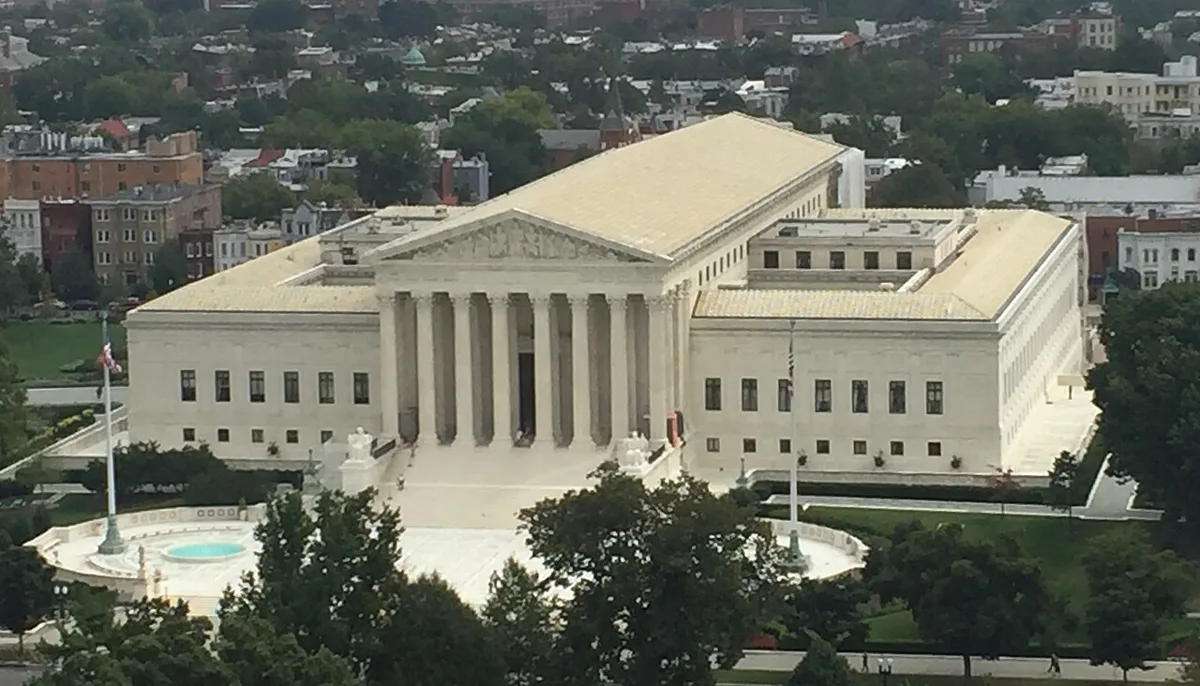
The Supreme Court didn't just rule against Trump's birthright citizenship order. It did something considerably more permanent: it took the whole question away from Congress and bolted it into the Constitution. That's a much bigger deal than a simple presidential loss, and it has consequences that will outlast this administration by decades.
What the Court Actually Did Here
In Trump v. Barbara, a five-justice majority ruled that the 14th Amendment itself guarantees citizenship to children born on U.S. soil, even if their parents are here illegally or only temporarily. Not federal statute. Not executive policy. The Constitution itself. That framing is everything.
The New York Post's Ilya Shapiro, director of constitutional studies at the Manhattan Institute, puts it plainly: the majority went further than it needed to, and in doing so, transformed a modern policy argument into a constitutional command. That's a one-way door. You don't walk back through it with a bill.
To understand why this matters, you have to understand what the court could have done instead. Justice Brett Kavanaugh sketched out a narrower off-ramp in his partial dissent. He would have invalidated Trump's order not on constitutional grounds, but because it conflicts with a 1940 federal law that was later folded into the Immigration and Nationality Act. In other words: Congress already spoke on this, and a president with a pen can't undo an act of Congress. Done. Case closed.
The Road Kavanaugh Wanted to Take
Kavanaugh's approach would have been surgical and, frankly, pretty reasonable by the standards of today's Supreme Court. Shapiro, writing in the Post, says he actually agrees with it. The message it would have sent: "Mr. President, you can't do this on your own. If the elected branches want to revisit these rules, Congress itself has to speak." Clean, democratic, leaves the constitutional debate for another day.
Instead, the majority opted for the constitutional ruling and closed that door permanently. Now Congress cannot simply pass a law redefining who is "subject to the jurisdiction" of the United States, which is the operative phrase in the 14th Amendment. If Congress wants to touch birthright citizenship at all, it has to pass a constitutional amendment. A constitutional amendment requires two-thirds of both chambers of Congress and ratification by three-quarters of the states. Good luck with that in any political environment, let alone this one.
The practical result is that Trump asked the court to settle the birthright citizenship question and the court settled it, just not in the direction he wanted, and now the legislative fix he's been demanding since the ruling is legally off the table.
Is the Originalist Case Really That Open-and-Shut?
Here's where the story gets genuinely complicated. The administration's argument was not, as many commentators pretended, pure MAGA gibberish with no legal foundation. Shapiro is careful to note that reasonable originalists have genuinely disagreed over what "subject to the jurisdiction" means. Does it just mean being subject to American law while physically present? Or does it require something closer to full political allegiance, the kind tied to permanent domicile and legal membership in the country?
The 1898 case United States v. Wong Kim Ark, which the majority leaned on heavily, involved the child of lawful permanent residents, not undocumented immigrants or visa overstays. Whether it resolves the question for every category of non-citizen parent is, per Shapiro, "important but not dispositive." Alito's dissent put the constitutional floor-versus-ceiling argument even more starkly: the 14th Amendment tells you who must be a citizen, not who Congress may choose to make a citizen. Congress has long granted citizenship to people not constitutionally required to have it, like children born abroad to American parents. The question was whether Congress could also carve out prospective exceptions. After this ruling, the answer is no.
None of this means Trump's executive order was the right move. As Shapiro writes in the Post, executive orders are not amendments to the U.S. Code, much less the Constitution. The administration tried to rewrite immigration law with a presidential pen, which is not how any of this is supposed to work.
Birth Tourism Is Real, and the Court Just Froze the Policy Response
Here is the part that deserves more attention than it's getting. Whatever you think of Trump's motivations, the underlying policy concern the court just constitutionally locked away is not imaginary. Shapiro notes that birth tourism, where foreign nationals fly into the U.S. specifically to give birth and obtain citizenship for their child before returning home, was entirely unknown in 1868 when the 14th Amendment was ratified. There were no package deals for birthing center stays followed by passport pickup and a flight home. The 39th Congress was thinking about formerly enslaved people, not visa itineraries.
Gorsuch, in his own commentary, suggested that a more nuanced approach might have grandfathered in children of long-term undocumented residents on a case-by-case basis, which would have at least preserved some room for Congress to address the more cut-and-dried abuse cases. The majority didn't go there. It treated decades of administrative practice as constitutionally definitive and called it a day.
So what's left? According to the Post's analysis, the federal government still controls visas, admissions, removals, and border enforcement. It can crack down on birth tourism through tighter visa vetting. It can remove people who overstay visas. It can enforce the border. None of that requires touching the 14th Amendment. But the bigger legislative fight Trump kept promising his base, the one where Congress redefines the rules? That fight is over. The court ended it.
Where Trump Goes From Here
Trump has been saying he wants Congress to fix this, but as the Post's Shapiro makes clear, that option has been foreclosed by the very ruling he provoked. The court reached the constitutional question when it didn't have to, and in doing so blocked the statutory path Kavanaugh would have left open. The administration essentially walked into a trap of its own making by pushing for the broadest possible ruling rather than accepting a narrower, more procedural loss.
What remains are enforcement tools. Tighter vetting of visa applications from nationals known to engage in birth tourism. Aggressive removal of overstays. Continued border pressure. These are all lawful, all within executive authority, and all considerably less satisfying to a political base that was promised a wholesale redefinition of American citizenship. Politically, this is a brutal outcome. Legally, it's what happens when you try to amend the Constitution with a Sharpie.
The Dingo Take
Let's be honest about what happened here. Trump and his allies picked a fight they didn't have the legal tools to win, forced it all the way to the Supreme Court, and in doing so, accidentally made birthright citizenship more constitutionally ironclad than it has ever been in American history. If the goal was to restrict birthright citizenship, this is quite possibly the worst outcome they could have engineered short of losing the presidency entirely. They didn't just lose the case. They closed the legislative door behind them on the way out.
The frustrating part is that the underlying debate about how a 19th-century constitutional provision should apply to 21st-century immigration patterns is not stupid. It is a real legal and policy question, and it deserved serious treatment. Kavanaugh's path, frustratingly boring and procedurally correct as it was, would have sent the issue back to Congress, where elected representatives could have had an actual debate. Instead, the majority constitutionalized the whole thing, Alito wrote a dissent that makes some real points even if you hate his conclusions, and the country is now stuck with whatever this court decided birthright citizenship means, forever, or at least until someone figures out how to pass a constitutional amendment through a Congress that can barely agree on a lunch order.
Trump lost this one. He lost it badly. And the version of losing he got was the kind where the rulebook gets rewritten against you permanently, not just overturned next term. The enforcement war he's now pivoting to is real, and some of those tools are genuinely powerful. But the base didn't donate money and wave flags to hear "we're tightening visa vetting procedures." They wanted the big win. They got a constitutional door slammed in their face. Enjoy the enforcement memo, everyone.




Comments