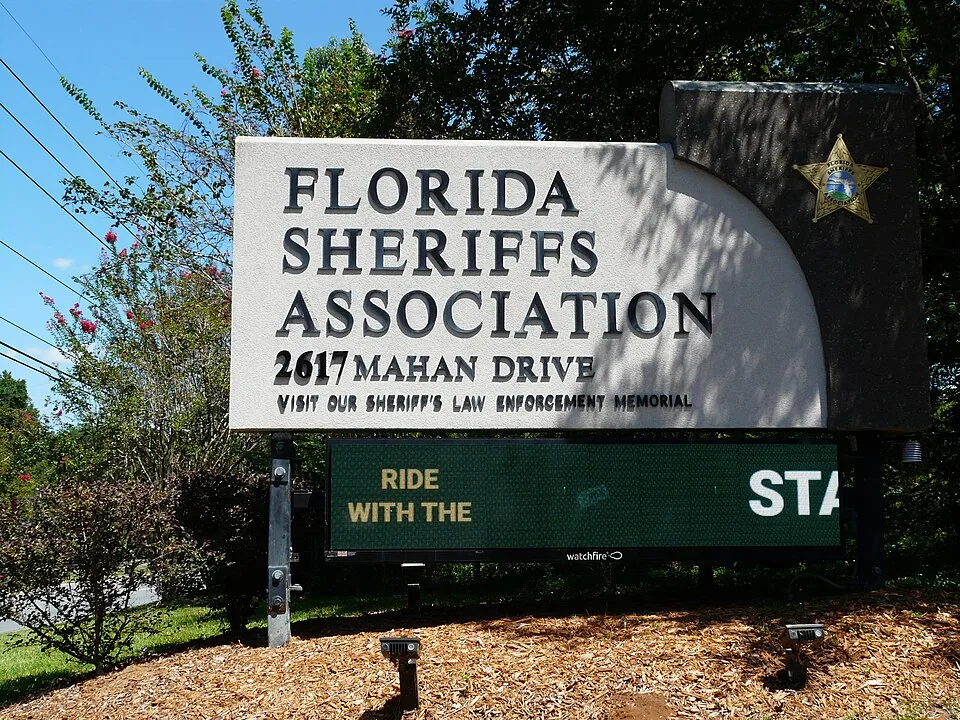
Every single county in Florida has signed a cooperation agreement with ICE. All 67 of them. The state didn't just embrace the Trump administration's mass deportation apparatus — it became the template for it, quietly, efficiently, and in ways that the ACLU says are ensnaring American citizens along the way.
What 287(g) Actually Is, and Why Florida Is Swimming in It
The 287(g) program has been around since 1996, and it does one very specific thing: it lets the federal government deputize local cops to enforce immigration law. Think of it as a franchise model for deportations. ICE provides the training and the legal authority; local sheriffs provide the bodies on the ground.
The Trump administration didn't invent this program, but it has thrown gasoline on it. As NPR reports, the administration significantly expanded 287(g) and recently slashed the certification training from a monthlong in-person commitment to 40 hours completed online. Forty hours. You can binge a prestige TV drama in that time. Now you can also detain people for federal immigration violations.
Florida didn't need much convincing. According to the Florida Sheriffs Association, every one of the state's 67 counties had signed cooperation agreements with ICE as of last year. That's not a partnership. That's a statewide infrastructure.
Meet the Operation on the Ground
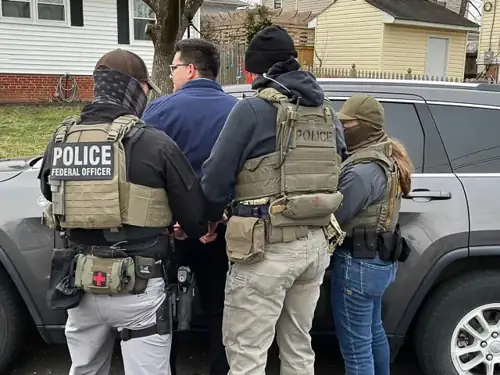
NPR profiled Walton County, a fast-growing Florida Panhandle community that relies heavily on immigrant labor for its construction and tourism industries. There, Sgt. Oscar D'Lassalas, 40, leads the sheriff's SWAT team and is now also a certified 287(g) task force officer, cleared to interrogate people suspected of being in the country without authorization, collect evidence, and make immigration arrests in the field.
D'Lassalas comes across as a decent enough guy in NPR's reporting. He says he wouldn't profile someone based on their complexion. Sheriff Michael Adkinson insists his office is narrowly focused. "We're certainly not out doing immigration raids," Adkinson tells NPR. "But if we come across those individuals who are committing a crime or endangering someone else, in the state of Florida, then we're certainly going to do that."
And yet the practical reality on the ground looks different. A local Mexican grocery store in downtown DeFuniak Springs is seeing fewer and fewer customers, according to NPR's reporting, because immigrants are afraid to go out in public. That's not a side effect. That's the point.
"Under the Radar and More Insidious"
Sam Lester, an immigrant rights attorney with the ACLU of Florida, draws a sharp distinction between the high-visibility ICE raids dominating national headlines and what's actually happening in Florida. "In Florida, it's much more under the radar and in many ways more insidious," he tells NPR. "By far, the vast majority of immigration enforcement is done by local and state law enforcement who are deputized under 287(g)."
Lester's concern isn't abstract. He says the training is insufficient, and the consequences are predictable: U.S. citizens and lawful permanent residents who are Latino and speak with accents are getting profiled, questioned about their immigration status, and in some cases arrested. Not suspected undocumented immigrants. American citizens. People who have every legal right to be here, getting detained because a deputized local officer made a judgment call after 40 hours of online coursework.
This is not a hypothetical civil liberties concern. The 287(g) program has generated civil rights lawsuits alleging racial profiling across the country, as NPR notes. Florida is just running the program at a scale no other state has matched.
The Money Is the Point
Here is where it gets clarifying. The Trump administration is offering billions of dollars in incentives to law enforcement agencies willing to work with ICE. This isn't just ideology. There's a revenue stream attached.
In Walton County alone, the sheriff's office cut a separate deal with ICE to convert about 48 jail beds into a 72-hour hold facility for immigrant detainees. The federal government reimburses the county $72 per inmate per day, according to NPR. That's not a lot of money per person, but multiply it by 48 beds running continuously, and you're looking at a tidy stream of federal cash flowing into a county jail in exchange for holding people for ICE pickup.
So local sheriffs get funding, the Trump administration gets a distributed deportation force it didn't have to build from scratch, and immigrants in a community that depends on their labor get to live in fear of their local police. Everyone wins, except the people this system was designed to grind up.
A Community Running on the Labor of People It's Now Hunting
The specific detail that should stop you cold is this: Walton County is, per NPR's reporting, heavily reliant on immigrant labor for construction and tourism. The same workforce that builds the hotels and staffs the restaurants is the workforce that county law enforcement is now federally authorized to detain.
This is not a tension the program's architects seem particularly interested in resolving. The MAGA deportation machine doesn't run on consistency. It runs on selective enforcement, ambient fear, and the understanding that workers too scared to leave their homes are workers too scared to organize, complain, or ask for higher wages.
The chilling effect is a feature. An empty grocery store in DeFuniak Springs on a Tuesday afternoon is not collateral damage. It is the mechanism working as intended.
The Dingo Take
Forty hours of online training. That's the bar for giving a local cop the authority to interrogate, arrest, and funnel human beings into the federal deportation system. You can learn to make sourdough bread in 40 hours. You can finish a beginner's Spanish course. You can also, apparently, become a de facto immigration agent in the state of Florida, where all 67 counties have decided this is simply part of the job now.
The 287(g) program is not new, and it's worth being honest about that. Democrats used it too, at lower volumes, with less enthusiasm. But what the Trump administration has done is nationalize it, accelerate it, strip out the friction, attach cash incentives, and build a distributed deportation force out of local sheriffs who now have a financial stake in keeping those 48 beds full. This is not immigration enforcement. This is a franchise model. ICE is the franchisor. Your county sheriff is the franchisee. The detainees are the inventory.
And in Florida, where this apparatus is most mature and most complete, the result is a state where a Mexican grocery store in a small Panhandle town is sitting empty on a weekday because the people who shop there are afraid to leave their homes. These are people who pick up construction debris after hurricanes, who clean the vacation rentals, who make Walton County's tourism economy function. The system depends on them. It has just decided it can also threaten them. That's not governance. That's leverage.



Comments