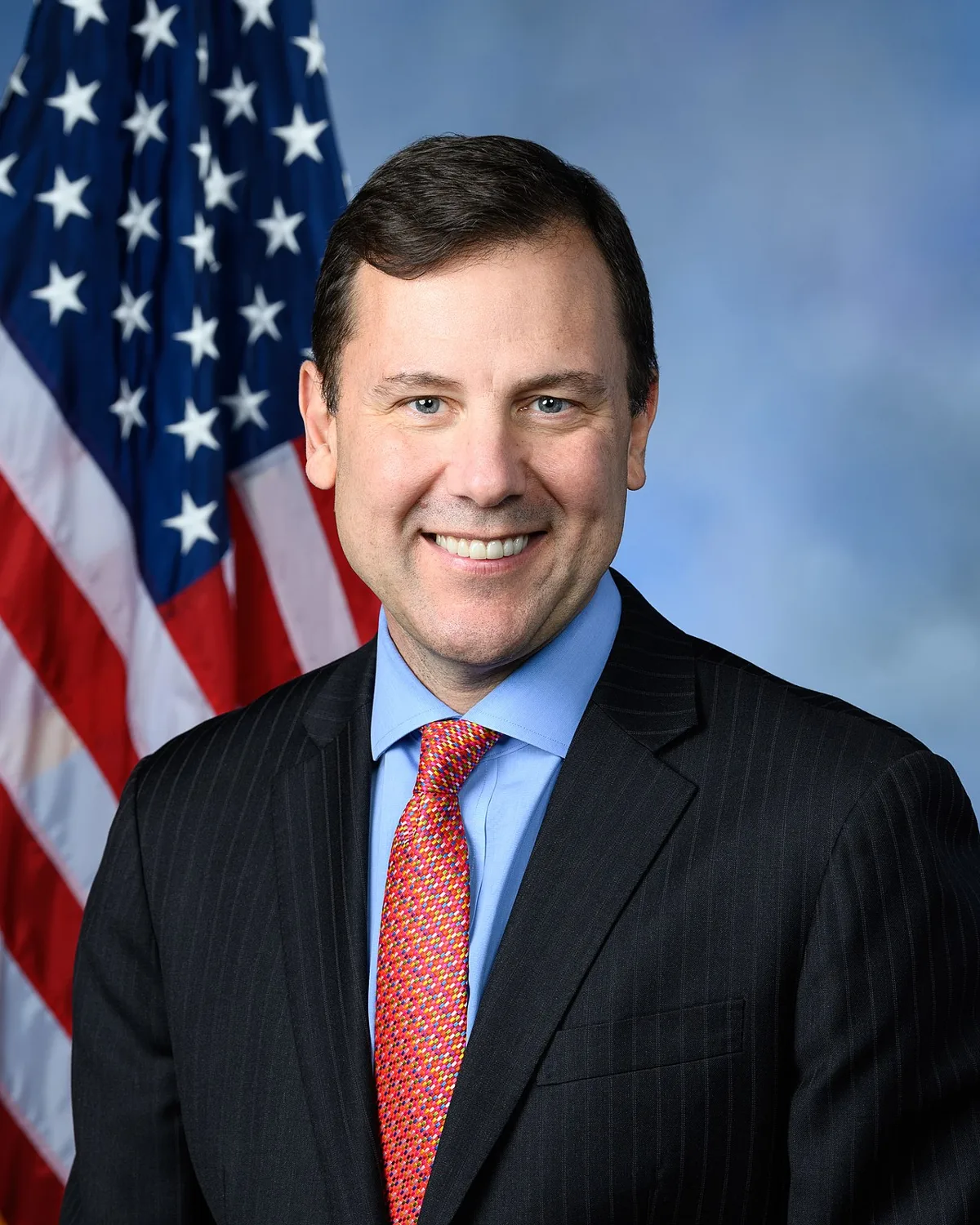
A sitting U.S. congressman vanished from Capitol Hill for nearly four months, missed hundreds of votes that his party desperately needed, reportedly traded stocks from wherever he was hiding, and then strolled back onto the House floor Tuesday to give a speech about it. Tom Kean Jr., Republican of New Jersey, is back. And he has some explaining to do.
Where Has This Guy Been?
Kean's last vote was cast on March 5. After that, nothing. His office issued a statement in late April, according to The Guardian, saying only that he was dealing with a "personal health matter" and would return "soon." That was it. No name for the condition, no hospital, no timeline that held up.
For reference, this is a sitting member of the United States Congress, representing a competitive swing district, during a period when Republicans held the House majority by a margin so thin you could read a newspaper through it. His absence was not an abstraction. It had real consequences for the ability of his party to govern.
Last week, a New York Times reporter found Kean at his New Jersey home. He declined to comment. The man was literally located by a journalist before he chose to explain himself to the constituents who elected him.
The Speech
On Tuesday morning, Kean finally addressed the House floor and disclosed that he had been diagnosed with depression after entering the hospital for what he initially thought would be routine testing. "I did not believe that this would result in a long-term stay," he said, per The Guardian's reporting.
He described himself as "a private person by nature" and said doctors recommended he remain hospitalized to treat his illness. "I didn't think that I had time for it," Kean admitted. Which is, honestly, a very human thing to say, and probably the most relatable sentence any Republican congressman has uttered in about a decade.
He also said, in a line that deserves some credit for its honesty: "When I said I hope to return in a matter of weeks, I believed it." He acknowledged that depression doesn't come with a schedule, noting that over 48 million Americans are being treated for the same illness. He closed by saying he was "grateful" he accepted help and returns "healthier, stronger."
It was, by any fair measure, a dignified statement about a real and serious illness. And it would be a lot easier to leave it at just that, if not for a couple of inconvenient details.
The Stock Trades
While Tom Kean Jr. was absent from Congress for nearly four months, while his office was stonewalling the press, while his party was scrambling to pass legislation without him, he was reportedly trading stocks. The Guardian confirms this detail, and Democrats running to flip his seat in November's midterms have not been quiet about it.
Let's sit with that for a moment. He didn't have time to vote. He didn't have time to explain his absence to the public. He found time to trade stocks.
There are federal disclosure rules around congressional stock trading, and plenty of members of both parties play fast and loose with them. But the optics here are specifically brutal. This is not a gray area. You cannot simultaneously claim a health crisis prevents you from doing your job while continuing to do the financially lucrative parts of your job.
Mike Johnson's Non-Apology Apology
Speaker Mike Johnson, who had been conspicuously silent about the whole situation for months, addressed reporters before Kean's speech. His verdict: nothing to see here, but also maybe Kean could have handled it better.
"There's no conspiracy involved in this, there's nothing scandalous at all. He has a health condition, as he said," Johnson told reporters, according to The Guardian. Then he added: "If it were me, I would have been more specific about that, and I encouraged him to be."
Translation: I knew something was going on, I had to push him to come clean, and I'm very carefully not saying anything that could be used against either of us in a campaign ad. Classic Johnson. The man could find a way to equivocate about a fire in his own office.
The Fetterman Comparison Nobody Can Avoid
The Guardian specifically calls out the obvious contrast: in 2023, Democratic Senator John Fetterman checked himself into Walter Reed for inpatient depression treatment. His office announced it promptly and publicly. Fetterman took heat for it from the usual bad-faith corners of the internet. He came back and kept doing his job.
Kean's situation unfolded over nearly four months of managed silence, vague statements, and a sitting member of Congress being tracked down at his home by a newspaper reporter before he said a single word about what was happening.
The difference is not about the illness. Depression is depression, it doesn't care about your party registration, and it's a serious medical condition that deserves to be treated as such. The difference is about transparency, and what a public official owes the people who gave him power.
The Dingo Take
Here's the thing: mental health stigma is real, and the fact that Kean came forward at all, spoke openly about depression, and described his own hesitation to get help is genuinely valuable. If even one person watching C-SPAN at 11 in the morning decides to seek treatment because a congressman said it was okay, that matters. Depression does not have a timeline. That part of his speech was honest and human and worth saying.
But Tom Kean Jr. is not just a private citizen. He is a representative, in the most literal constitutional sense of that word. He holds a seat in a co-equal branch of government, in a district that could flip the House majority in November. His absence had real, concrete effects on legislation, on votes, on the functioning of the institution he was elected to serve. The public had a right to know what was happening, and his office strung them along for months with "personal health matter" and "returning soon" while the man was trading stocks from home.
You can have compassion for his illness and still hold him accountable for how he handled it. Those two things are not in conflict. The question going into November is whether voters in that swing district feel the same way.





Comments