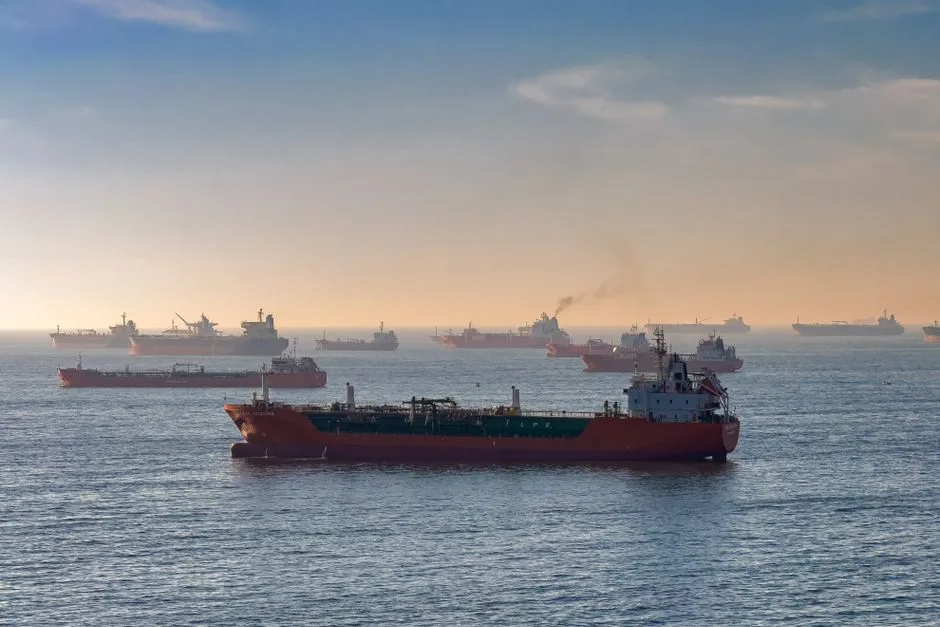
Iran spent the early months of 2026 turning the Strait of Hormuz into a parking lot for the global oil supply. Now, with a shaky ceasefire in place, Tehran is floating the idea of charging ships for the privilege of passing through waters it just proved it can shut down whenever it feels like it. Welcome to the new world order, where a fifth of the planet's oil flows through a toll booth that didn't exist six months ago.
How Iran Broke the Strait and Remade It
When the U.S. and Israel launched their joint war on Iran in February, Tehran went straight for the jugular. By firing on ships or threatening to strike any vessel that hadn't asked Iran's permission first, it effectively closed the Strait of Hormuz, the narrow chokepoint through which roughly a fifth of the world's oil normally flows. The result was a global shipping gridlock that sent oil prices through the roof and hit American drivers at the pump almost immediately.
Transits have slowly resumed since the U.S. and Iran signed a memorandum of understanding two weeks ago, CBS News reports. That framework agreement lifts restrictions on both sides and guarantees toll-free transit for at least 60 days, during which the two countries are supposed to negotiate a broader peace deal. So right now, things are moving again. The question is what happens on day 61.
Noam Raydan, a senior fellow at the Washington Institute think tank, put it plainly to CBS News: "We are no longer dealing with the traditional maritime arrangement in the Strait of Hormuz, which we are familiar with, the one that existed before the war. This new navigational order has been created by Iran, and what Iran is trying to do right now is ensure that it plays a central role in it." Hard to argue with that read.
The Toll Booth That Has No Legal Basis (But Might Happen Anyway)
Iran has been fairly open about wanting to charge ships for transiting the strait once the 60-day window closes. Last week, Iran and Oman, the two countries with coastlines on the strait, issued a joint statement saying future management of the waterway would have "costs associated," though they promised those costs would be in line with international standards, according to CBS News.
Here's the legal problem with that. Yes, there are tolls on the Suez and Panama Canals, which can run into hundreds of thousands of dollars for the largest cargo ships. But those are man-made canals, and both Egypt and Panama were granted explicit permission by treaty to charge fees. The Strait of Hormuz is a natural waterway. Under the United Nations Convention on the Law of the Sea, which took effect in 1994, ships have the right of innocent passage through any country's territorial waters without paying a toll. Iran signed UNCLOS but has never ratified it, which tells you a lot about how seriously Tehran takes that particular piece of paper.
The comparison Iran would prefer you to make is with Turkey, which charges service fees for ships passing through the Bosporus and Dardanelles under the 1936 Montreux Convention. But that law explicitly requires Turkey to allow commercial ships free passage and only permits fees for specific services like pilotage, lighthouses, and sanitation. It is not a blank check to monetize a choke point.
Oman Blinks, Iran Pivots to Insurance Scams
A few days after the joint Iran-Oman statement dropped, Omani Foreign Minister Badr bin Hamad Al-Busaidi appeared to get cold feet. He denied, per CBS News, "any ambiguity" on transit fees and insisted there would be none. He did leave the door open for fees tied to navigational, environmental, or other "services," pointing to the Straits of Malacca and Singapore as a model, where pilotage service fees are technically voluntary. So: no tolls, but maybe fees. Got it. Crystal clear.
Meanwhile, the Persian Gulf Strait Authority, an agency Iran invented during the war and handed sole authority over strait traffic, floated a different idea: requiring ships to buy an insurance policy just to cross. The UN's International Maritime Organization shot that down quickly, saying the demands were not official. But the PGSA floated it, which means someone in Tehran thought it was worth trying.
The One Thing That Might Actually Stop This
According to Ali Vaez, director of the Crisis Group think tank's Iran Project, there is a fairly straightforward lever here. Speaking to CBS News, Vaez said there is "an inverse correlation between Iran's ability to secure sanctions relief and its desire to look at the strait as a source of revenue." In plain English: if Iran can sell its oil freely and access its frozen funds, it needs the strait tolls less. If the Trump administration keeps the economic squeeze on, Iran has every incentive to find creative ways to make the world pay.
"The more the Trump administration ensures that Iran can get access to frozen funds and is able to repatriate revenue from its oil sales, the less Iran would need to make money through imposing fees for transiting the Strait of Hormuz," Vaez told CBS News. That is the kind of blunt, transactional logic that should be legible to this particular White House, though whether anyone there is actually listening is a separate question.
Vaez also raised the possibility of a broader regional management arrangement involving not just Iran and Oman but Pakistan, Qatar, Saudi Arabia, Turkey, and Egypt, countries that have played mediating roles in the conflict. He even suggested Iran might try a two-tier system that exempts poorer nations in the global south while charging wealthier ones. If that sounds like Iran is rewriting the rules of international shipping with a calculator and a grudge, that is because it essentially is.
The Dingo Take
Let's be clear about what happened here. The U.S. and Israel launched a war against Iran in February. Iran responded by closing one of the most strategically important waterways on the planet. Global oil prices spiked, everyday Americans paid more to fill their tanks, and the international shipping system briefly looked like a game of Red Light Green Light where Iran was the kid in the middle. And now, two weeks into a fragile ceasefire, the conversation is about whether Iran gets to charge the world a fee to use a strait it just demonstrated it can shut down at will. That is not a negotiating position. That is a hostage situation with extra steps.
The legal arguments against Iranian tolls are solid, but legality has been doing a lot of losing lately. Iran never ratified UNCLOS. The Persian Gulf Strait Authority it created mid-war has no international standing. None of that stopped Iran from doing any of this in the first place. The actual constraint on what Iran does next is not international maritime law. It is whether the Trump administration can put together a sanctions deal that gives Tehran enough economic oxygen that it does not feel compelled to monetize the only leverage it has left. That is an uncomfortable thing to admit, but it is where we are.
The experts CBS News spoke to are right that the Strait of Hormuz is not going back to what it was before February. The world just watched Iran prove that it can break global oil markets with a credible threat and a few warning shots. That knowledge does not unlearn itself. Every future negotiation, every tanker captain, every energy market will price in the possibility that Iran can do this again. The strait is permanently different now. The only question is how different, and who ends up paying for it.


Comments