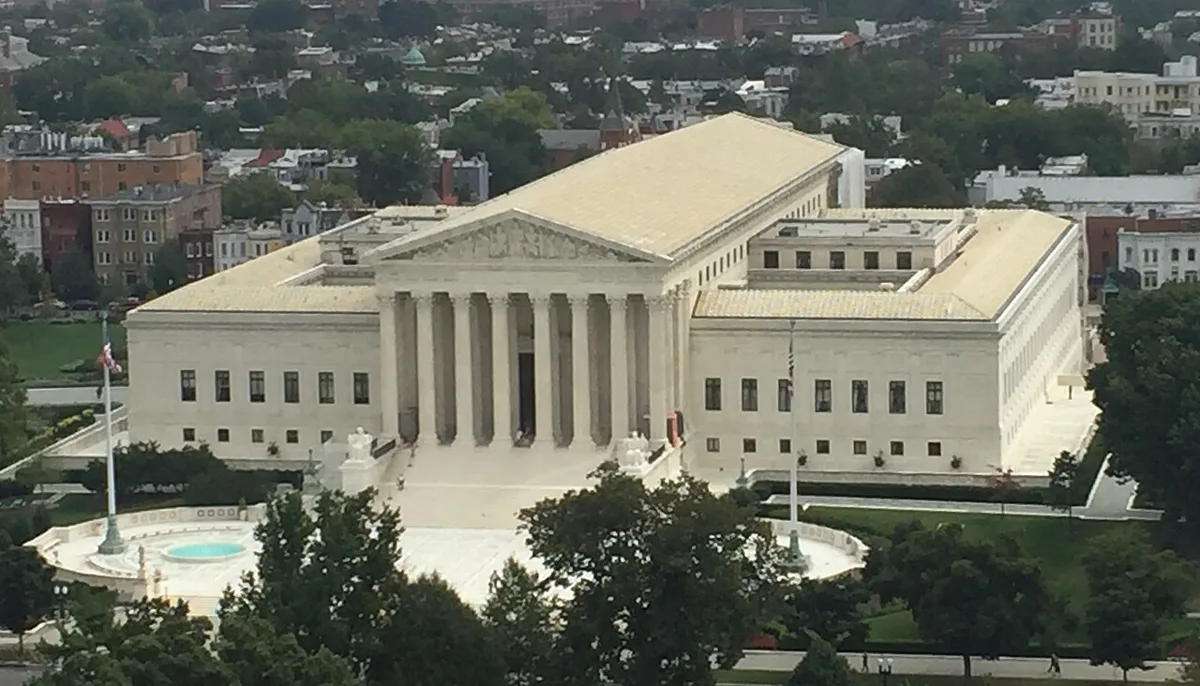
A lawyer who tried to get a priest with a credible sexual abuse allegation removed from a high school campus got hit with a $400,000 fine. He appealed all the way to the Supreme Court. On Monday, the Supreme Court said no. The priest is dead. The fine stands.
What Trahant Actually Did
Here's the setup. Richard Trahant is an attorney representing dozens of clergy abuse survivors in the New Orleans Catholic archdiocese's federal bankruptcy case, which the archdiocese filed in 2020. Through that work, as the Guardian reports, Trahant learned that a priest named Paul Hart had secretly confessed to his religious superiors that he'd had sexual contact with a 17-year-old girl in the early 1990s, contact he made through his duties as a clergyman.
Hart had been reported to the church in 2012. He confessed. A board advising Archbishop Gregory Aymond recommended removing Hart from public ministry. Aymond disagreed, because technically the age of consent under the church's own canon law back in the early '90s was 16, even though the US Catholic bishops had since raised that to 18. So Aymond let Hart keep ministering. And then, in 2017, assigned him to be chaplain at Brother Martin, an all-boys Catholic high school in New Orleans where girls also participate in activities.
When Trahant found out Hart was working at a school, he called the school's principal, who happened to be his cousin, and told him there was a credible allegation from Hart's past involving a minor. He didn't give specifics. He said a protective order in the bankruptcy case prevented him from saying more. He also emailed the journalist covering the case, asking him to keep Hart on his radar, again without specifics.
What the Archdiocese Did Next
Here's where it gets rich. After Trahant's vague warning, it was actually the archdiocese, not Trahant, that went to Brother Martin and gave the school the full details about what Hart had done. Hart retired as chaplain in January 2022, reportedly citing brain cancer. The school had asked Aymond to remove him.
A journalist then published a story about Hart's departure in the Times-Picayune, using sources and methods independent of Trahant. The federal bankruptcy judge overseeing the archdiocese case, Meredith Grabill, saw the article and ordered an investigation into what she called a protective order violation. That investigation quickly focused on Trahant.
The Guardian reviewed depositions from the school's principal and staff confirming that Brother Martin got the details about Hart from the archdiocese, not from Trahant. Court investigators, per a report the Guardian obtained, even conceded there was evidence backing Trahant's claim that he never gave confidential information to the journalist. Judge Grabill fined him $400,000 anyway. She also expelled four of his clients from a survivor committee that was negotiating the bankruptcy settlement.
The Legal Gauntlet Nobody Should Have Had to Run
Trahant appealed to New Orleans federal court. They left the fine in place. He appealed to the Fifth Circuit. They left it in place. He petitioned the Supreme Court in May, arguing, among other things, that his due process rights were violated during the proceedings against him.
The archdiocese's attorneys didn't even bother filing a response to his Supreme Court petition. The court declined to take the case on Monday without explanation, which is standard practice, but still feels like a particular kind of knife in the gut given the circumstances. The fine, with interest, now sits at roughly $460,000.
What the Survivors Are Saying
Trahant issued a statement after Monday's ruling challenging the archdiocese to direct the money he owes toward clergy abuse survivors. He wrote, according to the Guardian, that "this entire saga hurt my clients, my wife, my kids and my co-counsel," and added: "I maintain I did what I did to protect children."
James Adams, one of the four clients expelled from the survivors committee, said Monday's ruling "affirmed the protection of sexual predators over the safety of children." He was direct about what he sees as the message the courts have sent: "If you try to expose sexual abuse of minors within the Catholic church, you will be punished."
Another expelled client, Jackie Berthelot, said it plainly: if you speak up against predators in Catholic schools, you get penalized severely. Paul Hart died at 70 about nine months after his removal from Brother Martin. The institution that protected him for decades is still in bankruptcy court, still negotiating settlements with the people it failed.
The Dingo Take
Let's just sit with what happened here. An attorney working on behalf of clergy abuse survivors learned that a priest with a documented, self-confessed history of sexual contact with a minor was working at a school with students on its campus. He made two vague, cautious, technically non-specific warnings, and he was fined nearly half a million dollars for it. The judge acknowledged there wasn't solid evidence he'd actually disclosed confidential information. She fined him anyway. Three courts, including the Supreme Court of the United States, have now looked at this situation and decided that the fine should stand.
Meanwhile, the archdiocese that actually told the school the full details of what Hart did, the institution that covered for him for a decade, that kept him in ministry, that assigned him to a school, is the one negotiating a settlement with his victims through federal bankruptcy court. Nobody at the archdiocese paid $400,000. Nobody got expelled from anything. The institution that protected an abuser for years is now managing its financial exposure in a federal bankruptcy proceeding, which is, if you think about it for more than three seconds, a completely insane way for any of this to have ended up.
Trahant's client said the courts have stated that if you try to expose sexual abuse in the Catholic Church, you will be punished. It's hard to look at the facts of this case and argue with that. Whatever the precise technical merits of the protective order question, the practical outcome is that a lawyer got financially destroyed for trying to keep kids away from an admitted abuser. The system that was supposed to protect those kids protected the institution instead. Again. As it always has.




Comments