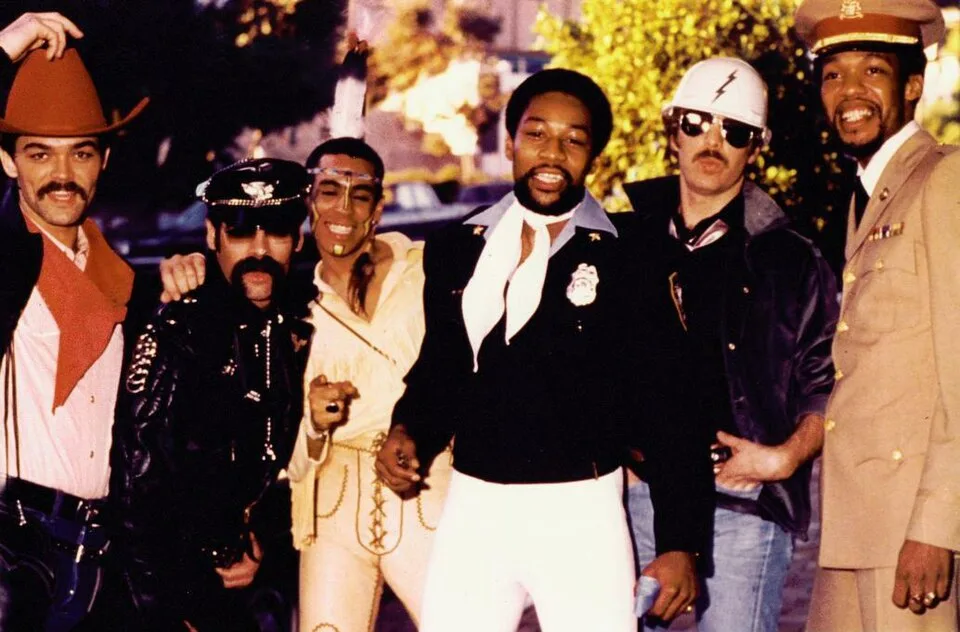
Victor Willis, the man who wrote "YMCA," performed it for decades in a cop costume, fought in court to reclaim ownership of it, watched Trump hijack it anyway, and then ultimately showed up to sing it at the guy's inauguration, died Monday at 74. He passed on June 30, 2026, one single day before his 75th birthday. The band confirmed the news Wednesday in a Facebook post, citing "a short but aggressive illness."
Gospel Roots, Broadway, and a Disco Revolution
Willis was born Victor Edward Willis in Dallas and raised in San Francisco, where he grew up singing gospel in his father's Baptist church. That foundation took him into acting and eventually to Broadway, including a role in "The Wiz," before a chance meeting with French producer Jacques Morali in the mid-1970s changed everything.
Morali had a vision for a group built around masculine archetypes in costume: a cop, a cowboy, a construction worker, a biker, an Indian chief, a soldier. Willis became the cop, then the naval officer, and most importantly, the voice. Page Six reports that he was both the lead vocalist and co-writer behind the band's biggest hits, including "YMCA," "Go West" and "In the Navy."
"YMCA" dropped in 1978 and became one of the most recognizable songs on the planet. Nearly fifty years later it still gets played at every sports stadium, every awkward wedding reception, and apparently, at every single Donald Trump rally. The song has had a longer and stranger life than anyone involved probably imagined.
He Left, He Fought, He Won, He Came Back
Willis departed the group in 1980, with some accounts suggesting it was as early as 1979, to pursue a solo career. What followed were years of legal battles over songwriting credits, the kind of grinding intellectual property warfare that can consume decades of a person's life.
He won a significant legal victory in 2012 that helped him reclaim rights to "YMCA," "Go West" and "In the Navy," according to Page Six. A jury later ruled that Willis and Morali were the sole writers of 13 Village People tracks. That is not a minor thing. That is a man refusing to let his own legacy be taken from him.
He rejoined Village People in 2017 and, through the natural attrition of time, eventually became the only remaining original member of the band. The group completed the first leg of a European tour in May of this year, with more dates in Italy and France still scheduled for later this summer. Those shows will not happen with Willis.
Trump, YMCA, and a Cease-and-Desist That Did Not Work
Here is where the story gets complicated, and also very 2020s. Trump started using "YMCA" as a campaign rally anthem, and Willis and the band were not happy about it. In 2023, they sent a cease-and-desist to the White House after "Macho Man" was played at a Mar-a-Lago event, per Page Six. They backed Kamala Harris in the 2024 election. Everything seemed clear.
Then Harris lost. And Willis made a call that a lot of people found baffling. Village People performed at the "MAGA Victory" rally in Washington during Trump's 2025 inauguration. Willis posted a lengthy explanation on Facebook. "Our song 'YMCA' is a global anthem that hopefully helps bring the country together after a tumultuous and divided campaign where our preferred candidate lost," he wrote. "Therefore, we believe it's now time to bring the country together with music."
You can agree with that reasoning or you can find it infuriating. Plenty of people fell into the second camp. But Willis had clearly thought it through. Whether performing for a man you'd previously tried to legally stop from using your music constitutes unity or capitulation is a debate that will outlast all of us.
On the Whole "Gay Anthem" Question
Willis spent a significant portion of his later career pushing back against the widely held interpretation of "YMCA" as a gay anthem. Page Six notes that he argued people needed to "get their minds out of the gutter" and maintained the gay reading was "based solely on the song's lyrics alluding to [illicit] activity for which it does not."
This was always a slightly awkward position to hold, given that Village People emerged from and explicitly referenced Greenwich Village's gay culture, that Morali himself was gay, and that the song was immediately and enthusiastically embraced by the gay community upon its release. Willis was not wrong that the song's text is technically ambiguous. He was just fighting a battle that the culture had already settled without him.
None of that diminishes what he created. Whatever "YMCA" means to any given listener, it is one of the most durable pop songs ever written. Willis co-wrote it. He sang it. He fought in court to own it. That is his regardless of anyone else's interpretation.
The End
Willis is survived by his wife Karen Huff-Willis, whom he married in 2007. The couple lived in San Diego. The band has asked for privacy.
He died on June 30, 2026. He would have turned 75 the following day. That particular detail is the kind of thing that sits with you.
The Dingo Take
Victor Willis had one of the stranger late-career arcs in pop music history. He spent years in court fighting to reclaim ownership of songs that had made other people rich. He won. He rejoined the band he'd left. He backed Harris. He sent Trump a cease-and-desist. And then, when the election went the wrong way, he made a choice that many people hated and showed up to sing "YMCA" at the inauguration anyway. You can call that a sellout. You can also call it a man in his 70s who had seen enough of the music industry to know that songs belong to everyone once they're out in the world, and who decided he'd rather be present than absent.
What gets lost in all the Trump noise is the actual achievement. Willis co-wrote some of the most recognizable songs of the 20th century, fought for legal recognition of that fact for decades, and won. In an industry that has historically chewed up Black artists and stripped them of their royalties and their rights without a second thought, winning that fight matters. The songs are his. The court said so.
He died one day before his 75th birthday. At 74. After completing a leg of a European tour two months ago. The man was still working, still performing, still very much in it. That counts for something. Rest easy, Victor.




Comments