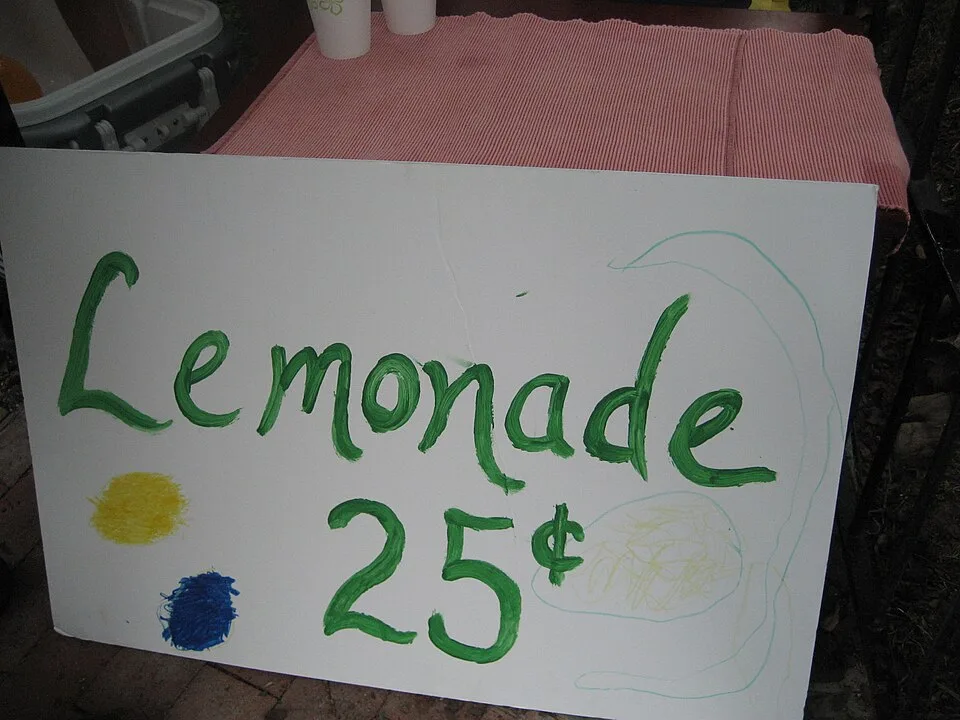
Somewhere in Michigan, a health department employee looked at a child's lemonade stand, thought "I should get paid for this," and actually followed through on that thought. Multiple times. It took a state legislator to step in and write a law clarifying that no, actually, kids should probably be allowed to sell lemonade without cutting the government in on the deal.
The Government vs. Eight-Year-Olds, Apparently
According to Good News Network, parents in the district of Republican state Representative Cam Cavitt reached out to him after the local health department demanded children pay repeated fees to operate their lemonade stands. Not a one-time thing. Repeated fees. Someone was going back.
Cavitt, who represents Cheboygan, introduced House Bill 6007 in response. The bill passed overwhelmingly in the state house and now heads to the Senate. "This is a practical change that will make it easier for our kids to gain real business experience and develop civic responsibility," Cavitt told CBS News, which is a very measured and reasonable way to describe legislation whose entire purpose is to stop bureaucrats from shaking down children.
What the Bill Actually Does
The legislation is straightforward. Under House Bill 6007, minors can operate a temporary food business serving non-temperature-controlled beverages on private property without paying any fees or obtaining any permits. The conditions are about as permissive as you'd expect for a child selling cups of Minute Maid: the beverages can't be alcoholic, and the business has to bring in less than $5,000 a year.
That's it. That's the whole law. Do not charge children money to sell lemonade. This required a legislative solution.
Michigan Is Not Alone in This Absurdity
Here's the part where it gets bleaker. Michigan isn't dealing with some isolated rogue health inspector. Good News Network reports that there have been a truly head-scratching number of legal actions taken against children's lemonade stands across the country, enough that Texas and Georgia have both already passed laws making them exempt from most business regulations.
Think about that trajectory for a second. A problem so widespread that multiple state governments have had to carve out explicit legal protections for kids with pitchers and hand-lettered signs. At some point you have to ask what went wrong in the regulatory mindset that "lemonade stand" was not already in its own self-evident exemption category.
Meanwhile in Colorado, Tamales Are Getting Their Moment
On the slightly more heartwarming end of the small-scale food regulation spectrum, Colorado is also loosening restrictions, though for a different reason. Good News Network also reports that Colorado extended similar protections to home-cooked meals sold informally, provided sellers take a food safety course and don't transport the food more than two hours from where it was cooked.
Colorado House Majority Leader Monica Dura called it the Tamale Act, and framed it as giving people a chance to turn family recipes and cooking skills into actual business opportunities. Which is lovely. The fact that it, too, required a law to make legal is less lovely, but you take the wins where you get them.
The Dingo Take
Look, there is a version of this story where you give the health department some benefit of the doubt. Regulations exist for reasons. Food safety matters. Nobody wants an E. coli situation at a sidewalk lemonade stand. But charging kids repeated fees to run a stand on private property serving cups of cold drinks is not food safety enforcement. That's just a bureaucracy that has completely lost the plot on what it is for.
The fact that Cavitt's bill passed "overwhelmingly" in the state house is one of those rare signs that elected officials can still recognize a no-brainer when one walks in the door. Good for them. It should not have been necessary. The standing policy for lemonade stands should have always been: these are children, leave them alone, go find something else to do.
If you needed a single data point to explain why a huge chunk of the country has developed a reflexive distrust of government institutions, "local health departments charging children fees to sell lemonade" is doing a lot of work. The regulations that actually protect people are harder to defend when the same regulatory apparatus is out here issuing citations to kids with a pitcher of Country Time. Fix the obvious stuff first. This was obvious.




Comments