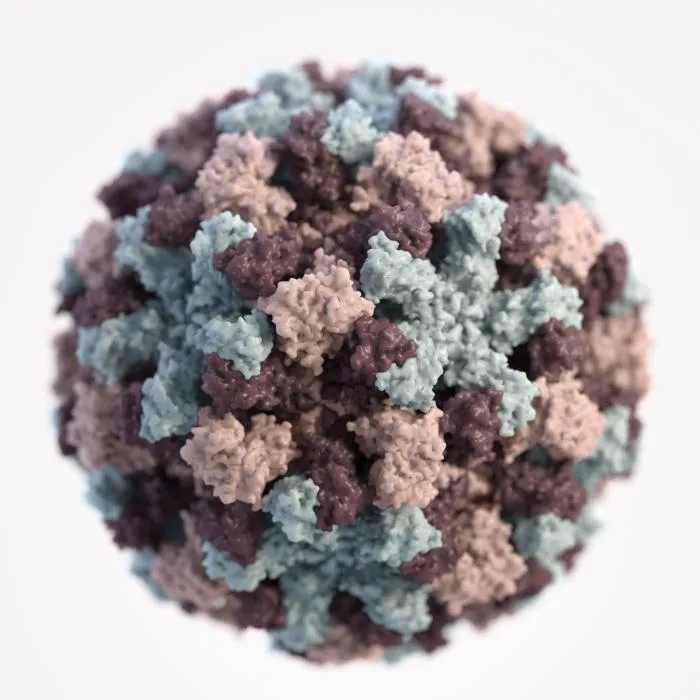
Nothing says 'Alaskan vacation' quite like spending the return leg of your cruise trip isolated in your cabin while the ship gets hosed down for fecal particles. More than 100 passengers and 23 crew members aboard the Ruby Princess came down with suspected norovirus, according to the CDC, making this the third norovirus outbreak to hit a Princess Cruises ship this year alone. Three outbreaks. One company. Seven months into 2026.
What Actually Happened on This Ship
The Ruby Princess left San Francisco on June 12, headed for Alaska and Canada, carrying 3,032 passengers and 1,144 crew members. The CDC received an outbreak report somewhere in the middle of that 20-day trip. Under CDC rules, an outbreak is officially declared when 3% or more of passengers report illness. They hit that threshold.
The ship docked back in San Francisco on July 2 for disinfecting, according to The Guardian. Sick passengers and crew have been isolated. The rest of the passengers got to watch their vacation end with the ship being scrubbed down, which is a vacation memory, technically.
Princess Cruises did not respond to a request for comment on what may have triggered the outbreak. Which is absolutely shocking behavior from a company currently batting three-for-three on norovirus incidents this year.
Norovirus: A Quick and Disgusting Refresher
For anyone who has been lucky enough to forget, norovirus is extraordinarily contagious and delivers a one-two punch of vomiting and diarrhea. The CDC explains that it spreads through tiny particles of fecal matter or vomit making contact with someone's mouth. Hand-to-mouth contact with contaminated surfaces also does the job nicely.
Picture a cruise ship. Thousands of people. Buffet lines. Handrails. Shared pool decks. Casino chips passed between hundreds of hands. It is, and this is a clinical term, a germ incubator. The Guardian notes that cruise ships' close-proximity living conditions make them particularly effective at turning one sick passenger into a public health event.
Health officials recommend frequent handwashing with soap and water, especially after using the toilet and before eating. On a ship where 100 people are already sick and surfaces are already compromised, that advice is doing a lot of heavy lifting.
Three Times, Same Company, Same Year
Let's be precise about the number here, because it deserves its own moment of silence: this is the third norovirus outbreak on a Princess Cruises ship in 2026. The Guardian confirmed that. We are barely past the halfway point of the calendar year.
This is not a one-time bad luck situation. This is a pattern. When a company appears three times in the same category of news story within a single year, the polite thing journalists are supposed to do is 'ask for comment.' Princess Cruises declined that opportunity. The impolite thing journalists then do is point out that three outbreaks in seven months is not a run of bad luck, it is a trend.
For context, The Guardian also reports that six other norovirus outbreaks have hit cruise ships industrywide in 2026. The cruise industry as a whole is having a bad year for gastrointestinal health. Princess is just leading the pack.
What Passengers Signed Up For vs. What They Got
These passengers booked a 20-day cruise to Alaska and Canada. They packed their binoculars for glacier viewing and their windbreakers for the deck. Some of them probably saved up for this trip. It is genuinely not funny that they ended up sick, isolated in their cabins, while the ship was sanitized around them.
What is darkly funny is the marketing gap. Cruise companies sell the dream of a floating luxury resort. Princess Cruises' own branding leans heavily into discovery and premium experience. What the Ruby Princess delivered for at least 100 of those 3,032 passengers was a very different kind of discovery: that their immune system was no match for whatever was circulating on deck four.
Disinfecting a ship after an outbreak is standard protocol. The CDC keeps a publicly accessible database of cruise ship inspections and outbreak reports specifically because this happens with enough regularity that someone decided a database was warranted. That database is a treasure trove that the cruise industry would very much prefer you not read.
The Dingo Take
Here is the thing about recurring institutional failures: at some point, 'we take the health and safety of our guests very seriously' stops being an acceptable statement from a public relations team and starts being evidence that no one actually does. Princess Cruises has now had three norovirus outbreaks in 2026. The company did not respond to comment requests from The Guardian. That silence is its own answer.
The CDC's outbreak threshold of 3% sounds clinical and bureaucratic until you do the math: on a ship with 3,032 passengers, 3% is 91 people. They blew past that number. We don't know the final case count, but we know over 100 passengers got sick. On a vacation. That they paid for. On a ship that has now apparently made norovirus a recurring amenity.
The cruise industry loves to sell escapism. Turquoise water, open bars, dinner under the stars. What they are less forthcoming about is that you are floating in a petri dish with thousands of strangers and the sanitation infrastructure of a mid-tier convention center. Wash your hands. Question the buffet. And maybe, for the love of everything, do not book the Ruby Princess until it has gone at least one quarter without making the CDC's outbreak report.




Comments