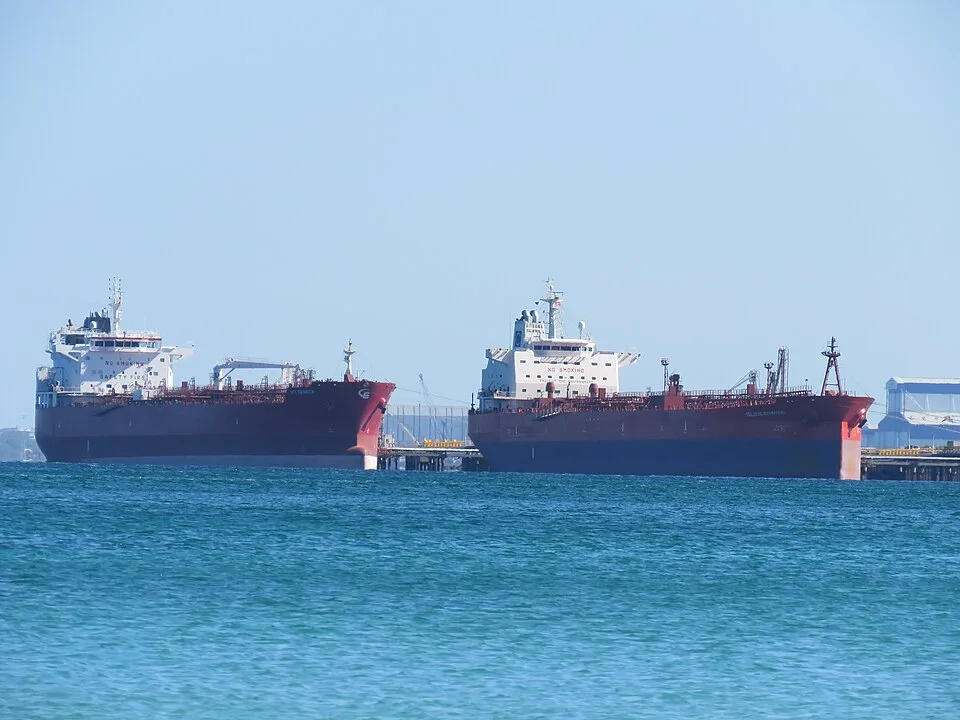
Donald Trump, the man who called climate change a Chinese hoax and spent his presidency trying to resurrect coal like a deranged Dr. Frankenstein, may have accidentally done more for the clean energy transition than a decade of Paris Agreement negotiations. His botched military adventure against Iran, which resulted in a blockade of roughly 20% of the world's oil and gas supply through the Strait of Hormuz, has sent governments scrambling for energy independence. And the thing they keep landing on is solar panels.
Europe Is Cooking. Literally.
Before we get to the dark comedy portion of this story, let's sit with the horror for a second. The World Health Organisation reports the extreme heatwave currently blanketing Europe has killed more than 1,300 people. And as the Guardian's Adam Morton explains, that number is going to look embarrassingly small once the final accounting comes in.
After the 2022 European summer, the final death toll from heat came in at more than 60,000. The past ten days have been significantly hotter than that summer. Scientists from the World Weather Attribution consortium found that nearly half of Europe's 850 biggest cities have been enduring their worst heat stress in recorded history, with temperatures running between 5C and 12C above seasonal averages.
This is not a natural disaster in the classic sense. There's no rubble to dig through, no dramatic rescue footage to run on loop. It's quiet and distributed and devastating. Germany's Autobahn has literally ruptured. Train lines buckled. Nuclear plants shut down because rivers got too hot to cool the reactors. Scientists say these temperatures would have been flat-out impossible during the 1976 European heatwave, and ten times less likely during the brutal summer of 2003. Human-caused climate change made this possible. Full stop.
And this is, as Morton notes in the Guardian, just a preview. The recently declared El Nino pattern over the Pacific means what we're seeing now could accelerate in the months ahead. Australia is tracking toward its warmest winter on record. Its ski season, which was supposed to start this week, is running almost entirely on artificial snow. Enjoy the preview, everyone.
Enter the Accidental Hero
Here's where it gets genuinely strange. Donald Trump, through a combination of military adventurism and sheer incompetence, has managed to do something climate activists spent years trying to accomplish with protests and documentaries and very earnest op-eds: he made the entire world confront its fossil fuel addiction at once.
By attacking Iran alongside Israel and triggering a blockade of the Strait of Hormuz, Trump took roughly 20% of the world's oil and gas supply off the market. That kind of supply shock tends to concentrate the mind. Governments that spent years treating energy transition as a long-term aspiration are now treating it as an immediate survival project. When the fuel you depend on can be choked off by a single military miscalculation, energy independence stops being an environmental talking point and starts being a national security emergency.
The Guardian's reporting makes clear this shift was already underway before Trump's intervention, but the Hormuz blockade poured rocket fuel on it. Ironic fuel. Expensive, increasingly unavailable fuel.
The Numbers Are Genuinely Shocking
Forget the politics for a moment and look at what's actually happened in the energy sector. For the first time ever, renewable energy, including solar, wind, and hydro, overtook coal as the world's leading source of electricity in the past year, supplying a third of global generation. Add nuclear power, which is zero-emissions even if it's not technically renewable, and non-fossil sources hit 42% of total global electricity.
Solar grew 30% in 2025 alone. That's the single largest annual increase of any electricity source in recorded history. Battery storage grew 66%. The UN secretary general Antonio Guterres has pointed out that the cost of solar panels has fallen 90% over the past 15 years, battery storage costs are down 95%, and wind is down 70%. His summary: renewables are the cheapest, fastest, and most scalable source of new electricity in most of the world.
Pakistan, one of the world's top 20 emitting nations, has increased its solar capacity more than tenfold in four years. Solar provided more than 25% of Pakistan's electricity last year, and the government has cancelled its liquified natural gas import contracts entirely. In the EU, solar and wind hit 30% of electricity in 2025, up from 19% in 2021, and renewable energy now accounts for 48% of total generation. Fossil fuels have fallen to 29% of EU electricity. That's not a rounding error. That's a structural shift.
Even America, Despite America
The truly wild part is that this is happening in the United States too, in spite of everything Trump and the Republican Party have done to prevent it. The administration has actively undermined renewable energy. Coal generation has actually ticked back up. None of it matters, because the economics are running the show now.
According to analysis from the thinktank Ember, solar and battery storage provided 91% of America's new electricity generation capacity in the first quarter of this year. In May, for the first time ever, solar produced more electricity in the United States than coal. In the country run by a man who has treated climate policy as a personal enemy, the market quietly went ahead and made the rational choice anyway.
This is the thing about cheap energy: it doesn't care about your ideology. Solar doesn't need a subsidy argument when it's simply the cheapest thing on the table. Trump spent years trying to will a coal renaissance into existence, and the market laughed in his face while installing panels.
Two Movies, One Planet
The Guardian frames all of this as two films running in parallel, and it's an accurate read. The horror movie is real and ongoing. More than 1,300 people are dead in a European heatwave that scientists say is a direct result of rising atmospheric greenhouse gases, and that death toll is going to grow. There are versions of this story playing out globally, and they will keep coming, and they will keep getting worse before the energy transition can catch up.
The other movie is a genuinely unexpected story about how a convergence of geopolitical chaos, collapsing technology costs, and pure market logic is pushing the world toward clean energy faster than anyone's climate model predicted. The villain of movie one is inadvertently accelerating the plot of movie two.
Those two realities exist simultaneously. People are dying from heat that shouldn't exist. Clean energy is winning faster than it was supposed to. Both things are true, right now, today.
The Dingo Take
Let's be clear about something: calling Trump an "accidental hero" on climate is a bit like calling the guy who burned down your house an accidental hero because the fire marshall who showed up to put it out taught your kid about fire safety. The underlying crisis, the heatwave killing people across Europe, the accelerating warming, the El Nino season bearing down on the southern hemisphere, all of it is what happens when you spend decades treating fossil fuels as politically sacred and ignore the scientists telling you what comes next. Trump didn't cause climate change, but he spent years making it categorically worse, gutting regulations and withdrawing from international agreements, and now the planet is presenting the bill.
The clean energy surge is real, and it's genuinely good news, but let's not confuse market momentum with a solved problem. Solar is winning because it got cheap enough that you can't argue with the math. That's great. That's exactly what needed to happen. But the energy transition runs on a decade-long timeline, and the climate crisis is happening in real time, right now, this summer, with 1,300 confirmed dead and counting.
What we're watching is a race between the horror movie and the feelgood one. The horror is already here. The feelgood ending is still being written. Trump stumbling into a policy outcome that accelerates clean energy adoption is not a reason to feel good about Donald Trump. It's a reason to feel something darker: that we apparently needed a geopolitical catastrophe of his making to finally treat the energy transition with the urgency it deserved all along.





Comments