One year ago, Donald Trump signed what he called the One Big Beautiful Bill on the Fourth of July, because of course he did. Twelve months later, the scoreboard is in, and it turns out the biggest winners are Amazon, Tesla, Alphabet, and Meta, who collectively pocketed $51 billion in tax breaks in 2025 alone. The tipped workers and seniors the White House keeps putting in the brochure got something too, but let's talk about the fine print.
What the Bill Actually Did
The One Big Beautiful Bill Act, signed July 4, 2025, was a sweeping overhaul of federal tax and spending policy. It extended and made permanent many provisions from Trump's 2017 Tax Cuts and Jobs Act, added new deductions for tipped workers, overtime pay, and senior citizens, and created a new investment account program for children called Trump Accounts. It paid for all of this, at least in part, by cutting federal spending on Medicaid and food assistance programs.
The White House is very proud of it. Spokesman Kush Patel told CBS News this week that the law is "simultaneously delivering short-term economic relief while laying the groundwork for long-term economic growth." Which is one way to describe what happened. Another way is coming right up.
The Top 1% Are Having a Great Year
Here is the part that should be printed on a billboard somewhere. Jon Whiten, deputy director of the nonpartisan Institute on Taxation and Economic Policy, told CBS News that "the top 1%, in fact, are in line to get $1 trillion in tax cuts from the law over a decade." A trillion dollars. For people who were already doing fine.
The mechanism is pretty straightforward. The OBBBA permanently locked in the top individual income tax rate at 37%, blocking it from reverting to 39.6% as previously scheduled. According to the nonpartisan Center for American Progress, this mostly affects the top 2% of taxpayers, meaning individuals clearing over $640,000 a year. The law also raised the state and local tax deduction from $10,000 to $40,000 annually, a change that disproportionately benefits high earners in expensive states.
Andrew Lautz of the Bipartisan Policy Center told CBS News that both sides of the political argument are technically correct here. Many provisions do target middle-class taxpayers. "At the same time," he said, "there are many provisions in this bill that primarily benefit the wealthy." Both things are true. The bill just happens to benefit the wealthy a lot more.
$51 Billion for Four Companies, to Be Specific
Let's put a finer point on the corporate side of this. The OBBBA restored and made permanent 100% bonus depreciation, letting companies immediately deduct the full cost of many investments instead of spreading them over years. It also made domestic research and development expenses immediately deductible. Good stuff if you're running a massive tech company with an army of accountants.
Whiten of ITEP told CBS News the law included "a potpourri of special subsidies and tax breaks that have slashed the tax bills of many hugely profitable corporations." The specific example he offered: Amazon, Alphabet, Meta, and Tesla together received $51 billion in tax breaks in 2025, much of it from the new law. Fifty-one billion dollars. To four companies. That collectively employ some of the richest people on earth. Happy Independence Day.
The Actual Working-Class Wins (Yes, There Are Some)
To be fair, and we are always fair here, there are provisions in this law that genuinely helped ordinary workers. The "no tax on tips" deduction was claimed by about 7 million workers, with a typical deduction of $7,000, according to the House Ways and Means Committee. The "no tax on overtime" provision was used by 28 million people, with a typical deduction of $3,100. Those are real numbers affecting real people.
Seniors got a $6,000 bonus deduction, subject to income limits that phase it out for individuals earning above $75,000 and eliminate it entirely above $175,000. Around 34 million seniors claimed it this year, per the Ways and Means Committee. The Trump Accounts program, a new tax-advantaged investment account for children with a $1,000 Treasury deposit for eligible newborns, has seen more than 6 million accounts opened, Treasury Secretary Scott Bessent told CBS News in an exclusive interview this week. Michael and Susan Dell have even pledged to kick in $250 per child for up to 25 million lower-income kids under 10. That's a genuinely interesting program wrapped inside a bill that also handed Amazon a fortune.
The Cuts That Haven't Hit Yet
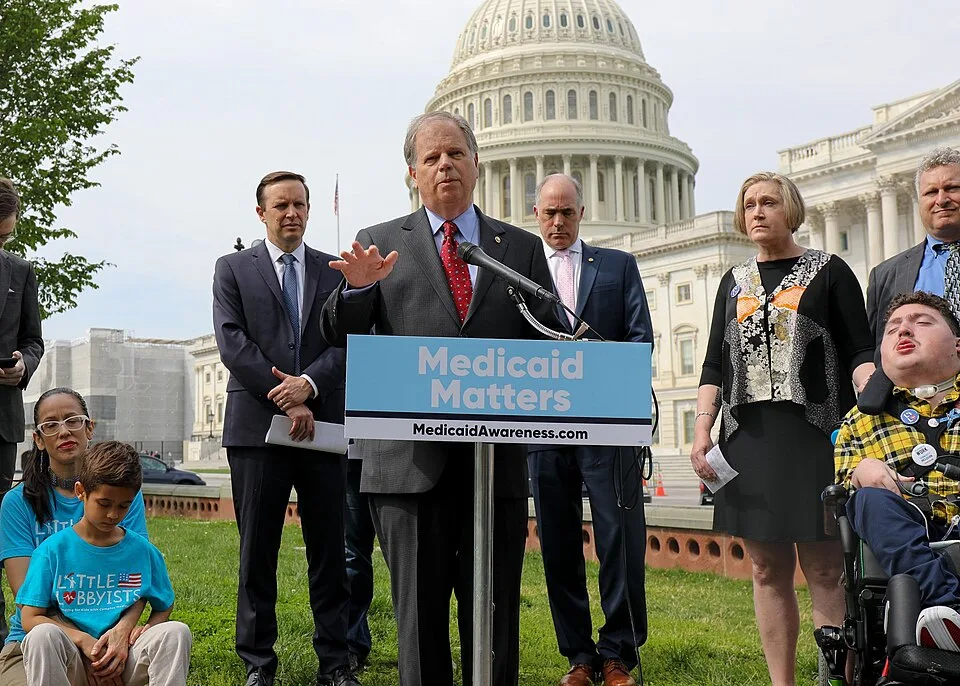
Here's what makes this one-year review incomplete in a structurally important way. Several of the bill's most consequential provisions haven't taken effect yet. New Medicaid work requirements and changes affecting student loan borrowers don't kick in until the second half of 2026 or 2027, as CBS News notes in its analysis.
In other words, the tax cuts are already in people's pockets. The Medicaid cuts are still coming. The bill's biggest potential losers haven't lost anything yet. That story is still being written, and it involves millions of Americans who depend on federal health coverage and food assistance to survive. The winners got theirs in April. The losers find out next year.
The Dingo Take
The One Big Beautiful Bill is a perfectly designed political product. It hands real, tangible benefits to enough ordinary people that its supporters can point to them sincerely, while quietly routing the truly enormous money upward to corporations and wealthy households who didn't need the help. Fifty-one billion dollars to four tech giants. A trillion over a decade to the top 1%. And the White House spokesman is in your inbox talking about waitresses keeping their tip money.
The cruelest part of the design is the timing. The popular stuff, the overtime deductions, the senior bonus, the baby investment accounts, all of that landed before the 2026 midterms. The Medicaid cuts, the food stamp reductions, the changes to student loans, those roll out after. By the time the people who got hurt the most feel it, the bill will already have its commemorative signed photo on the Oval Office wall.
None of this is a secret. The nonpartisan Institute on Taxation and Economic Policy ran the numbers. The Bipartisan Policy Center ran the numbers. CBS News reported them straight. The argument being made right now, by the administration, by Republican lawmakers, is essentially: sure, the rich got more, but the middle class got something. Which is true. It is also true that if you hand your neighbor twenty dollars and give yourself twenty thousand, you gave your neighbor twenty dollars.



Comments