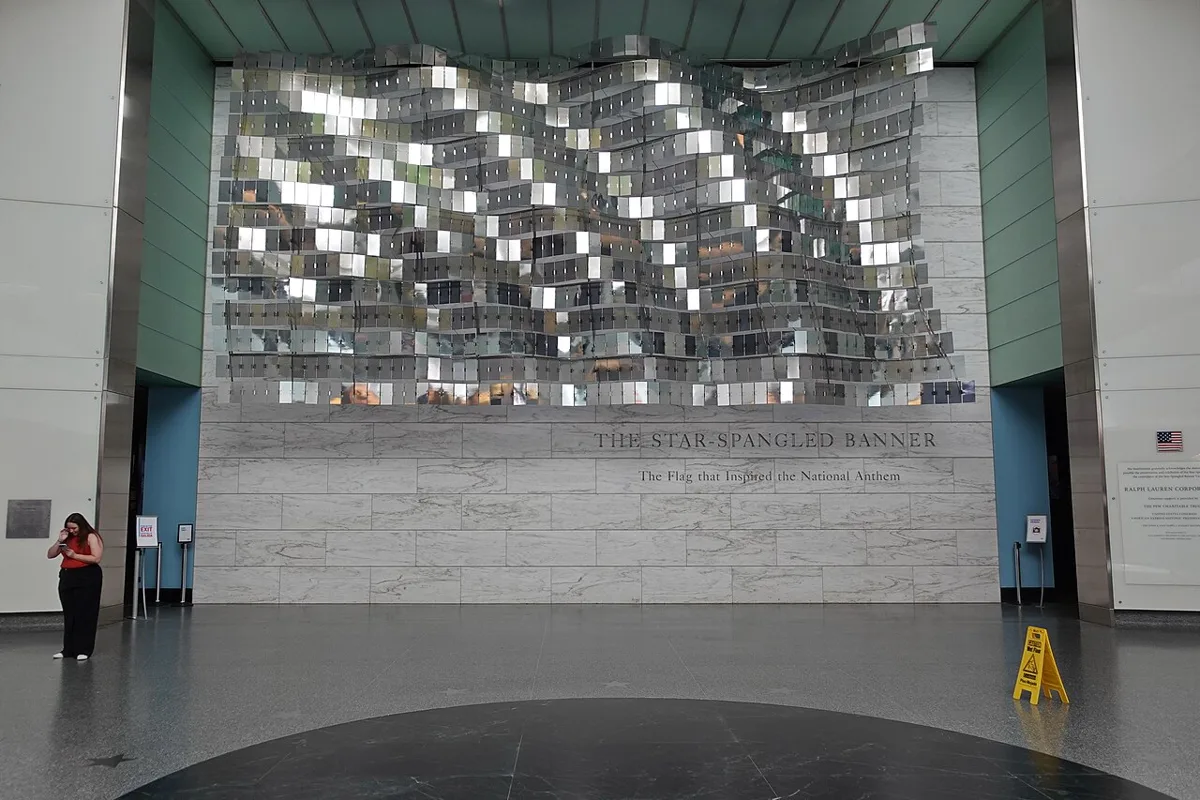
America just turned 250 years old, and CBS News marked the occasion by rounding up the six presidential speeches that did the most to shape this country. Reading them back-to-back in 2026 is an experience. Like finding your old diary and realizing you used to have principles.
Washington Warned Us. We Did Not Listen.
George Washington's farewell address, published through the press on September 19, 1796, is the founding document everyone cites and nobody actually heeds. Washington never even delivered it out loud. He just sent it to the newspapers and hoped for the best. That went great.
His central obsession was factionalism. The country was already beginning to crack along partisan lines, and Washington was watching it happen in real time. According to CBS News, he warned explicitly about the "baneful effects" of political tribalism, writing that it "agitates the community with ill-founded jealousies and false alarms, kindles the animosity of one part against another, foments occasionally riot and insurrection."
He wrote those words in 1796. The Senate has read his farewell address aloud every year since 1893 to honor his birthday. Every single year. And yet here we are, a country so thoroughly factionalized that we cannot agree on what happened on January 6th, let alone what to do about it. The ritual continues. The lesson does not.
Monroe Drew a Line. Trump Renamed It After Himself.
James Monroe's 1823 message to Congress established what became the Monroe Doctrine, a foundational foreign policy principle declaring that Europe had no business meddling in the Western hemisphere. It was invoked by JFK during the Cuban Missile Crisis. It became a cornerstone of American foreign policy for two centuries.
And then, as CBS News reports, Donald Trump cited his administration's capture of former Venezuelan leader Nicolas Maduro as an example of what he called the "Donroe Doctrine." The Donroe Doctrine. He took a 200-year-old pillar of American statecraft and put his name on it like it was a Atlantic City casino.
To be fair, Trump inserting himself into history by renaming things after himself is at least consistent behavior. The man put his name on a Bible. The leap to putting it on an entire foreign policy framework is shorter than it sounds.
Lincoln at Gettysburg: 272 Words That Still Embarrass Us
The Gettysburg Address, delivered on November 19, 1863 at the dedication of what was then called the Soldiers' National Cemetery, is arguably the most concentrated piece of political rhetoric in American history. Abraham Lincoln, in 272 words, reframed the entire Civil War as a test of whether democratic self-governance could survive at all.
"Government of the people, by the people, for the people, shall not perish from the earth." CBS News points out the speech is engraved at the Lincoln Memorial. It shows up in sitcoms. Schoolchildren memorize it. The Battle of Gettysburg, according to the National Park Service, produced more than 51,000 casualties across both sides, making it the bloodiest engagement of the Civil War.
Lincoln gave that speech four and a half months after that carnage, on the same ground where it happened. He did not flinch. He told the living that the dead had already done their part and the rest was now up to them. It is the kind of speech that makes you feel genuinely ashamed of whatever political discourse currently passes for serious in this country.
FDR Told the Truth About a Bad Situation. Wild Concept.
Franklin Roosevelt's first inaugural address, delivered March 4, 1933, is remembered for one line. You know the line. "The only thing we have to fear is fear itself." Everyone knows it. Fewer people remember what came immediately before it, which was Roosevelt explicitly stating that it was "preeminently the time to speak the truth, the whole truth, frankly and boldly."
According to CBS News, Roosevelt inherited an America wrecked by the Great Depression. He won in a landslide over Herbert Hoover because voters were desperate for someone who would level with them. So he did. He acknowledged the economic catastrophe plainly, declined to be a "foolish optimist," and then laid out his New Deal as a wartime-scale mobilization that would require expanded executive power.
Voters found this persuasive enough to reelect him three more times, a feat so unprecedented that Congress later ratified the 22nd Amendment in 1951 specifically to make sure it could never happen again. The two-term limit now exists, in part, because of FDR. History is a feedback loop.
LBJ's "American Promise" and the Unfinished Business
The source material cuts off mid-sentence before finishing the section on Lyndon Johnson's "American Promise" speech, delivered March 15, 1965, eight days after Bloody Sunday in Alabama. That's an apt metaphor for where the civil rights story still sits in America.
What we know from history is that LBJ went before a joint session of Congress and, in the most explicit terms any sitting president had ever used, linked the federal government's power directly to the cause of Black voting rights. He closed with the words of the movement itself: "We shall overcome." The Voting Rights Act passed five months later.
In 2026, large portions of that Act have been gutted by the Supreme Court. The speech is historic. The protections it produced are battered. That's the through-line in all six of these addresses, really. The words were good. The follow-through has been a mixed bag at best.
The Dingo Take
Here is what strikes you when you read these speeches together: the presidents who gave the best ones were almost always talking to a country in genuine crisis. Washington watched partisanship tear at a ten-year-old republic. Lincoln spoke on a mass grave. Roosevelt looked out at breadlines. They did not comfort their audiences with slogans or blame their problems on the press. They told the truth about what was happening and asked something real of the people listening.
That is not nostalgia. Some of these men were deeply flawed in ways that history has been too slow to fully reckon with. But the speeches worked because they treated the public as adults who could handle an honest accounting of a bad situation. That particular governing philosophy feels quaint right now, on the 250th birthday of a country currently run by a man who renamed a foundational foreign policy doctrine after himself.
Two hundred and fifty years is a long time to hold a republic together. Washington thought factionalism would kill it. Roosevelt thought economic collapse might. Lincoln thought a civil war was the test. They were all right, and the republic survived all three. What survives the era we are currently living through is a genuinely open question, and pretending otherwise, on a birthday or any other day, is exactly the foolish optimism FDR warned about.



Comments