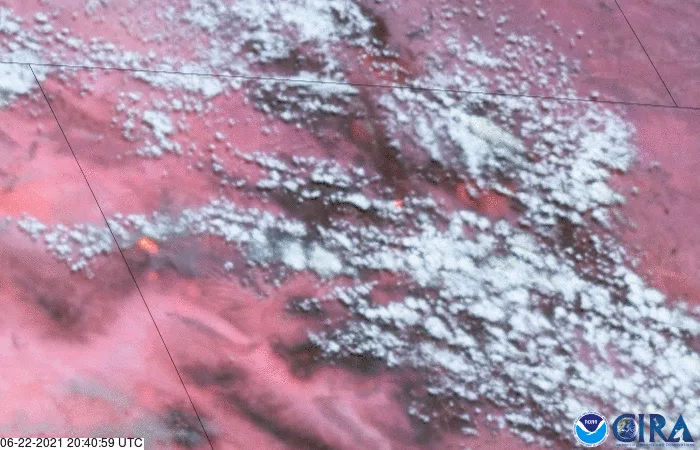
Three firefighters are dead, a memorial service just wrapped up, and the state of Colorado is staring down a weekend forecast that reads less like weather and more like a second disaster. The Aspen Acres Fire has eaten through more than 86,000 acres south of Colorado Springs and is 13% contained as of Sunday morning, according to NPR. That number is doing a lot of work to make things sound better than they are.
What 86,000 Acres Actually Looks Like
The Aspen Acres Fire is burning across Pueblo and Custer counties, and it has been doing so for nearly a week. Thirteen percent contained after six days. That is not a fire being beaten. That is a fire being watched.
Evacuation orders and evacuation warnings are in effect across Custer, Pueblo, Huerfano and Fremont counties, NPR reports. Four counties. Families packing cars, loading dogs, leaving behind homes that may or may not exist when they come back. The math of wildfire is brutal and indifferent.
And the Aspen Acres Fire is not even the only one. Southwest Colorado has the Ferris Fire at more than 42,000 acres and 7% contained. The Gold Mountain Fire is sitting at more than 25,000 acres and 0% contained as of Sunday afternoon. Zero. As in: firefighters have not gotten a foothold on it at all. Just across the state line, southern Utah's Babylon Fire has topped 90,000 acres and is also 0% contained, with hot and dry conditions expected to hold through Monday.
The Weather Is Not Here to Help
Here is what Sunday looked like for the people trying to stop these fires. The National Weather Service was forecasting scattered showers and thunderstorms across south central and southwest Colorado. That sounds like relief. It is not relief.
The NWS office in Pueblo specifically warned that the main threats from those storms would be gusty outflow winds up to 50 mph and lightning, according to NPR. So yes, there might be rain. There will definitely be wind gusts that can turn a manageable fire line into a sprinting wall of flame. And lightning, in case the fires needed help starting new ignitions in unburned territory.
Officials are also worried about road damage in burned areas and flash flooding, NPR reports. The ground in a burned zone does not absorb water. It sheds it, fast, and flash floods in wildfire burn scars are their own category of catastrophe. Red flag warnings and air quality alerts are blanketing the state. The Colorado Department of Public Health and Environment told residents on Sunday to limit time outdoors because of heavy smoke. Summer in Colorado in 2026 means choosing between heat stroke outside and smoke inhalation inside.
Three People Went to Work and Did Not Come Home
On Sunday, a memorial service was held for Emily Barker, Sydney Watson and Nick Hutcherson. They were killed on June 27 battling wildfires on the Colorado-Utah border. They were 27 days ago.
They died in what the Department of Interior calls a burnover incident, NPR explains. That is when a fire moves faster than firefighters can escape it, and they have to deploy their emergency shelters and try to survive while the fire passes directly over them. Two other firefighters in the same incident survived and were treated for burns. Barker, Watson and Hutcherson did not make it.
Colorado Governor Jared Polis ordered flags to half-staff and wrote on social media that these three brave heroes ran towards the flames, put themselves in harm's way, and gave the ultimate sacrifice to protect Coloradans, our communities and our families. That is the right thing to say. It is also a sentence that has been said too many times, by too many governors, about too many people doing a job that gets more dangerous every year that climate change reshapes what fire season means in the American West.
The Scale of This Is Getting Hard to Absorb
Add it up. The Aspen Acres Fire at 86,000 acres. The Ferris Fire at 42,000. The Gold Mountain Fire at 25,000. The Babylon Fire across the Utah border at 90,000. That is roughly 243,000 acres burning simultaneously across a single region, with three of those four fires sitting at single-digit containment percentages or zero.
This is not a bad fire season. This is a fire season that has stopped being a season and started being a condition. The nights are staying hot, which means fires that used to die down after dark are now running through the night, NPR has previously reported on the science behind this. Firefighters cannot rest. Equipment cannot be repositioned. Ground gains made during the day get erased before dawn.
Four counties under evacuation orders. Three people dead. A memorial service on a Sunday while the fire that outlived the people fighting it is still growing. And Monday's forecast is not looking any better.
The Dingo Take
There will be press conferences. There will be politicians standing in front of maps with very serious expressions. There will be federal disaster declarations and mutual aid agreements and all the bureaucratic infrastructure that gets deployed after the fact. None of it will bring back Emily Barker, Sydney Watson or Nick Hutcherson. None of it will un-burn 86,000 acres.
What is maddening is not that wildfires happen. They always have. What is maddening is that everything making them worse, the hotter nights, the drier conditions, the longer fire seasons, the increased intensity, has been forecast, documented, modeled and ignored at the policy level for decades by people who found it politically inconvenient to act. The firefighters paid the price for that inconvenience. They always do.
Somebody at a memorial service on Sunday called them heroes. They were. They also deserved a government that treated the conditions killing them as the emergency those conditions have been for years. They did not get that. They got a memorial service and a half-staff flag and another summer where the fires keep coming.



Comments