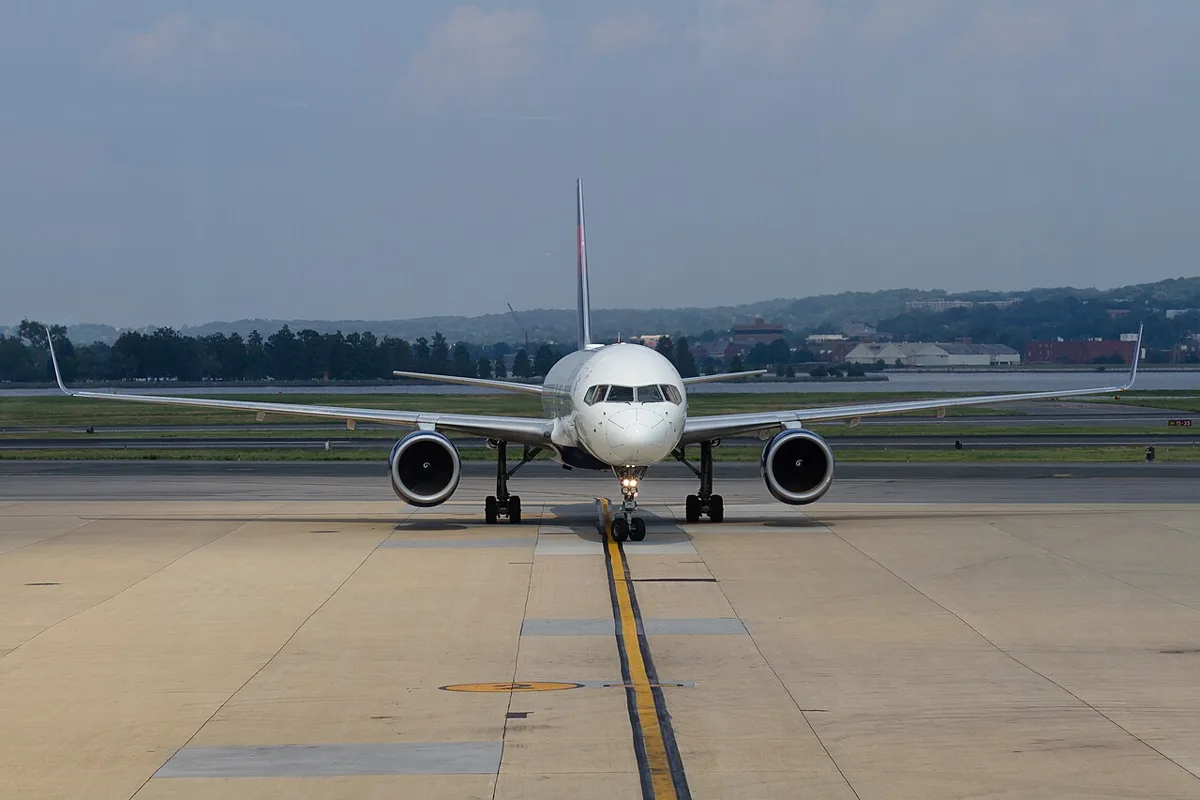
A commercial passenger jet was struck by a fireworks mortar while descending into Chicago Midway Airport on the Fourth of July, and somehow that sentence is completely real. Delta Flight 1076, carrying 52 passengers and six crew members, was on final approach from Atlanta when a firework hit the aircraft. The FAA confirmed it. The FBI is now involved. Happy Independence Day, everyone.
What Actually Happened Over Chicago at 8:30 PM
According to CBS News, the FAA confirmed that around 8:30 p.m. on July 4th, the pilot of Delta Flight 1076 reported that a fireworks mortar struck the Airbus A319 while the plane was on descent, just before landing at Midway International Airport. The flight had originated at Hartsfield-Jackson Atlanta International Airport.
Air traffic control audio captured the flight crew describing a 'big bang,' with the pilots expressing hope that it was just a mortar that went off underneath the plane rather than something worse. Chicago police were notified. The aircraft landed safely, taxied to the gate, and no one aboard was injured.
Chicago police told CBS News that the firework caused minor paint damage. Delta said the plane was under evaluation the following day to confirm the full extent of any structural harm. The airline confirmed the passenger and crew count, and Chicago police referred further questions to the FBI.
The Neighborhood Right Next to the Runway
Midway is not LaGuardia, where at least the surrounding area is mostly industrial sprawl and parking lots. Midway sits in a densely packed residential neighborhood on Chicago's southwest side, with homes literally bordering the airport perimeter. CBS News spoke to Christina Bernabe, a resident who has lived near Midway for over 20 years, who described the fireworks activity near 63rd and Central Avenue on the night of the Fourth as relentless.
'Maybe at least 20 per minute I would say, at least,' Bernabe told CBS News. She said she was stunned to learn one of those fireworks had actually struck a landing aircraft.
That context matters. This was not some isolated rogue firework launched from a field. This was the predictable, foreseeable outcome of launching high-altitude commercial-grade mortar fireworks directly adjacent to an active airport approach path, on the single busiest fireworks night of the entire year.
How Bad Could It Have Been
DePaul University transportation and aviation expert Joe Schwieterman told CBS News he has spent his entire career watching aviation and has never seen anything like this. 'I've been watching aviation my whole life and have seen about everything from different kinds of birds to projectiles, but never a firework,' he said.
Schwieterman pointed out that Midway is already a notoriously difficult airport to fly into. Short runways, dense surrounding traffic, and the tightly packed neighborhood configuration make every approach demanding. Layering a fireworks strike on top of that is not a small deal.
The expert specifically raised the engine ingestion scenario to CBS News. 'Perhaps a firecracker goes off right at the intake of the jet engine. That could cause something and combine that with another factor like a wind shear or an unexpected weather pattern,' Schwieterman said. A Jet engine ingesting debris mid-approach, combined with crosswind or microbursts, is the kind of compounding failure chain that fills the NTSB's case archive. This one got lucky. The plane landed. Everyone walked off.
The FBI Is Now on This, Which Tells You Something
Chicago police confirmed the incident to CBS News, noted the paint damage, and then did something telling: they referred further questions to the FBI. That is not what happens when someone sets off a bottle rocket in a cul-de-sac.
Federal jurisdiction over aviation incidents means this is now a potential federal crime investigation. Schwieterman noted to CBS News that the person who fired the mortar could face citations from police, which is one of the more spectacular understatements possible. Firing a commercial-grade mortar that strikes a commercial airliner is not a citation situation. The FAA takes interference with aircraft with extraordinary seriousness, and the FBI's involvement suggests the same calculus is already in motion.
As of the CBS News report on July 6th, no arrests had been announced and no suspect had been publicly identified.
This Has Almost Certainly Happened Before, Quietly
Here is the part of this story that should bother people more than it probably will. Schwieterman told CBS News this is something he has never heard of happening. An aviation expert who has spent his career on this stuff, had never encountered a fireworks strike on a commercial aircraft.
But consider how many urban airports sit inside or immediately adjacent to residential neighborhoods. Consider how many of those neighborhoods launch fireworks every Fourth of July, often with professional-grade mortars bought at roadside tents. Consider how many flights are in the air over American cities on the night of July 4th. The question is not how this happened. The question is why we do not hear about it more often, and whether the answer to that question is 'it doesn't happen' or 'it happens and the plane lands fine and no one reports it.'
The FAA requires pilots to report airspace hazards and near-miss incidents. Not every pilot files every report on every minor strike, especially when the plane lands uneventfully. We may be looking at the visible surface of something considerably larger.
The Dingo Take
Let's be clear about what happened here. A passenger jet with 58 human beings aboard was hit by a firework fired from a residential neighborhood while the plane was on final approach to a major American airport. That is not a near-miss. That is a direct hit. The only reason this is a 'minor paint damage' story and not a catastrophic accident investigation is luck, pilot skill, and the specific trajectory of one mortar on one night.
The FBI is involved, which means someone out there who thought they were just doing a big backyard show now has a federal problem. Good. The FAA classifies shining a laser pointer at a cockpit as a federal crime with serious prison time attached, because interfering with an aircraft on approach is one of the most dangerous things a civilian can do. Firing an actual explosive projectile at one should be treated with at least equivalent seriousness. We will see whether it is.
Christina Bernabe, who has lived next to Midway for 20 years, told CBS News she was grateful everyone was safe and found it 'a bit frightening.' A bit frightening is one way to put it. Another way to put it is: we built a major international airport in the middle of a dense city, we allow the unrestricted sale of commercial-grade fireworks to anyone with cash, we schedule peak air traffic on the one night a year every amateur in America is launching explosives into the sky, and then we act surprised when the Venn diagram overlaps. This was not an accident waiting to happen. This was arithmetic.




Comments