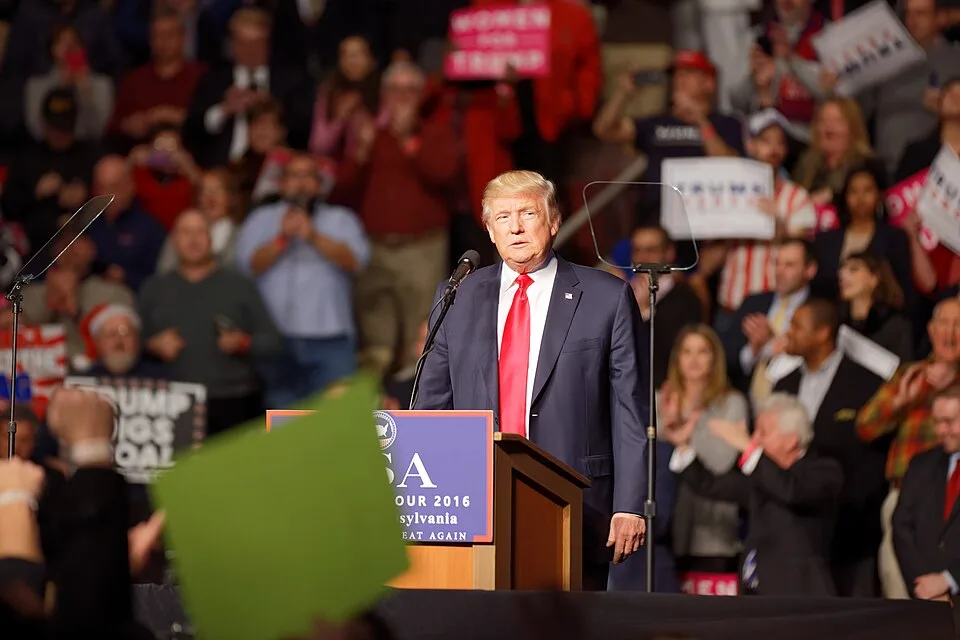
At some point past midnight on July 5th, 2026, the President of the United States stood on the National Mall in Washington, D.C., soaking wet in the aftermath of a thunderstorm, and delivered a 37-minute speech about American greatness to roughly 150,000 people who had decided, for whatever reason, not to go home. The occasion was America's 250th birthday. The vibe was, apparently, victory or death.
What Actually Happened Out There
According to Fox News, the Salute to America 250 celebration had originally drawn an estimated 375,000 people to the National Mall. Then a thunderstorm showed up with its own opinion about the evening's schedule. Lightning cleared most of the crowd. Around 225,000 people looked at the sky, made a reasonable adult decision, and left.
The 150,000 who stayed were rewarded with a Guinness world-record-setting fireworks display that ran 38 minutes, immediately followed by 37 minutes of Donald Trump. Whether that sequencing was a reward or a test of endurance is a matter of personal philosophy.
Trump acknowledged the chaos directly, in what Fox News described as an unscripted moment. 'If you think that was easy, it wasn't,' he told the crowd. He also floated the possibility that he would have given this speech in front of one person at 4 in the morning if it came to that. Given everything we know about this man, nobody doubted him.
The Speech Itself, Ranked by Ambition
The content of Trump's address covered approximately the full scope of human history and then several things beyond it. Fox News recapped the highlights, and they are something.
Trump declared that 'no dream in history is bigger or more incredible' than the American experiment. He told the crowd that America 'defeated tyrants, demolished evil, and saved freedom again and again and again.' He described the Founders as having 'seized a victory for the ages' and called the Constitution 'the most righteous political document ever conceived.' He praised the 56 signers of the Declaration of Independence as patriots who 'put everything at risk' and 'stepped onto the stage of destiny.' All of that is, broadly speaking, within the normal parameters of a Fourth of July presidential address.
Then he announced America is going to Mars. 'We're going to be going to Mars very soon,' Trump said, in what Fox News noted was a callback to JFK's moon speech. He clarified that America would do the moon first and then proceed from there. A logical itinerary. The crowd, at midnight, after a thunderstorm, apparently received this well.
The Part About Winners
A significant portion of the speech was dedicated to the theme of winning. 'America is a nation of winners,' Trump said, 'and today our country is winning again, and we're winning like never before.' He did not specify the metric by which this winning is being measured, but the declarative confidence was firm.
He also told the crowd 'there is no challenge Americans cannot overcome,' 'there is no place we cannot go,' 'there is no goal we cannot reach,' and 'there is nothing that Americans cannot do.' This was, by Fox News's account, delivered just before his concluding remarks, which suggests it functioned as the emotional crescendo. The phrasing has the structural rhythm of a Little League coach, but the setting was the Washington Monument in the middle of the night, so context is everything.
The Crowd: Wet, Loyal, and Still There
Let's take a moment for the 150,000 people who stayed. They sat through an actual lightning storm. They watched 225,000 of their fellow Americans correctly identify the exit and use it. They remained anyway. Then they got fireworks, and then they got the president of the United States thanking them personally for not leaving.
'You're very special people, and we have a very special country,' Trump told them. That's a line that sounds like it belongs on a refrigerator magnet, but at 1am after a thunderstorm on the National Mall, it probably landed differently. To be fair, anyone still standing in that field at that hour has earned the right to feel special about it.
The Part Where He Mentioned Communism
Fox News's recap includes a reference to Trump addressing the defeat of communism, quoting him saying America 'cast the hammer and sickle into oblivion.' The article cuts off mid-sentence before giving the full context, which is either an editing oversight or the most accidentally perfect metaphor for how American political memory works.
The hammer and sickle line fits snugly into the broader rhetorical structure of the speech, which treated the arc of American history as a series of enemies defeated, challenges overcome, and peaks ascended. There was no nuance here about complexity or ongoing work. The framing was: we won, we are winning, we will win, see also Mars.
The Fireworks, For What It's Worth
The fireworks display did break a Guinness World Record, according to Fox News. Thirty-eight minutes of fireworks over the Washington Monument, the largest display in world history. That is a real thing that happened and it is genuinely impressive as a logistical feat regardless of your feelings about the man who commissioned it.
Trump described the lightning-delayed evening as 'bigger' and 'more beautiful' than it would have been without the weather interference. 'In its own way it's more beautiful,' he said. This is a very specific psychological maneuver where every setback becomes evidence of destiny. By that logic, getting rained on makes you more historic. Some people find this inspirational. Others find it exhausting. Most people, apparently, found it worth showing up for, even at midnight, even wet.
The Dingo Take
Here's the thing about this speech. Strip away the context and just read the transcript cold: a president standing before a crowd at midnight, after a storm chased off two-thirds of the audience, telling the remaining people that they are special and their country is the greatest force for good in human history and also they're going to Mars. That is, objectively, an unhinged situation. It is also, somehow, completely on brand for every single element involved.
The speech was everything Trump speeches always are: maximalist, self-referential, light on specifics, heavy on victory. 'America is a nation of winners' is not a policy. 'We will always be the best' is not a governing philosophy. Promising Mars to a thunderstorm-soaked crowd at 1am is not a space program. But none of that is really the point with these events, and everyone who attends knows it. The point is the spectacle, the feeling, the record-breaking fireworks and the president in the dark telling you that you're special for staying.
The 150,000 people who didn't leave got exactly what they came for. The 225,000 who did leave made a perfectly reasonable choice and probably slept better. America contains multitudes. Happy 250th birthday to this exhausting, fascinating, record-breaking disaster of a country. We're going to Mars, apparently. Sure. Why not.




Comments