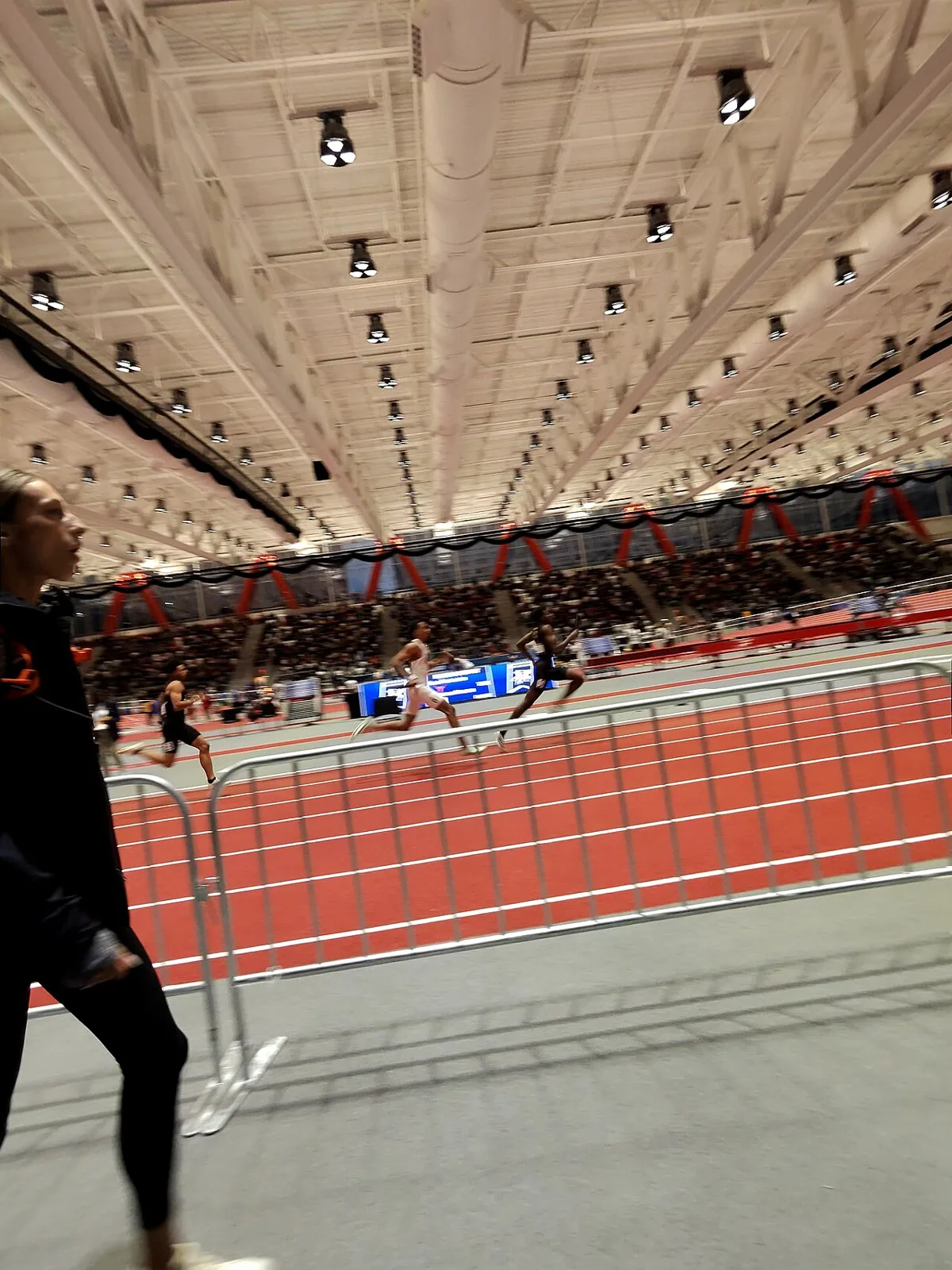
There are roughly 500,000 student athletes competing under the NCAA banner. According to the NCAA's own president, exactly ten of them were transgender. Ten. And the entire apparatus of American collegiate sports, the federal government, and now the Supreme Court of the United States has spent years contorting itself around those ten kids.
Baker Says Nothing To See Here
NCAA president Charlie Baker sat down with CBS News' Face the Nation on Sunday and delivered the sports administration equivalent of a shrug emoji. His organization does not anticipate changing its rules on transgender athlete participation following the Supreme Court's June 30 ruling. Everything is fine. Policy is working. Please enjoy your weekend.
Baker, the former Republican governor of Massachusetts, reminded viewers that the NCAA had already effectively banned transgender women from women's sports back in January 2025, in direct response to an executive order signed by Donald Trump at the start of his second term. So the Supreme Court ruling, as far as Baker is concerned, is largely moot for the NCAA. They got there first. Gold star for compliance.
"We needed some sort of clarity around what the national standard for this would be, and we adopted and comply with the standard that was put forth by the administration," Baker told CBS senior political correspondent Ed O'Keefe. That's a remarkably sanitized way of describing a civil rights rollback, but sure. Clarity. Great word. Love clarity.
What The Supreme Court Actually Did
The ruling Baker was nodding to came down 6-3 on June 30, with the three liberal justices dissenting. The Guardian reports the majority decided that state laws banning transgender girls and women from competing in female sports do not violate Title IX, the federal civil rights law prohibiting sex-based discrimination in education. That's a significant reinterpretation of a law that has been the foundation of women's athletics in America for over fifty years.
The case involved two trans students, one in college and one in high school, who had sued after being excluded from competition in West Virginia and Idaho. Both lost. The ruling overturned lower court decisions that had gone in their favor, and it handed the Trump administration one of its cleaner legal victories of the second term, on an issue Trump had explicitly campaigned on under the banner of "men in women's sports."
The practical fallout extends well beyond West Virginia and Idaho. As The Guardian notes, similar bans already exist in at least 25 other states, and those states will almost certainly read this decision as a judicial thumbs-up. What happens in states like California and Connecticut, where legal challenges to such bans are still working through the courts, is murkier. The ruling doesn't automatically kill those challenges, but it makes the road considerably steeper.
Ten Kids. Half A Million. Do The Math.
During the interview, O'Keefe reminded Baker of testimony Baker himself gave to Congress in 2024, in which he said he was aware of only ten transgender athletes competing across all of NCAA sports out of more than 500,000 student athletes total. Baker didn't dispute the number on Sunday.
Sit with that for a second. Ten people. Two hundredths of one percent of the student athlete population. This is the crisis that required executive orders, Supreme Court intervention, congressional hearings, and a complete rewrite of how collegiate sports handles inclusion. Ten kids who wanted to play sports.
O'Keefe asked Baker where this issue ranked among the critical challenges facing the NCAA. Baker's answer was notably careful: "I can tell you that having talked to people on both sides of this issue, to those who are involved in it, it matters a lot." Which is technically true of almost any policy that affects real human beings, and also says absolutely nothing.
The Riley Gaines Industrial Complex
No article about the NCAA trans athlete debate would be complete without addressing how this became a culture war centerpiece in the first place. The Guardian points to Riley Gaines, the former collegiate swimmer who became the movement's most visible spokesperson after swimming against Lia Thomas at the 2022 NCAA championships.
Here is the full extent of what happened at that meet: Gaines and Thomas tied for fifth place. Fifth. Gaines has since built a prominent rightwing media career on that tie. Thomas, meanwhile, has largely disappeared from public life under the weight of years of coordinated harassment. One of them got a media platform and a spot on conservative speaking circuits. The other got driven out of her sport.
The asymmetry there is not subtle.
Baker's Comfortable With It All
When O'Keefe pressed Baker directly on whether the NCAA's current policy makes the organization inclusive enough, Baker's answer was disarmingly breezy. "Yeah, I do. I don't have a problem with the way that policy currently operates. And frankly, I don't think many of our schools do either."
That "frankly" is doing a lot of work. Baker is a former moderate Republican governor who spent years positioning himself as a reasonable, above-the-fray institutionalist. He's now running a major collegiate sports organization that enacted a blanket exclusion policy the moment a Trump executive order gave him political cover to do so, and he's describing that policy as one he has no problem with.
For the ten athletes affected, and for every trans kid watching, the message is clear enough. The NCAA decided the path of least resistance runs straight through them, and Charlie Baker would very much like to stop being asked about it.
The Dingo Take
Here is the thing about the "clarity" Baker says he was looking for: the original NCAA policy, before January 2025, already required trans women athletes to demonstrate suppressed testosterone levels for a year before competing in women's sports. It was not a free-for-all. It was a medically supervised eligibility process. The "clarity" Baker got was permission to skip all that and just say no. Those are different things, and dressing up capitulation as administrative tidiness doesn't make it something else.
The Supreme Court ruling is the part that should be keeping people up at night. A 6-3 decision written by a court remade in Donald Trump's image has now established that excluding transgender people from public life, at least in the context of school sports, does not constitute discrimination under federal civil rights law. That logic does not stay in locker rooms. The same framework that clears a state to ban a trans girl from the track meet is available to people who want to push further, and they will.
Ten athletes. We did all of this for ten athletes, except of course we did not do it for them at all. We did it to them. Charlie Baker is comfortable with that. The Supreme Court's majority is comfortable with that. Whether the rest of the country stays comfortable with it is the only question left worth asking.




Comments