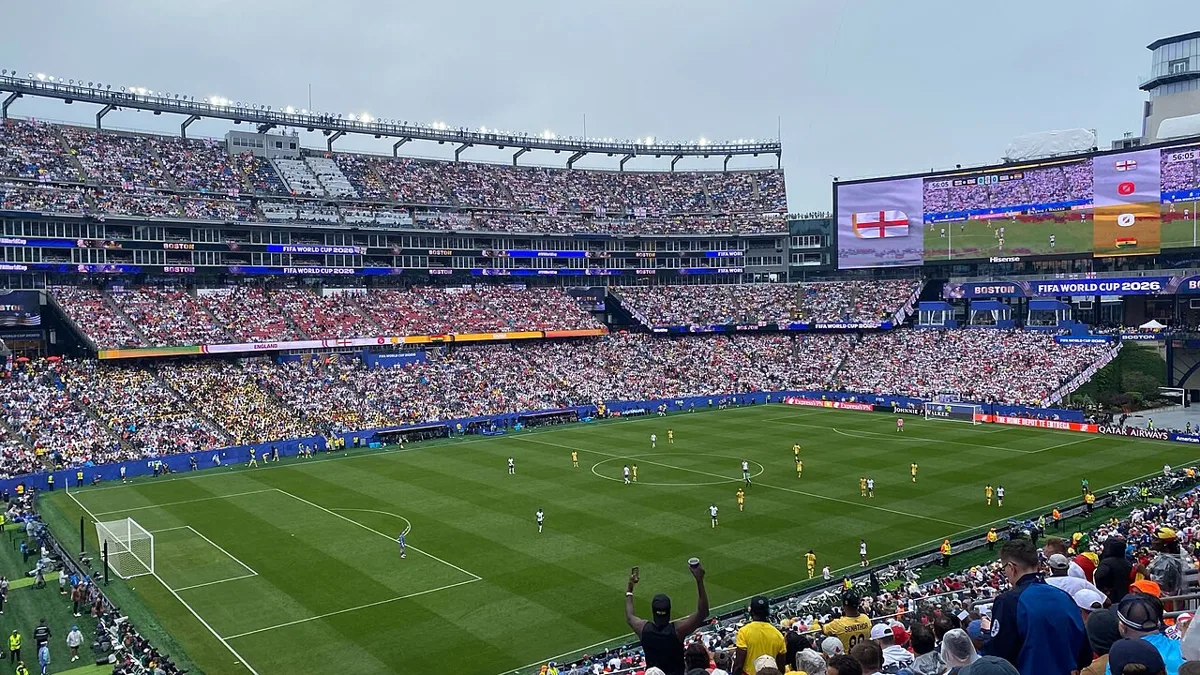
America is falling in love with soccer, attendance records are being shattered, millions of people who couldn't have named a single USMNT player two weeks ago are now furious about offside calls — and somewhere in the middle of all this beautiful chaos, Donald Trump personally called FIFA to get a red card overturned. Sure. Fine. This is fine.
The Numbers Are Actually Insane
Let's start with the facts, because they're genuinely staggering. According to BBC News, FIFA announced that fan attendance at the 2026 World Cup exceeded 3.6 million in just the first two weeks of play, breaking the record of 3.58 million set the last time the US hosted the tournament, back in 1994. An average of 18 million American viewers tuned in to the USMNT's opener against Paraguay across Fox's platforms. Another 7 million watched on Telemundo.
To put that in context, those are numbers that put the tournament on par with the NBA Finals and the World Series of baseball. Those aren't fringe sports in America. Those are the sports. The ones with their own holidays and their own themed chips at the grocery store.
Pop-up merchandise shops are packed. Fan zones are spread across parks, shopping centers and museums. Viewing parties are erupting at restaurants from LA to New York. The BBC reports that die-hard fans told reporters they believed this World Cup was a genuine tipping point for the sport in the country, win or lose.
From Eight-Year-Olds to Superfans in Two Weeks
One of the more quietly remarkable things happening right now is the sheer breadth of who is getting swept up in this. The BBC spoke to Keenah Pacheco, a 16-year-old who showed up to an LA fan zone and admitted she hadn't played soccer since she was eight. Watching this tournament, she said, made her want to pick it up again. That's not a talking point. That's how sports actually grow.
Steve Salcedo, a lifelong fan who has been cheering for both the US and Mexico this tournament, told the BBC his son and son's friends had embraced soccer more than his own generation did. Documentary filmmaker Erik Olsen, watching in line for a burrito in downtown LA before the USA-Turkey match, called the whole thing a unifying experience — noting that fans of other nations were mixing in with American fans, creating something that felt genuinely communal.
Given that this country currently can't agree on whether water is wet, watching thousands of Americans in star-spangled jerseys cheering alongside Mexican and Argentine fans is, genuinely, a small miracle.
Soccer's Actual Path Into American Culture
The growth of soccer in the US isn't some mystery. It's been happening steadily for years, mostly through kids. Steve Bank, a sports law expert at UCLA School of Law, told the BBC that soccer has picked up precisely where American football as a youth sport has declined. Parents worried about concussions have been steering their kids away from the gridiron for over a decade now, and those kids have landed on soccer fields instead.
Jeff Schneider, executive director of the Center for Sports, Entertainment, Media and Technology Law at USC, puts it more bluntly: soccer has gone from the fringes to being "mainstream in the sense that there is a strong minority group of people that love it." He's skeptical it'll ever rival American football or basketball at the cultural level, arguing those sports are too deeply embedded, having grown up in an era before media saturation and passive consumption took over leisure time. But he concedes the foothold is real and growing.
Women's soccer, it's worth remembering, has long outpaced the men's game in the US. The USWNT is a genuine global powerhouse and has historically occupied a higher spot in the American sporting consciousness than the men's team. What this World Cup is doing, with the lion's share of games on US soil, is finally giving the men's game an equivalent moment of national attention.
And Then There Was the Phone Call
Okay. Here we go. The US Men's National Team is preparing to face Belgium in a quarterfinal match after a tournament run that has been shadowed by one very specific and very weird controversy: the red card given to striker Folarin Balogun was rescinded. After a phone call between Donald Trump and FIFA President Gianni Infantino. Yes, that's what happened.
Trump, who the BBC reports has not actually attended any matches, has nonetheless called the record attendance numbers "a great tribute to the United States." Infantino, who is currently letting the sitting US president phone in to discuss officiating decisions, has declared the whole tournament the "most successful event in history." These two are clearly working well together.
The scrutiny on the USMNT's performance has only intensified because of that call. Every goal, every call, every result now carries an asterisk-shaped shadow. Which is a shame, because the actual story of this tournament is genuinely good.
The Dingo Take
Here's the thing about this moment: it's real. The crowds are real. The ratings are real. Teenagers who gave up soccer at age eight are picking it up again. Families who usually ignore the sport are gathering around TVs and losing their minds over corner kicks. The 2026 World Cup is doing something genuine for American soccer culture, and it didn't need any help from anyone.
Which makes the Trump angle so predictably irritating. The man skips every match, picks up a phone to pressure FIFA on a red card ruling, and then takes credit for the attendance records. This is the guy who showed up after the party, knocked over the punch bowl, and is now telling everyone he organized the event. FIFA, for its part, handed Infantino the title of "most successful event in history" while literally taking calls from a head of state about referee decisions. The corruption isn't even subtle. It's just standing there in a polo shirt.
If the USMNT beats Belgium and goes deep in this tournament, soccer in America gets a real, lasting boost. That would be a good thing. A genuinely good thing that regular people did, by showing up, buying jerseys, and dragging their kids to fan zones at museums on a Tuesday. Trump will absolutely take credit for all of it. The sport will grow anyway. That's probably the best outcome available to us right now.



Comments