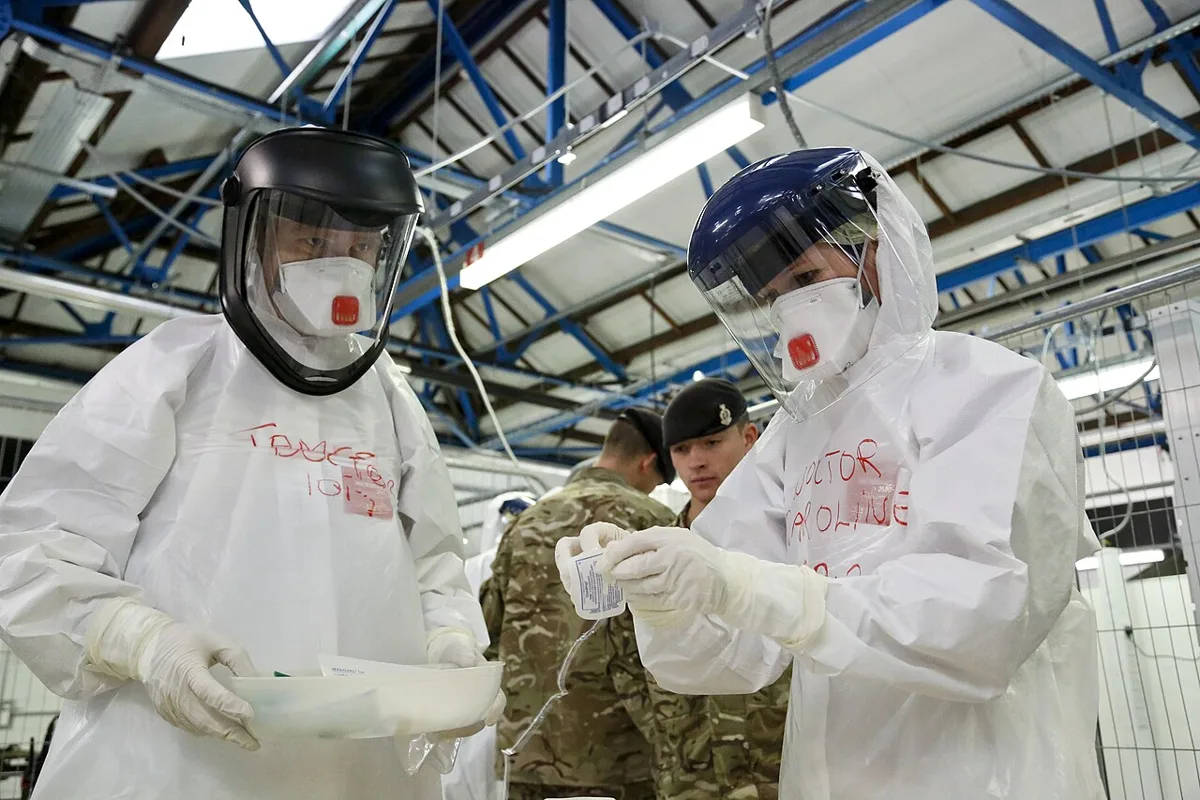
There is an Ebola outbreak that has already killed more than 500 people and sickened over 1,560, it has been raging for over 50 days, and until last week there were zero treatments being tested against the specific strain causing it. Not because science failed. Because this particular strain of Ebola mostly kills poor people in central Africa, which meant the world largely looked the other way until the body count got embarrassing enough to act.
The Strain Nobody Prepared For
Here is what you need to know about the Bundibugyo strain of Ebola. It is rarer than the Zaire strain that caused the famous outbreaks you remember from the news cycles. And because it is rarer, almost no specialized research has been done on it. No targeted treatments. No drugs to give people after exposure before they get sick. Nothing.
As NPR reports, clinicians on the ground in the Democratic Republic of Congo and Uganda are trying to save dying patients with essentially their hands tied. "We urgently need treatments that can help people affected by Bundibugyo virus disease," Dr. Amanda Rojek, a physician scientist at the University of Oxford, told NPR. That is a quote from someone with a medical degree who is watching people die of a disease that the scientific community mostly ignored because it was inconvenient to study.
The outbreak was declared more than 50 days ago. Think about that number. Fifty days. Some people reading this have been on the same Netflix show for longer than this outbreak has been officially recognized, and the global response is only now getting its act together.
Trials Are Running, Finally
Last Thursday, the World Health Organization announced that the first patients were enrolled in a clinical trial testing two drugs against Bundibugyo. The drugs are remdesivir, the antiviral made by Gilead Sciences that you might remember from its controversial starring role in COVID-19 treatment, and MBP-134, a monoclonal antibody developed by Mapp Biopharmaceutical. Both are delivered intravenously, both were originally developed or studied in the context of different Ebola strains, and neither was designed specifically for this outbreak.
That last part is important. As NPR explains, the researchers are repurposing existing medicines because starting from scratch takes years. "To start from scratch takes years," Dr. Salim Abdool Karim, director of the Centre for the AIDS Programme of Research in South Africa, told NPR bluntly. "So we take existing medicines and see whether they can be repurposed." It is the scientific equivalent of raiding the medicine cabinet because you forgot to go to the pharmacy.
A third trial, slated to begin this week, will test whether obeldesivir pills, also from Gilead Sciences, can prevent close contacts of Ebola patients from contracting the disease at all. Contact tracers identify exposed individuals, researchers show up twice a day to deliver the drug, and everyone holds their breath. It is a smart approach. It is also something that could have been planned years ago.
BARDA's Role, and the Awkward Politics of It
Here is a detail worth slowing down for. The U.S. government's Biomedical Advanced Research and Development Authority, known as BARDA, played a major role in funding research behind MBP-134 and technically owns the doses being used in the clinical trial. The government has donated those doses for the trial, according to WHO's research and development lead Vasee Moorthy.
BARDA is an agency inside the Department of Health and Human Services. The same department that the current administration has been systematically gutting. The same administration that has treated global health funding as a line item to slash while celebrating American withdrawal from international institutions. The doses exist because of prior investment. What happens to the next outbreak's doses is a question nobody in power seems eager to answer.
Don't Hold Your Breath for Quick Results
Even with trials underway, do not expect a fast resolution. Moorthy was candid at last Thursday's press conference in a way that public health officials rarely are. "From what we see at the moment, this will take some time," he said. "It will take some months. It could go even into next year. It could be that we need over 1,000 patients enrolled in the trial until we get a definitive answer."
Over 1,000 patients enrolled. In a trial. For an outbreak that has already infected 1,560 people. You do not need an advanced degree in epidemiology to see the uncomfortable math there.
The silver lining, if you can call it that, is that if either treatment proves dramatically effective, the timeline shortens. But "dramatically effective" is doing heavy lifting in that sentence. Remdesivir had a rocky track record against the Zaire strain in 2018. MBP-134 has promising lab data against Bundibugyo but has not been proven in the field. This is science operating at the edge of what is known, in real time, with people's lives on the table.
No Vaccine, No Easy Exit
A vaccine would be the cleanest solution. There is no vaccine. NPR reports that it will be months before testing on vaccine candidates even begins, which means vaccines are not a near-term factor in this outbreak at all. The post-exposure prophylaxis trial with obeldesivir is partly filling that gap, trying to create a stopgap protection for people who have been exposed but have not yet developed symptoms.
Dr. Yazdan Yazdanpanah, an infectious disease physician at ANRS Emerging Infectious Diseases in France who is coordinating the prophylaxis trial, told NPR that this approach could become a powerful tool for containing the spread if it works. The trial depends heavily on contact tracing, which depends heavily on functioning public health infrastructure, which depends heavily on consistent international support. None of those things should be taken for granted right now.
Some observers are already warning this could become the largest Ebola outbreak ever recorded. NPR notes that the outbreak shows no sign of slowing. That is not a metaphor or a framing device. That is the plain situation on the ground.
The Dingo Take
The story here is not really about remdesivir or monoclonal antibodies or post-exposure prophylaxis. The story is that the Bundibugyo strain of Ebola has existed and occasionally killed people for decades, and because it was rare enough to not make Western news cycles on a regular basis, the scientific and political will to prepare for it never materialized. "One of the key lessons from recent outbreaks is that research needs to happen alongside the response, not after it," Rojek told NPR. Correct. Also: research needs to happen before the outbreak, not during it. That lesson has been available since at least 2014. We are still learning it.
The Trump administration's aggressive dismantling of global health infrastructure, USAID, and the broader architecture of international pandemic preparedness is operating in the background of every sentence of this story. BARDA's previously funded doses are showing up as donated supplies right now. Future BARDA, operating under current budget priorities, is a different institution than the one that funded this research. The bill for that will come due in some future outbreak, and it will be paid in a currency nobody wants to think about.
Five hundred people are dead. One thousand five hundred sixty people are sick. Clinical trials started last week. A disease that could have had a research head start has researchers scrambling to repurpose drugs designed for something else. This is what it looks like when preparedness fails quietly over years and then fails loudly all at once. Pay attention.



Comments