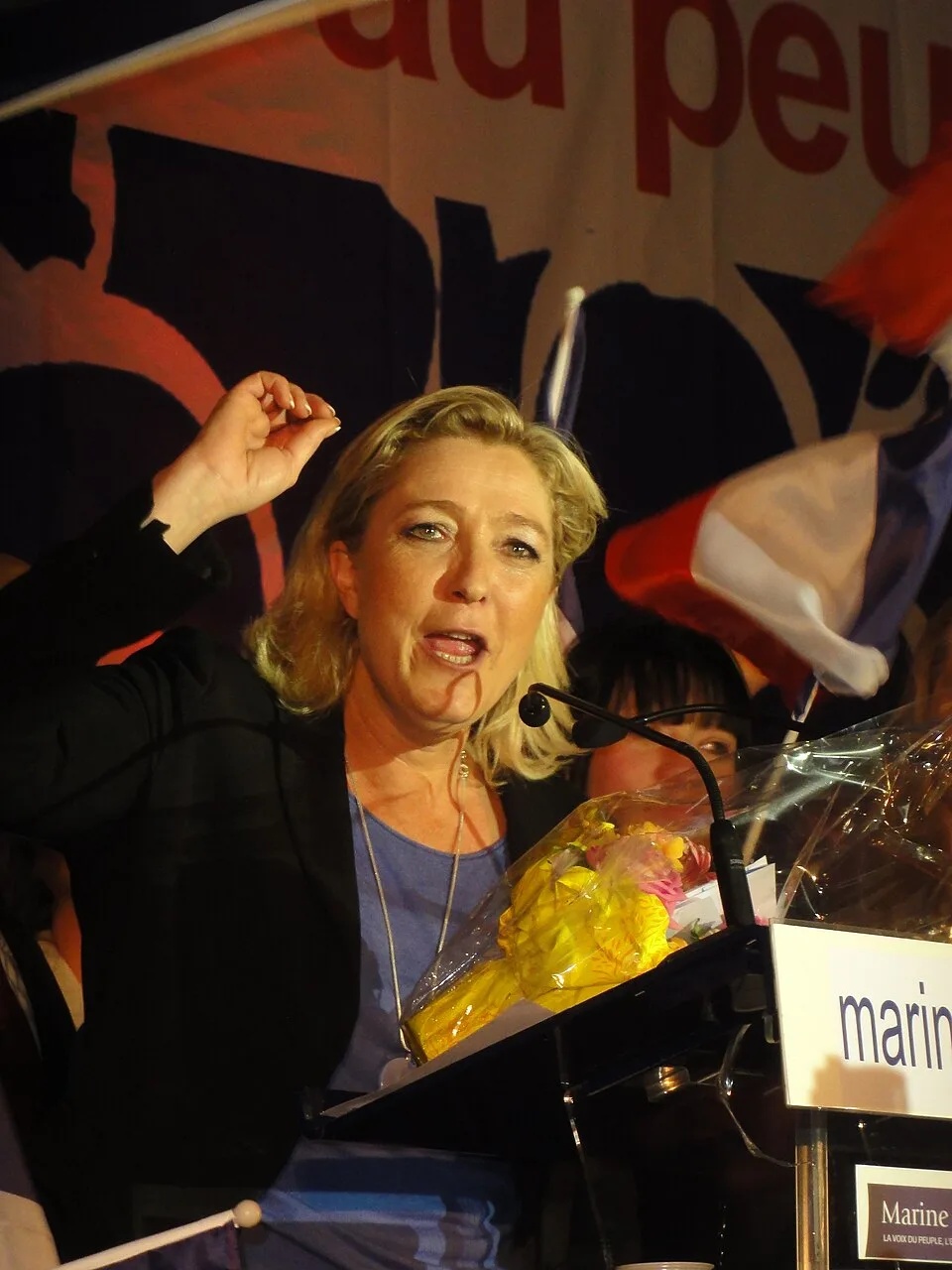
A French appeals court confirmed on Tuesday that Marine Le Pen spent over a decade overseeing the theft of $3.2 million from European Union taxpayers, slapped her with an electronic monitor, cut her office ban short enough that she can run for president anyway, and then went home. Le Pen, for her part, went straight to a television studio to announce her candidacy. Democracy, folks.
What the Court Actually Said
Let's be precise about what happened here, because the details matter. The Paris appeals court upheld guilty verdicts for Le Pen and ten other members of her National Rally party on Tuesday, confirming that the party embezzled 2.8 million euros over more than eleven years by paying party staff with funds specifically designated for European Parliament assistants. Chief judge Michele Agi said plainly: 'The facts are serious.'
According to NPR, the court cut Le Pen's original five-year ban on seeking public office down to 45 months, with two-thirds of that suspended. Since she had already served 15 months under the ban handed down by a lower court last March, the math works out perfectly: she's eligible to run again right now. The court also trimmed her prison sentence from four years to three, with two suspended. So: guilty, monitored, and cleared for takeoff.
The Ankle Bracelet She Plans to Never Wear
Here's where this gets properly surreal. The court also ordered Le Pen to wear an electronic monitoring bracelet for a year. This matters because Le Pen herself had previously said, publicly, that electronic monitoring would make it impossible to campaign. It was her stated reason for why a conviction on these terms would amount to, in her own words, 'political death.'
And then Tuesday night happened. After hours of closed-door meetings with her National Rally inner circle, including her political heir Jordan Bardella, Le Pen emerged and announced she would appeal to France's Court of Cassation, the country's highest court. That appeal, she says, will suspend the monitoring sentence while it's under review. 'I will therefore campaign without an electronic bracelet,' she told French television. 'Tonight, I am a candidate for the presidential election.'
She may be right about the legal mechanics. NPR points to the case of former French president Nicolas Sarkozy, who appealed an electronic monitoring sentence to the same court, had it suspended pending review, and only ended up wearing the bracelet after the Court of Cassation ultimately upheld his conviction. The highest court has already signaled it can rule before the April 2027 first-round vote. So Le Pen is betting that the process buys her enough time to run free and clear. It's a bold legal strategy from someone who just had her embezzlement conviction confirmed on appeal.
The Court Explicitly Thought About the Election
What makes this ruling genuinely strange is that the court wasn't pretending it wasn't doing what it was doing. In written notes explaining the verdict, the judges explicitly cited 'the voter's freedom of choice' and argued that the 15 months Le Pen had already served under the original ban was enough to repair the harm her crimes caused to public integrity.
'Disregarding this would undermine the principle of freedom to stand for election, an essential condition for the democratic expression of universal suffrage,' the court wrote. So yes, a French appeals court confirmed that a politician committed serious financial crimes against European institutions and then engineered its own sentencing calculus around not being the body that ends her presidential campaign. Whether you read that as judicial restraint or institutional cowardice probably says something about where you're sitting.
A Dynasty That Doesn't Quit
Le Pen, 57, is a veteran of three previous presidential campaigns, losing to Emmanuel Macron in the 2017 and 2022 runoffs. But the Le Pen name has been on French presidential ballots continuously since 1988, with her father Jean-Marie running four times before she took over the family business.
Jean-Marie Le Pen founded the party in 1972 under the name National Front. His legacy included associations with Nazi collaborators and multiple hate-speech convictions, including Holocaust denial. When Marine took over, she rebranded the party as National Rally in 2018 and spent years carefully distancing herself from her father's most toxic baggage, trying to make the far-right palatable to mainstream French voters. The strategy has produced dramatically better electoral results. She lost the 2022 runoff to Macron by about 17 points, a narrower gap than her 2017 loss. The 2027 race, with Macron term-limited out, is very much an open question.
She Turned the Verdict Into a Campaign Ad Before It Was Cold
Le Pen's political instincts, whatever you think of her politics, are sharp. She walked out of the courthouse and went directly to National Rally headquarters to huddle with Bardella and her senior team. Bardella had been prepped as the party's presidential candidate in the event that Le Pen couldn't run. He won't be needed, apparently.
Then she went on television and immediately tried to reframe a confirmed embezzlement conviction as proof that the system fears her. 'My hands are clean,' she said, which is a remarkable thing to say hours after an appeals court confirmed you oversaw the theft of millions in public funds. She framed the restored ability to stand for election not as judicial leniency but as vindication. Whether French voters buy that framing is the only question that matters now.
The Dingo Take
Let's just sit with this for a second. An appeals court looked at eleven-plus years of embezzlement, confirmed every guilty verdict, called the facts 'serious,' and then wrote an explicit note explaining why it was constructing a sentence that wouldn't prevent the convicted person from running for the most powerful office in the country. The court is not wrong that voters should get to make their own choices. But there's something deeply uncomfortable about an institution carefully threading the needle so it doesn't have to be the one that stops a convicted financial criminal from seeking the French presidency. That's a lot of deference to democratic process from people who just confirmed democracy's funds got stolen.
The comparison to Sarkozy is telling in ways the court probably didn't intend. Sarkozy was convicted, appealed, ran out the clock, and eventually ended up wearing the bracelet anyway after the Court of Cassation upheld his conviction. That's the track Le Pen is now on. The question is whether 'eventually' arrives before or after April 2027. Her entire candidacy is a bet that French courts move slowly enough that she gets to the ballot before justice catches up.
And if she wins? She'd be a head of state with an unresolved criminal conviction working its way through the highest court in her own country. France has seen a lot in its political history. A convicted embezzler running the Elysee Palace while her ankle bracelet appeal is pending would be genuinely new territory. 'My hands are clean,' she says. The receipts say otherwise, but apparently that's for the voters to sort out now.




Comments