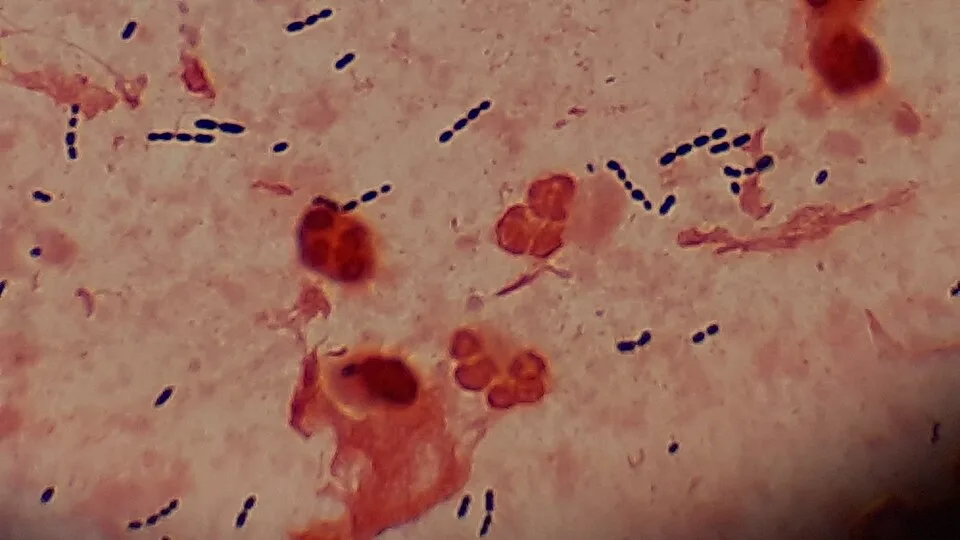
A microscopic parasite that causes "frequent and sometimes explosive" diarrhea has spread across more than half of all US states, and health officials still have no idea what food is causing it. Over 1,500 Americans are sick, Michigan just reported more than 1,000 cases in a single two-week window, and the CDC is openly telling the public to expect the numbers to keep climbing. Great summer, everyone.
What Is This Thing and How Bad Is It
The culprit is cyclospora cayetanensis, a microscopic parasite that causes cyclosporiasis, an intestinal infection that the CDC describes with the delightful phrase "explosive bowel movements." You eat it, you don't know for about a week, and then your bathroom becomes a crime scene. If untreated, the illness can drag on from a few days to over a month, with symptoms vanishing and then cruelly returning for an encore.
According to the BBC, 843 cases were confirmed by the CDC between May 1 and July 9, but the agency simultaneously acknowledged awareness of more than 1,500 cases still requiring analysis. That gap is not reassuring. The CDC also notes that the real number is almost certainly higher still, because plenty of people get sick, recover at home, and never get tested. So the true scale of this outbreak is, at this moment, genuinely unknown.
Eighty-six people have been hospitalized. No deaths have been reported. The illness is not usually life-threatening, which is worth saying plainly, but "not life-threatening" and "fine" are very different things when you are a sick person who cannot leave their bathroom.
Michigan Is Getting Absolutely Hammered
While the outbreak now covers 31 states, Michigan is the clear epicenter. The state reported more than 1,000 diagnosed cases in just a two-week period, according to the BBC, which is a staggering concentration for a parasite that public health officials are still scrambling to trace back to a source.
New York is second-worst, with nearly 300 cases reported as of July 8. Ohio has logged 177. Illinois reported 141 cases on July 7, with state officials calling it a "higher-than-average" figure, which is one of those bureaucratic understatements that does a lot of heavy lifting.
Michigan's health department has responded by issuing guidance to restaurants and kitchens: wash your greens thoroughly, cook raspberries and leafy greens when you can, and peel the outer layers off lettuce and green onions. It is a reasonable set of instructions that also doubles as a preview of the investigation's working theory, even before officials have formally named any food as the source.
They Still Don't Know Where It's Coming From
Here is the part that should make you put down whatever salad you are currently eating. As of this writing, no specific produce item, grower, or supplier has been identified as the source of the outbreak. The CDC confirmed that those who got sick "became sick after eating food in the United States" and had not traveled internationally in the two weeks before symptoms appeared, which rules out a foreign trip as the explanation but does not narrow things down much further.
Dr. Caitlin Rivers of the Johns Hopkins Center for Health Security explained in a newsletter on July 8 that transmission is exclusively through ingesting contaminated food or water, with no person-to-person spread. The parasite cannot jump from a sick person to a healthy one through casual contact. You have to eat it. That makes identifying the source critical, and it also makes the current lack of an answer genuinely alarming for anyone who has eaten fresh produce recently, which is most people.
Past cyclospora outbreaks in the US and Canada have been linked to bagged salad mixes, fresh cilantro, fresh basil, raspberries, snow peas, and green onions, the BBC reports. Rivers noted that contamination typically happens at the farm or irrigation level, which is exactly what makes traceback investigations so difficult. You are not looking for one bad actor in one kitchen. You are looking for one contaminated water source somewhere upstream in a supply chain that spans the continent.
What You Can Actually Do About This
The guidance from health officials lands somewhere between "helpful" and "maddening." The FDA says rinsing produce is unlikely to actually remove the parasite effectively. The CDC still recommends rinsing anyway. So the official federal position is essentially: wash your vegetables with the understanding that washing probably will not work, but do it regardless. This is not a knock on the CDC so much as an honest description of a situation where the tools available do not perfectly match the threat.
What officials are more emphatic about is this: if you have diarrhea right now, especially explosive and watery diarrhea, contact a healthcare provider and specifically ask them to test for cyclosporiasis. The illness is treatable with antibiotics, and early treatment matters. The problem is that many doctors do not automatically test for cyclospora, so you have to ask directly. The CDC's own data acknowledges that cases are undercounted precisely because people recover without ever getting a formal diagnosis.
The Dingo Take
Let's be honest about what is happening here. A parasite outbreak is spreading across 31 states during an era when the federal public health infrastructure is being deliberately dismantled. The CDC is doing its job, researchers like Caitlin Rivers are doing their jobs, state health departments are doing their jobs. But the broader context is that this administration has spent the better part of a year treating public health agencies like a budget line item to be cut rather than a firewall to be maintained. Outbreak investigations are hard enough with full resources. We are not working with full resources.
The absence of an identified source after cases have been spreading for weeks is not a failure of individual scientists. It is a reflection of how complicated food supply traceback investigations are under the best conditions, and how much harder they become when you are understaffed, underfunded, and operating inside an administration that has demonstrated contempt for the entire enterprise of government expertise. The CDC is still standing, still publishing data, still issuing guidance. That is genuinely good. But "still functioning" is a low bar for the agency we count on when something is making a thousand people in Michigan violently ill in two weeks.
Wash your produce. Cook your leafy greens if you can. Ask your doctor to test for cyclospora if you are symptomatic. And maybe, while you are sitting in the waiting room, consider what it means that we are asking the same agencies being gutted in real time to also solve an active multi-state outbreak with no identified source. That is not a hypothetical concern about future preparedness. It is the situation right now.




Comments