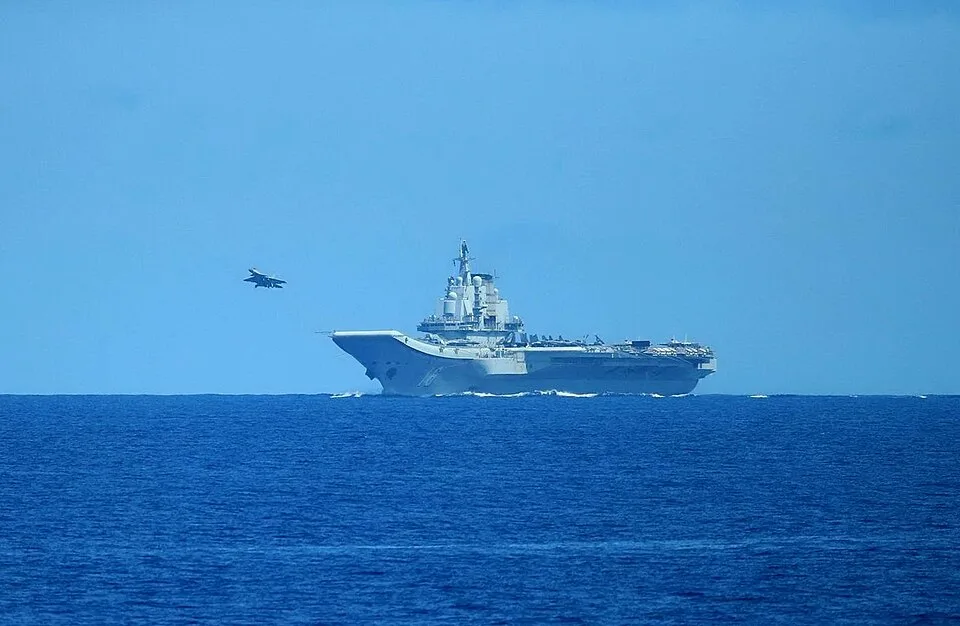
On July 6th, China launched a long-range ballistic missile from a nuclear-powered submarine, watched it travel 7,300 kilometers across the Pacific, and then basically shrugged. That was just one item on a very full two-week calendar that also included joint bomber runs with Russia, coast guard patrols east of Taiwan, and a major naval exercise that concluded with warships heading further into the Pacific. Beijing's official position is that all of this is completely normal and you should not be alarmed.
Two Weeks That Should Have Been Front Page Every Day
Let's run through the timeline, because the sheer density of it is the whole point. On June 27th, Chinese and Russian bombers flew a joint patrol over the Sea of Japan, the East China Sea, and the western Pacific, threading through the Miyako Strait near Japan's southwest islands. A few days later, Chinese and Russian naval forces kicked off Joint Sea-2026 in Qingdao, the latest in a long-running annual exercise series.
The naval drills wrapped up on July 11th, according to Chinese state media, with some participating forces heading out for a joint maritime patrol in the Pacific. Sandwiched in the middle of all that, on July 6th, came the submarine missile test. A nuclear-powered submarine fired a long-range ballistic missile carrying a simulated warhead roughly 7,300 kilometers before it splashed down in international waters in the South Pacific. China has conducted submarine-launched ballistic missile tests before, but CNA reports analysts are calling this one rare.
Meanwhile, Chinese coast guard vessels kept up operations in waters east of Taiwan, and Japan logged repeated movements of PLA Navy ships through key straits around its southwest islands. All of this, again, in under two weeks.
Not a Conspiracy. Somehow Scarier.
Here is where it gets interesting. Analysts quoted by CNA are being careful not to call this a single coordinated campaign. According to Isaac Kardon, an adjunct professor at Johns Hopkins' School of Advanced International Studies, what Beijing pulled off amounts to an "extraordinary confluence of public shows of China's military might," but the various activities were driven by different services, agencies, and planning cycles. There is no public evidence they were deliberately synchronized.
That distinction matters, but maybe not in the way you'd hope. Hao Nan, a Nuclear Futures fellow with Ploughshares Fund and Horizon 2045, told CNA the best way to read it is as "a coherent strategic direction without demonstrated operational integration." Translation: China doesn't need to be running a secret war room for all of this to add up to the same thing.
Ben Brand, founder of Iron Command, an independent defence intelligence channel, put it even more bluntly. Beijing, he told CNA, was using "an already busy annual exercise window to pack a lot of signalling into one news cycle." This wasn't a coincidence. It also wasn't a conspiracy. It was just China being very deliberate about what it chooses to do and when.
The Whole Game Is Making This Seem Normal
The strategic logic here is worth understanding, because it's genuinely clever and genuinely unsettling. According to Brand, Beijing is pushing a "normalisation of activity in waters that used to be exceptional." The goal isn't to spark a crisis. It's to make Chinese military presence across the region feel so routine that challenging it becomes politically and logistically costly.
"The objective is normalisation, not crisis," Brand told CNA. "Beijing wants its presence in these waters to become unremarkable, so the cost of challenging it rises over time." Brand describes this playing out on two separate tracks: one focused on the First Island Chain, targeting Japan, Taiwan, and the US; the other pushing into the South Pacific, directed at Australia, New Zealand, and Pacific Island nations.
Kardon added that the timing and intensity of recent activity likely reflects Beijing's intent to push back hard against what it sees as unfavorable regional trends, specifically the deepening security coordination among US allies. All of this is also happening while the US-led RIMPAC exercise, the world's largest multinational naval drill, is running near Hawaii. That part is probably not a coincidence either.
Russia Is Along for the Ride
Worth spending a moment on the Russia angle, because it keeps showing up. This is not the first China-Russia joint bomber patrol or naval exercise, and it will not be the last. China's defence ministry described Joint Sea-2026 and the follow-on Pacific patrol as part of the two militaries' annual cooperation plan, framed around jointly responding to security challenges and maintaining regional peace. Standard language.
But the optics of Russian and Chinese warships heading into the Pacific together, days after a Chinese submarine lobbed a ballistic missile 7,300 kilometers downrange, are not nothing. These are two countries that both have deep grievances with the current US-led security order, and they are increasingly willing to do their military exercises where people can see them. Whether that constitutes a formal alliance or just an extremely pointed friendship is a debate for academics. The rest of us can just look at the map.
The Dingo Take
China fired a ballistic missile from a nuclear submarine into the Pacific Ocean and the official line is that this is routine. Think about that sentence for a second. The normalisation strategy is working, at least partly, because we have gotten so accustomed to alarming Chinese military activity that a 7,300-kilometer submarine-launched missile test gets buried in a two-week highlight reel alongside coast guard patrols and joint bomber flights. That's not a sign that things are fine. That's a sign that the overton window on what counts as alarming has shifted dramatically.
The analysts CNA spoke to are doing the responsible thing by not screaming that war is imminent. They're right that these activities reflect planning cycles and annual exercises more than any single secret plot. But "coherent strategic direction" is a polite way of saying China has a clear long-term goal, is executing steadily toward it, and is doing so in a way that makes it harder and harder for anyone to draw a line and say "this is where it stops." That is exactly how you reshape a security environment without firing a shot at anyone.
The US and its allies are not sitting still, and RIMPAC running simultaneously is not irrelevant. But the uncomfortable truth is that China is doing the slow, grinding work of making its military reach feel permanent, unremarkable, and too costly to contest. By the time that process is complete, the question of whether any particular two-week stretch was coordinated or just busy will seem beside the point entirely.




Comments