
Nearly 7,000 Americans across 34 states are currently experiencing frequent, explosive, watery diarrhea from a parasitic outbreak, and public health officials cannot tell you where it's coming from. They can't tell you that partly because the infection is notoriously hard to track, and partly because Robert F. Kennedy Jr. gutted the very surveillance system that was supposed to track it. Great job, everyone.
What Is This Thing and Why Is It So Hard to Catch
The culprit is cyclosporiasis, a parasitic infection that spreads through contaminated water or food and tends to flare up during summer months. The BBC reports that Michigan has been hit hardest, with over 3,300 cases on its own, followed by New York state. Health officials have told people to wash their produce, avoid raspberries, and cook their vegetables. That's the guidance. That's what they've got.
Here's why the thing is so hard to pin down. Unlike most foodborne illnesses, where you start projectile vomiting within a few hours of eating the bad thing, cyclosporiasis takes one to two weeks to show symptoms. Jodie Guest, senior vice chair of epidemiology at Emory University's Rollins School of Public Health, told the BBC that this delay makes tracing the source enormously difficult. By the time you're sick, you've eaten approximately 14 to 21 meals since you ingested the parasite. Good luck narrowing that down.
Testing food for the parasite is its own nightmare. Steven Manderach, executive director of the Association of Food and Drug Officials, explained to the BBC that the process involves washing enormous quantities of potentially contaminated food, reducing the runoff, and then testing it. "You'd have to have truckloads of lettuce to get to that point," he said. It is, in his words, "like detecting a microscopic portion of a needle in a haystack." Not a needle. A microscopic portion of a needle.
The Surveillance System That Could Have Helped Is Gone
The federal government runs something called the Foodborne Diseases Active Surveillance Network, known as FoodNet, which was specifically designed to track pathogens like cyclospora across the country. It gathered data from people who tested positive, tested food sources from state labs, and pulled everything together at a national level so investigators could spot patterns and identify sources before outbreaks grew out of control.
FoodNet scaled back monitoring for all but two pathogens last year. Cyclosporiasis is not one of the two they kept. The CDC wrote in a memo to the state of Connecticut, obtained by NBC News, that "funding has not kept pace" with what the program needs to function. That memo is a masterpiece of bureaucratic understatement for what is, in practice, a surveillance blackout during an active outbreak.
Guest, who previously worked at FoodNet, put it plainly to the BBC. "When we see an outbreak or a cluster or something, we don't have the data we normally expect to go back to use to help us," she said. "You're starting in the dark." That is a public health epidemiologist describing the current state of America's food safety response. Starting in the dark. During an outbreak affecting nearly 7,000 people across 34 states.
Who Did This, Specifically
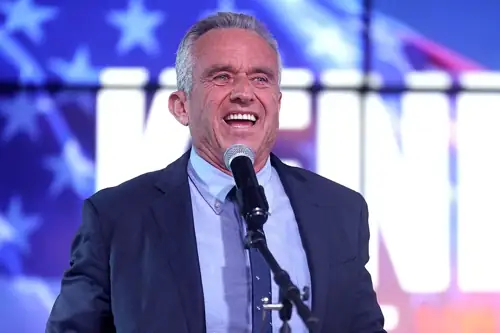
Health Secretary Robert F. Kennedy Jr. cut staff and budgets at the Department of Health and Human Services as part of Elon Musk's Department of Government Efficiency project, according to the BBC. These were not abstract bureaucratic trims. They hit the people and programs responsible for exactly this kind of outbreak investigation.
Colorado, which has had about 90 cases this year, told the BBC through a spokesperson that the state received less federal funding and now has fewer staff to monitor cases. "While our colleagues at the CDC are working hard to support state partners, we have had to adapt to federal changes," Hope Shuler, a spokesperson for Colorado's public health department, said. "Adapted to federal changes" is doing a lot of work in that sentence.
HHS told the BBC that the CDC is still working with 3,000 health departments and continues collecting cyclospora data through other surveillance systems, and that health funding for foodborne diseases has "remained stable." That claim lands a little differently when you're reading it next to a memo about funding not keeping pace and a surveillance network that stopped monitoring the pathogen currently infecting 7,000 people.
What Happens Now, Apparently
The current investigation strategy involves epidemiologists interviewing everyone who tested positive about every single thing they ate in the one to two weeks before they got sick. It's painstaking, it's resource-intensive, and it's the kind of work that smaller local health departments are not equipped to carry out at scale. David Weber, professor of medicine, pediatrics and epidemiology at the University of North Carolina at Chapel Hill, told the BBC: "It is pretty straightforward, but it takes a lot of person power to do it."
Nancy Glick of the National Consumers League told the BBC that the cuts are pushing responsibility onto states that simply don't have the capacity the CDC once had. "States are doing that now, but they don't have the resources that the CDC had," she said. So the federal government dismantled the national infrastructure and handed the burden to states already operating on tight public health budgets. Solid plan.
Meanwhile, the public health advice available to ordinary Americans is, and this is a direct quote from Jodie Guest speaking to the BBC: "At the moment, the list of things that you need to be concerned about is unfortunately quite long, making it feel really hard to control." So wash your produce, maybe skip the raspberries, and hope for the best. That's where we are.
The Dingo Take
Let's be precise about what happened here. The United States had a functioning national surveillance network for foodborne pathogens. It tracked cyclospora. It gathered data from state labs. It gave investigators the baseline they needed to move fast when outbreaks started. Then RFK Jr., operating under the DOGE mandate to slash federal spending, cut the funding and staff that kept it running. FoodNet stopped monitoring cyclospora. A cyclospora outbreak then hit 34 states and nearly 7,000 people. Investigators are now, in the words of a former FoodNet scientist, "starting in the dark." These facts are not complicated.
The HHS response that funding has "remained stable" is the kind of thing that should make you want to flip a table. Stable compared to what? Stable enough for what? Stable enough to identify the source of an ongoing multistate outbreak that has now been running long enough for Michigan to rack up 3,300 cases? The program stopped monitoring the pathogen. That's the ballgame. You don't get to claim stability on that one.
Manderach, to his credit, offered a somewhat balanced view, telling the BBC that federal food safety agencies are "largely performing to the previous standard" despite the cuts. Maybe. But 7,000 people currently have explosive diarrhea and nobody can find the source. That's not a hypothetical cost of dismantling public health infrastructure. That's the actual, real-world, happening-right-now cost. And the people responsible for the cuts are the same people who will stand at a podium and tell you they're making America healthy again.

Comments