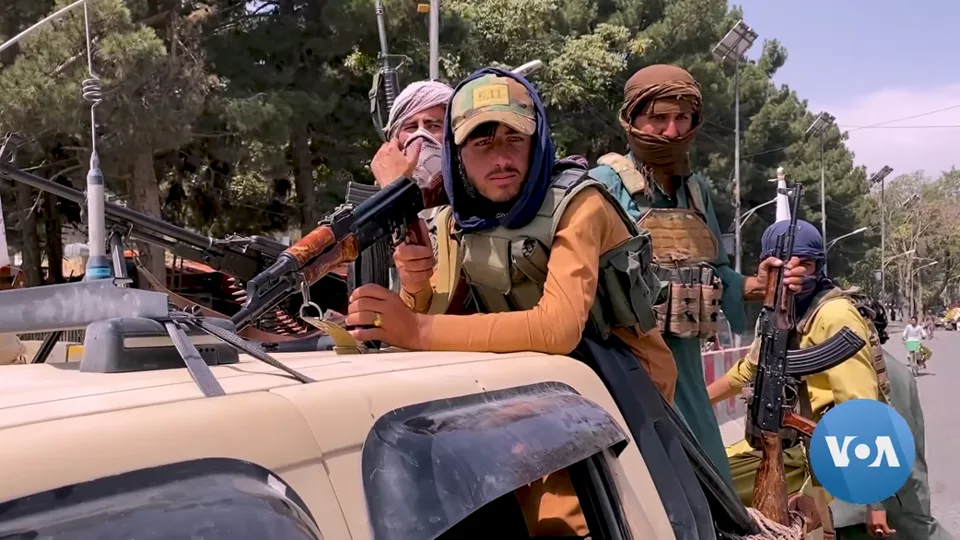
A suicide bomber rammed a vehicle packed with explosives into police officers and civilians in northwest Pakistan on Wednesday. By Friday, 24 militants were dead. That is a fast turnaround, even by the brutal math of South Asian counterterrorism.
What Actually Happened in Bannu
According to the Associated Press via NPR, Pakistani security forces conducted intelligence-driven raids on multiple militant hideouts in the country's northwest over a 24-hour period, killing 24 members of the Tehrik-e-Taliban Pakistan and Baloch separatist groups and seizing a weapons cache.
The raids came in direct response to two attacks on Wednesday. The first was a suicide car bombing that targeted police officers and civilians. The second was a strike on a police station in Bannu, a district in Khyber Pakhtunkhwa province that sits right on the Afghan border, which wounded several officers. A little-known militant group claimed that one.
Bannu is not a random place on a map. It sits in one of the most volatile corridors in the entire region, a stretch of territory where the Pakistani state has spent decades trying to assert control against groups that have no interest in letting it.
The TTP, Explained Quickly
The Pakistani Taliban, known formally as Tehrik-e-Taliban Pakistan or TTP, are not the same organization as the Afghan Taliban government currently running Kabul. They are, however, allied with them. This distinction matters enormously and gets glossed over constantly.
Pakistan's government in Islamabad regularly accuses the Afghan Taliban of looking the other way while the TTP launches cross-border attacks into Pakistani territory. Kabul denies this. The TTP then frequently turns around and claims responsibility for attacks inside Pakistan, which does not exactly help Kabul's credibility on the subject.
As the AP reports, Pakistan has carried out multiple strikes along the Afghan border since last year, all targeting what it describes as TTP hideouts. This is becoming less of an occasional tactic and more of a permanent operational posture.
Islamabad Adds India to the Mix
Here is where the regional politics get more complicated. In their statements praising the security forces on Friday, both President Asif Ali Zardari and Prime Minister Shehbaz Sharif repeated the Pakistani government's allegation that the TTP and Baloch separatist group BLA receive financial and logistical support from India. India denies this.
The allegation is a fixture of Pakistani political rhetoric, and it tends to spike whenever there is a major militant attack at home. Whether or not there is evidence behind it on any given occasion, the claim serves a domestic purpose: it frames Pakistani instability as something being done to Pakistan from outside, rather than something Pakistan is also generating internally.
That does not make the allegation false. It also does not make it automatically true. What it does make it is complicated, and complexity is not something any government in the region is particularly eager to sit with right now.
Azm-e-Istehkam and the Long Game
Pakistan's military confirmed Friday that counterterrorism operations will continue under Azm-e-Istehkam, which translates to "Resolve for Stability." The AP reports this is a nationwide campaign approved last year under the National Action Plan to dismantle militant networks across the country.
This is not Pakistan's first nationwide counterterrorism campaign. Not even close. The country has been running some version of this framework since the post-9/11 era, with varying levels of commitment, effectiveness, and political will behind it depending on who is in charge and what kind of pressure they are under.
Twenty-four militants killed in a single day of raids sounds like a decisive result. And tactically, it might be. Strategically, the Pakistani state has been fighting some version of this war for over two decades, and the border with Afghanistan remains as porous and as dangerous as it has ever been.
The Dingo Take
Look, the headline numbers are genuinely striking. Twenty-four militants killed in response to a suicide bombing within 24 hours is the kind of swift military action that governments always promise and rarely deliver. Pakistan's security forces deserve credit for the speed and apparent precision of these raids. That part is real.
But zoom out even slightly and the picture gets harder. The TTP is not shrinking. Cross-border attacks are not decreasing. The Azm-e-Istehkam campaign is the latest in a long line of campaigns with serious names and serious military muscle behind them that have, so far, not resolved the underlying problem. Every raid kills militants and seizes weapons. The weapons and militants keep coming back. At some point that pattern has to prompt a harder question about what victory is even supposed to look like here.
The most honest read of Friday's events is this: Pakistan had a very bad Wednesday and a much better Thursday night. What happens next week is still anybody's guess, and history in this part of the world is not particularly kind to optimists.



Comments