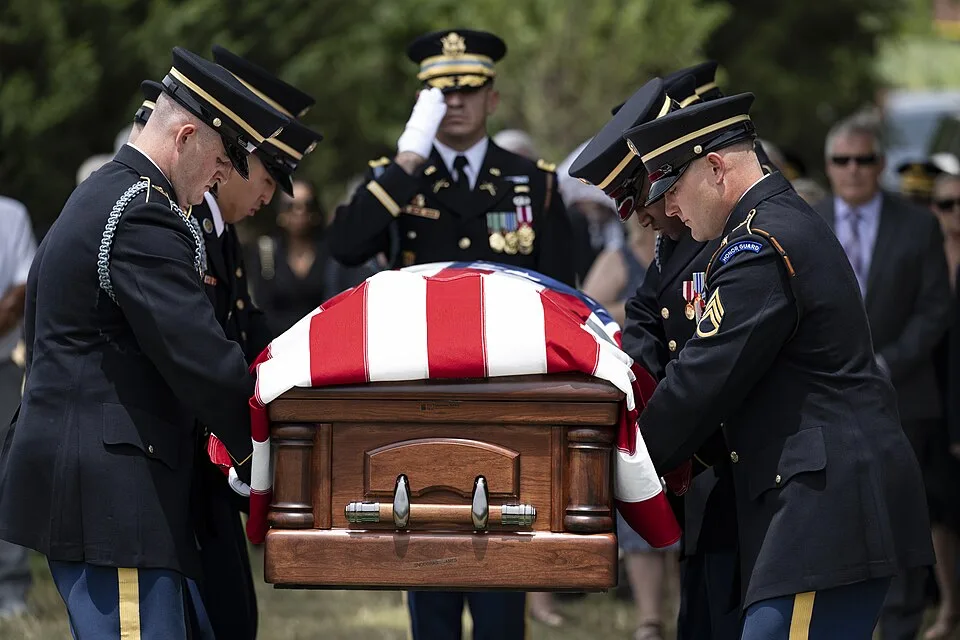
A U.S. service member is dead in northern Iraq after a controlled detonation of unexploded ordnance from a downed Iranian drone went catastrophically wrong. He is the 17th American service member killed since the United States went to war with Iran on February 28th. Seventeen. In less than five months.
What Happened in Northern Iraq
U.S. Central Command announced Sunday that the soldier was killed during a controlled detonation of unexploded ordnance recovered from a one-way Iranian attack drone that had been shot down. Another service member was injured and is receiving treatment for what Centcom described as a minor injury.
Controlled detonations are supposed to be the safe part. You down the drone, you secure the area, you dispose of the munitions under careful, deliberate conditions. The fact that a service member died during this process tells you something about the operational tempo right now, about how stretched and stressed these units are, about how much unexploded Iranian hardware is apparently just scattered across the region at this point.
The Hill reports that this death came just one day after Centcom announced two more U.S. service members were killed in an Iranian attack in Jordan on Friday. One of those soldiers was listed as missing following that attack. On Sunday, Centcom said a thorough search turned up unidentified remains at the location, with an examination process to verify those remains now ongoing. So there may be an 18th death being confirmed as you read this.
The War That Nobody's Talking About Like a War
Let's be precise about the timeline here, because it keeps getting lost. The United States has been at war with Iran since February 28th. That is not a metaphor, not a skirmish, not a tense standoff. There are U.S. airstrikes hitting Iranian military coastal surveillance, air defense facilities, maritime capabilities, and missile and drone storage sites. There are Iranian missiles hitting oil facilities and power and water treatment plants in Kuwait. Kuwait's military said Sunday its air defense systems are actively working to intercept Iranian missiles and attack drones.
According to The Hill, Iran has also struck targets in Bahrain and Jordan, two other countries with substantial U.S. military presence. The U.S. military has widened its attacks in recent days to include energy infrastructure, port facilities, and bridges inside Iran. Both sides are, as The Hill puts it, inching closer to all-out war.
Inching. Sure. That's one word for it.
Retaliation Breeding Retaliation Breeding Retaliation
After the two service members were killed in Jordan on Friday, the U.S. military launched another wave of airstrikes against Iran. This is the pattern now. An Iranian strike kills Americans. Americans retaliate with airstrikes. Iran retaliates for the retaliation. Repeat. Seventeen American service members dead and counting, with the cycle showing no signs of stopping.
This is how wars expand. Not through a single dramatic escalation that everyone can point to, but through accumulated responses, each one justified by the last provocation, each one generating the next. The U.S. military has deliberately widened the target set, hitting energy and infrastructure, which historically signals a shift from tactical military strikes toward something designed to cause broader national pain. That is not de-escalation. That is the opposite of de-escalation.
Kuwait Is Getting Hit. Think About That.
Kuwait is a country with which the United States has had an ironclad security relationship since the Gulf War in 1991. It hosts major U.S. military installations. And right now, Iran is hitting its oil facilities and knocking out its power and water treatment plants.
The Kuwaiti military confirmed Sunday that its air defense systems are actively engaged, intercepting Iranian missiles and attack drones. A U.S. treaty partner is under sustained missile attack from Iran and has its air defenses running around the clock. This is not background noise. This is a regional war with a rapidly expanding blast radius, and it is happening right now, in the summer of 2026, while the American news cycle debates whatever fresh absurdity crawled out of Washington this week.
The Dingo Take
Seventeen American service members are dead in a war that started in February, and the country has somehow not fully reckoned with the fact that this is happening. There is no draft lottery keeping it on the front page. There are no nightly casualty counts on the evening news the way there were during Vietnam. There is a war with Iran, real bombs hitting real targets, American soldiers dying in Iraq and Jordan, Kuwait under missile attack, and a U.S. military that is openly widening its strikes on Iranian infrastructure. This is not a limited engagement anymore. This stopped being a limited engagement weeks ago.
The question that nobody in power seems to want to answer directly is: what does winning look like? What is the off-ramp? Because right now the strategic logic on display is that we bomb them, they bomb our allies, we bomb more of their stuff, they bomb more of our allies' stuff, and seventeen becomes twenty becomes thirty. Every round of retaliation is presented as a response to what Iran did, which is true, and also completely misses the point that Iran is also responding to what we did, which was responding to what they did before that.
A U.S. service member died trying to safely dispose of a downed Iranian drone. He was doing the cleanup work of a war that is grinding forward with no clear endgame. Seventeen families have now gotten that knock on the door since February. The least the rest of us can do is actually pay attention to what is being done in our name, with our military, in a region that is one miscalculation away from something much larger and much worse.



Comments