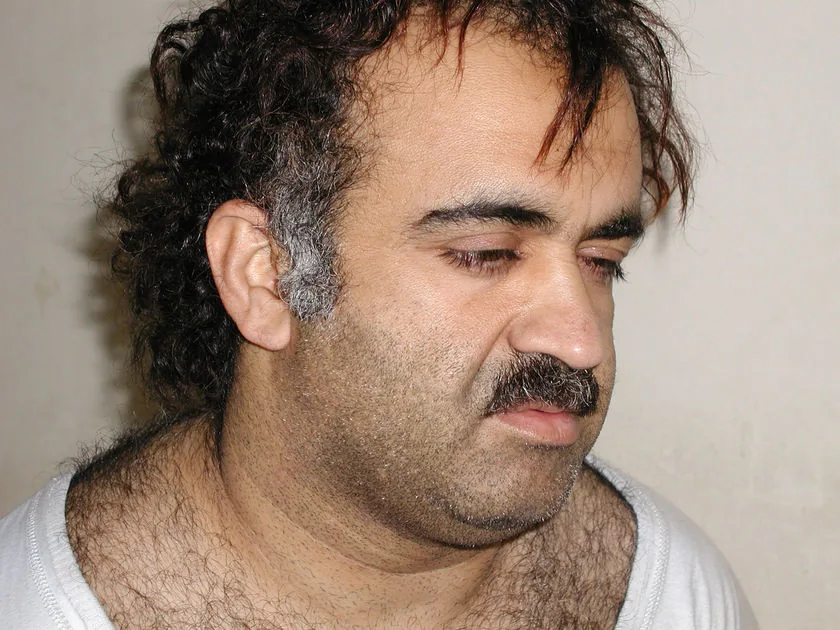
Khalid Sheikh Mohammed has been in U.S. custody since 2003. He has confessed. He is not missing. His trial is currently scheduled to begin June 5, 2028, which will be nearly 27 years after nearly 3,000 people were murdered in the worst terrorist attack in American history. If you are not furious about this, read that sentence again.
The Date Is Tentative. Of Course It Is.
Fox News reports that a military judge set the 2028 trial date after pushing back the prosecution's proposed January 2027 start by a full 18 months. The reason? A "long list of unresolved legal disputes" that apparently nobody could be bothered to resolve during the previous quarter-century.
The judge who set the date is the fifth military judge to oversee this case since defendants were arraigned in 2012. The fifth. Four judges either retired, were reassigned, or otherwise cycled out of a case involving the worst attack on American soil in living memory, and nobody in the chain of command seemed to think that was a problem worth fixing.
And the date itself carries an asterisk the size of Lower Manhattan. Fox News notes it remains tentative. A scheduling placeholder for the murder trial of the century. Twenty-seven years in and we're still doing placeholders.
The Confession They Can't Use
Here is where the legal machinery gets particularly ugly. Mohammed was waterboarded 183 times at CIA black sites before being transferred to Guantanamo in 2006. He has openly admitted to orchestrating the September 11 attacks. The confession exists. The problem is that everything surrounding it is legally radioactive because of how the United States chose to treat him in custody.
Prosecutors tried an end-run around the torture problem by having a separate FBI "clean team" take fresh statements from Mohammed in 2007, years after the CIA interrogations ended. The theory was that untainted statements taken later could still be used at trial. A military judge just ruled that theory wrong, finding that the 2007 statements were still tainted by the coercive treatment Mohammed had experienced. Fox News reports the government declined to appeal, saying an appeal could jeopardize the 2028 trial date.
So the government tortured a man, got a confession it cannot use, then got a second confession it also cannot use, and opted not to challenge the ruling because doing so might push a trial that is already 27 years out even further. This is not a legal system functioning at peak capacity.
What the Families Are Living Through
John Ryan spent nine months working the recovery operation at Ground Zero. He was chief of department with the Port Authority Police and later a commander with the FBI-led Joint Terrorism Task Force. He lost 37 police officers he had worked with personally. He told Fox News Digital that watching this case grind forward is like watching "an open sore" that tears back open every anniversary.
"The fact is that they've all admitted their involvement," Ryan said. "It's not a question of guilt. It's just a question of the process and the fact that the process has taken 25 years."
Sean Passananti's father was killed on the 100th floor of the North Tower. He has attended the September 11 memorial every year but one. "It feels really like a twilight zone and unbelievable that we have to fight for justice for the worst terrorist attack that ever happened on our soil," he told Fox News. Dennis McGinley, whose brother Danny worked on the 89th floor of the South Tower, put it more bluntly: this has gone from an American nightmare to an American embarrassment.
Twenty-Seven Years of How We Got Here
Mohammed was captured in Pakistan in 2003 and immediately disappeared into CIA black sites, where he was subjected to what the government has since had to acknowledge was torture. The waterboarding alone happened 183 times. Whatever intelligence value that produced, the legal cost has been staggering and ongoing.
He and the other defendants were transferred to Guantanamo in 2006. They were not arraigned until 2012. The case has been crawling through military commissions ever since, buried under what Fox News describes as "a mountain of unresolved pretrial motions" and years of litigation over whether any of the evidence collected against men who were tortured can actually be used in court.
A fifth defendant, Ramzi bin al-Shibh, is being handled separately after being found mentally incompetent to stand trial. So the group of men accused of killing 3,000 Americans has now been whittled down to four defendants heading toward a trial scheduled a generation after the crime.
What 2028 Actually Means
Children who lost parents on September 11, 2001, will be adults in their thirties when this trial starts, assuming it starts. Survivors who were in their forties during the attacks will be in their sixties. First responders who spent months at Ground Zero and are already fighting chronic illness from the exposure will be older still.
The accused mastermind of the attack will have spent a quarter-century in American custody before facing a jury. Not because the evidence is weak. Not because the facts are in dispute. Because the United States decided the fastest path to intelligence was to torture its prisoners, and then spent the next two decades paying the legal price for that choice every single day this case dragged forward.
McGinley told Fox News that Trump has "a unique, historic opportunity" to push this across the finish line. Maybe. But the structural rot in this prosecution was baked in before Trump's first term, during it, between administrations, and now into his second. This is not a one-president problem. It is a twenty-seven-year institutional failure that has spanned five commanders in chief and five military judges and counting.
The Dingo Take
You are supposed to believe this is just how complicated terrorism cases work. That the delays are a product of legal necessity, constitutional scrupulousness, the inherent difficulty of prosecuting crimes of this magnitude through a military commission system that barely existed when Mohammed was captured. There is some truth in that. The legal obstacles are real.
But let's be precise about who created most of those obstacles. The CIA waterboarded Khalid Sheikh Mohammed 183 times. That decision, made by American officials under American orders, is the single largest reason this trial is scheduled for 2028 instead of 2008. Every suppressed statement, every tainted confession, every pretrial motion that has consumed the last decade of litigation traces back to that choice. The families waiting for a verdict are not paying for Mohammed's crimes. They're paying for ours.
Twenty-seven years. Five judges. One tentative trial date. Three thousand people dead and a courtroom that still hasn't heard opening arguments. If there is a more damning indictment of what the post-9/11 decision to torture prisoners actually cost this country, in concrete, measurable, human terms, it is hard to imagine what it would look like. The families called it an open sore. That's too gentle. This is institutional malpractice stretched across a generation, and nobody with the power to fix it ever paid a price for breaking it.


Comments