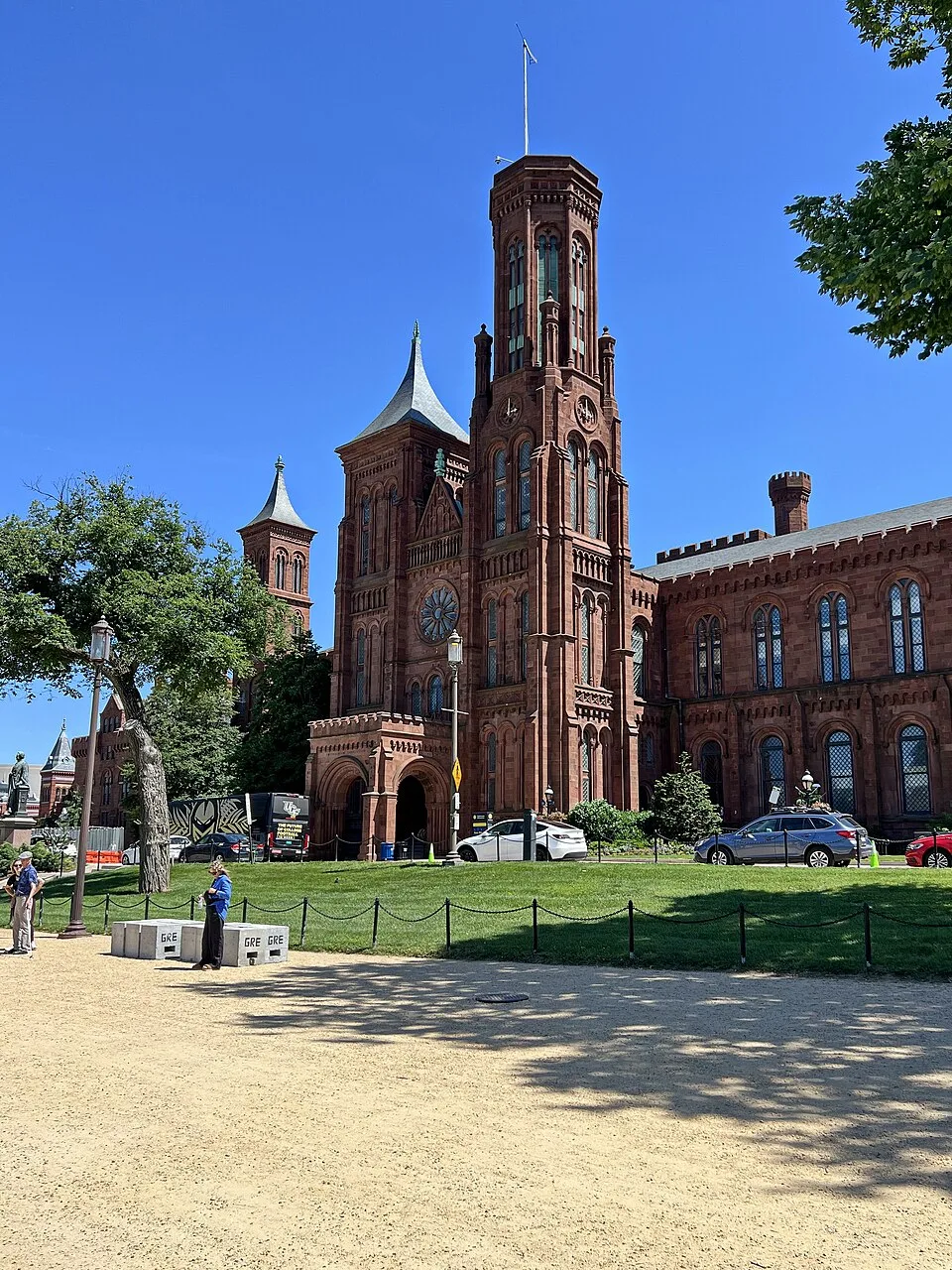
House Republicans hauled the director of the National Museum of American History before a congressional subcommittee on Tuesday to complain that the museum was teaching too much history. Specifically, the bad kind — the kind where bad things happened to people, and those people are mentioned by name. Rep. Tim Burchett of Tennessee, who chairs the House DOGE subcommittee, summarized his objection with the kind of clarity you rarely hear from elected officials: the museum had been, he said, "infected by a woke ideology."
The Crime: Acknowledging That America Had a Past
According to NPR, Burchett opened the hearing by declaring that the National Museum of American History had reduced the American story to "an ongoing power struggle between oppressors and the oppressed." He said this as if it were a devastating critique, apparently unaware that large portions of American history did, in fact, involve oppressors and the oppressed. Slavery. Segregation. The Trail of Tears. These are not woke talking points. They are exhibits.
The hearing was held by the House Subcommittee on Delivering on Government Efficiency, which is, yes, a congressional branch of DOGE. That's the committee charged with cutting waste. Their choice to spend a Tuesday afternoon interrogating a museum historian about a gender identity exhibit aimed at children tells you everything you need to know about what "efficiency" means to these people.
This all followed a 162-page report the White House Domestic Policy Council released on July 4, because nothing says patriotism like dropping a government attack document on a public museum on Independence Day. The report accused the Smithsonian of being captured by "a radical, activist ideology" and charged it with being insufficiently celebratory, underemphasizing the Founding Fathers, and engaging in what it called "anti-white" activism. One hundred and sixty-two pages. About a museum.
The Inquisition, Play by Play
Rep. Nancy Mace of South Carolina zeroed in on a children's exhibition called "Girlhood," which apparently mentioned gender identity and puberty. Her line of questioning culminated in her asking the museum's director, Anthea Hartig, "When was your gender revealed to you, Dr. Hartig?" This is a sitting member of the United States Congress, at an official congressional hearing, asking a museum director a question that would get you removed from a dinner party.
NPR reports that Rep. Lauren Boebert of Colorado asked Hartig whether she intended to "use a taxpayer-funded national museum to push a racial narrative that divides Americans by their skin color and guilt." Hartig, who apparently has the composure of someone who has been briefed extensively on what was coming, replied that the Smithsonian is "a nonpartisan institution we're very proud of." That is a woman who has learned to say absolutely nothing while appearing to say something.
Hartig kept her cool throughout. Her prepared statement, released before the hearing, was quietly devastating in the way that straightforward truth tends to be when aimed at people who find it threatening. "Examining the harder chapters of our history is not the same as hostility toward America," she wrote. "Telling our history fully is not anti-American. It is a form of respect for the American people." She said this to a committee that flew to Washington to argue the opposite.
Democrats Pushed Back, Hard
House Democrats released a 16-page rebuttal to the White House report the same day as the hearing, accusing the Trump administration of trying to "control and contort the historical record." They cited public opinion surveys showing that museums rank among the top three most trusted institutions in the country, behind only friends and family. The Democrats' argument: the administration is asking Americans to trust Donald Trump over the institutions Americans already trust most. That's a tough sell.
The most pointed moment of the hearing came from Rep. Kweisi Mfume of Maryland, who spoke about the National Museum of African American History and Culture. "I'm here as a Black man who grew up in segregation," Mfume said, according to NPR. "We will not let you destroy that museum, no matter how long it takes, how many battles are required, how much effort is needed. We will not allow that to happen unless you find a way to kill all of us and walk over our bodies to change history." That is not a sound bite. That is a man who has watched this movie before and knows how it ends.
What the Smithsonian Actually Is, For the Record
The Smithsonian Institution, per its charter as NPR notes, is meant to operate independently of the federal government. It runs 21 museums, 14 education and research centers, and the National Zoo. Its oversight board includes Vice President Vance and Supreme Court Chief Justice John Roberts, among others appointed by Congress. It is not a radical activist cell. It is the institution that holds the original Star-Spangled Banner, Dorothy's ruby slippers, and the Apollo 11 command module.
Hartig is also scheduled to appear before the House Administration Committee on Wednesday, because apparently one day of this was not enough. The Smithsonian's secretary, Lonnie G. Bunch III, has previously made public comments about the institution's mission that Hartig echoed during the hearing. Neither the Smithsonian nor Burchett's office responded to NPR's requests for comment about the hearing.
The Dingo Take
Here is what is actually happening. The Trump administration and its congressional allies have decided that the most dangerous institution in America is not a foreign adversary, a failing bank, or an out-of-control federal deficit. It is a museum in Washington, D.C., that lets children learn about puberty and shows visitors artifacts related to the experience of Black Americans. The 162-page July 4 report, the DOGE subcommittee hearing, the follow-up House Administration appearance the next day: this is a coordinated pressure campaign against public institutions that teach history the administration finds inconvenient.
The tell is always in what they want removed. They are not asking the Smithsonian to add more context, be more accurate, or correct factual errors. They are asking it to be less complete. To leave things out. To stop showing Americans evidence of the times the country fell short of its own ideals, as Hartig put it. That is not a demand for better history. That is a demand for a specific kind of myth, publicly funded and federally enforced.
Anthea Hartig sat in front of a congressional subcommittee and told them, with great patience, that telling the full story of America is "a form of respect for the American people." The committee's response was to schedule her for another hearing the next day. That tells you which side of this argument is comfortable with facts and which side needs them gone.




Comments