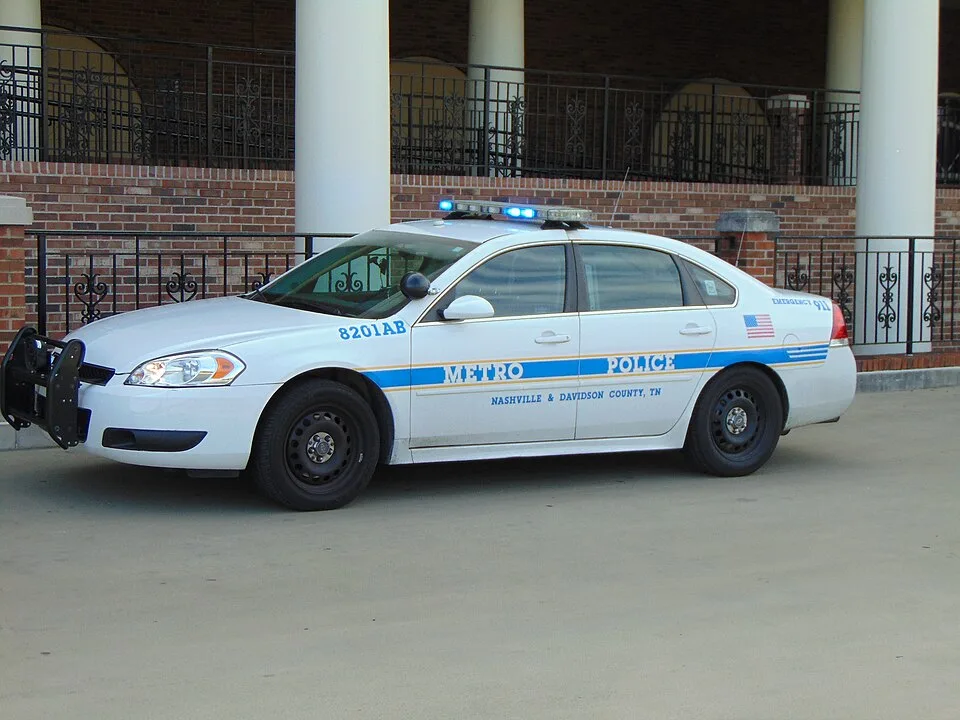
A 49-year-old man in Nashville got tased, arrested, and slapped with two felony counts carrying up to six years in prison. His crime: sleeping in the same public park where he has lived for years. After nine days in jail, he went right back.
The Crime Was Existing Outside
Joseph Lamont Williams grew up in East Nashville. He has lived in South Inglewood Park for several years. On June 28, when police found him there and told him to leave, he refused. So they tased him, arrested him, and charged him with two felony counts under Tennessee's no-camping law, as NPR reports.
The maximum penalty for felony camping in Tennessee is six years in prison. Six years. For sleeping outside. Williams told NPR that when he was offered a plea deal, he took it without fully understanding the terms because he just wanted out. 'The slickest thing was asking me if I knew what I was pleading to,' he said. 'I'm just trying to plead to get out of here.' He was released after nine days when a judge dismissed the felony charges.
His friend John Lozier, a 73-year-old retired social worker who met Williams years ago while walking his dog through the park, picked him up from jail. He offered Williams a hotel. A shelter. A different part of town. Williams said no to all of it. Lozier drove him back to the park. By nightfall, Williams was settled back in under the picnic pavilion.
The Only State Where Camping Is a Felony
Tennessee passed its no-camping law in 2022, but according to NPR, advocates for unhoused people say they have never seen it weaponized like this before. Tennessee is currently the only state in the country where sleeping on public property is a felony offense.
Eleven states have passed homeless camping bans over the last four years, according to the National Homelessness Law Center. Since the U.S. Supreme Court ruled in 2024 that cities can ban people from sleeping in public, more than 300 municipalities have piled on. The laws vary in their cruelty: some let states penalize cities that refuse to enforce the bans, others make it easier to involuntarily commit homeless people. But the end result is the same. No sleeping outside, or else.
Lindsey Krinks, co-founder of Open Table Nashville, a nonprofit that supports unhoused people, told NPR exactly what this looks like on the ground. 'Welcome to the city of Nashville, where luxury condos are going up every few blocks, and everyone living in their shadows are being left out of the progress and sometimes freezing to death or getting heat stroke and dying on our streets.' Hard to argue with the math there.
A Tech Billionaire's Think Tank Is Writing These Laws
Here is where it gets a specific kind of gross. NPR reports that many state legislators across the country have drawn inspiration from, or outright copied legislative language from, the Cicero Institute, a conservative think tank founded by tech billionaire Joe Lonsdale. Lonsdale is a co-founder of Palantir, the data-mining company whose software is used by local and federal law enforcement, the CIA, and ICE.
The Cicero Institute's pitch is that threatening homeless people with arrest will motivate them to engage with social services. That is the entire theory. Coerce people living in poverty and trauma into compliance by making their existence a criminal act, and apparently everything will sort itself out. No one at the think tank appears to have asked what happens when there is not enough shelter space, or when mental health systems are underfunded, or when the social services they are supposed to be pushed toward simply do not exist in sufficient quantity.
Williams did not choose to sleep in a park because he was unaware that beds exist. He is chronically homeless in a city where homelessness jumped more than 30 percent in less than a year, according to Nashville's own Homelessness Planning Council, which estimated roughly 4,300 people experiencing homelessness in December 2025. Nationally, chronic homelessness is growing, with HUD's most recent count finding more than 155,000 chronically homeless people in the United States.
The Neighborhood That Left Him Behind
Joseph Williams grew up in East Nashville. It is, as NPR describes it, a historically African American community that has undergone rapid gentrification over the last two decades. The park where he sleeps now sits in the shadow of the neighborhood that once was his.
This is not a coincidence or a footnote. It is the whole story. The city rebuilt itself around him, priced out the people who built it, watched homelessness surge past 4,000 people, and then responded by charging one of those people with a felony for sleeping outside. The condos went up. The felony charges followed. That is Nashville's answer to its housing crisis in 2026.
The Dingo Take
Let's be honest about what is actually being proposed here. The argument behind these camping bans, dressed up in think-tank language about accountability and service engagement, is that if you make being homeless uncomfortable enough, homeless people will stop being homeless. It is the policy equivalent of telling someone with a broken leg to walk it off. The Cicero Institute has a billionaire founder and a lot of white papers. It does not have a workable theory of human behavior.
What Tennessee actually accomplished on June 28 was this: it tased a 49-year-old man, locked him up for nine days on charges that a judge then threw out, burdened him with an arrest record that will make it even harder to find housing or work, and then watched him walk straight back to his park. The law did not solve anything. It punished someone for being poor and then left the poverty completely untouched. If that sounds like success to you, you are either Joe Lonsdale or you are not paying attention.
Williams is back under the pavilion in South Inglewood Park right now. The luxury condos are still going up a few blocks away. And somewhere, legislators in multiple states are copy-pasting Cicero Institute language into new bills that will charge more people like him with crimes for the offense of having nowhere to go. This is the plan. This is the whole plan.





Comments