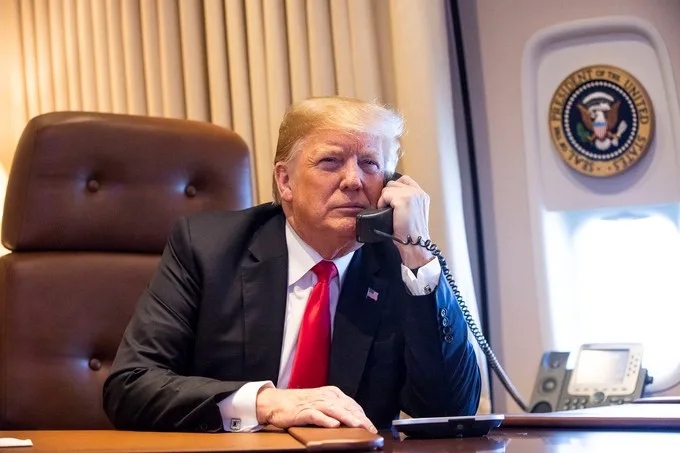
The Trump administration, apparently unsatisfied with subpoenaing journalists at their homes, has now gone after their spouses and at least one reporter's mother in its hunt for whoever leaked a story about a plane. A plane. This is where we are.
The Subpoenas Keep Coming, and They Keep Getting Weirder
According to a motion unsealed Monday and reported by The Guardian, the Trump administration sought phone records from several New York Times journalists, two of their spouses, and the mother of one reporter. The reporters in question wrote about Trump's new Air Force One jet, a $400 million retrofit of a plane gifted by Qatar, and whether it actually had the security features the old one did. That's the leak the government wants to plug. That's why someone's mom is now involved.
The mother, per the Times' legal filing, is a mental health professional with confidential client relationships of her own. One of the subpoenaed spouses is the general counsel of a law firm. So the DOJ's theory of a leak investigation apparently includes hauling in people who not only didn't write the articles, but almost certainly have professional confidentiality obligations of their own. Cool system we've got here.
The Timeline Is the Tell
Here's what makes this particularly hard to wave away. The Guardian reports that two of the subpoenas seek phone records going back to January 1, 2026 — months before the July 8 and July 9 articles that supposedly triggered this whole investigation. Lawyers for the Times made the obvious point in their filing: a subpoena that predates the articles it claims to be investigating is not really about those articles.
"That timeframe strongly suggests that the department is using this investigation not to focus on any purported concerns arising from the articles, but instead to forage for information about the journalists' source relationships more broadly," Times lawyers wrote. Forage. That's a diplomatic word for what the rest of us might call fishing through someone's entire professional life to figure out who they've been talking to for the last seven months.
Jay Clayton's Confirmation Hearing Just Got More Complicated
The Times' legal team also took a pointed shot at Jay Clayton, the US attorney in Manhattan who is currently up for confirmation as Trump's director of national intelligence. At his hearing last Wednesday, Clayton testified that "we followed the protocols" and that the government had taken "the least intrusive possible" steps. The newspaper's lawyers responded by noting that the additional subpoenas call "into question the accuracy" of that testimony.
To be clear about what Clayton is claiming: that demanding a journalist's mother's phone records is the least intrusive option the DOJ had available to it. That's the argument. That's what a man who wants to run national intelligence told the Senate under oath.
What the Government Is Actually Saying
The Justice Department pushed back Tuesday morning, insisting it followed its own regulations and conducted investigative steps before issuing the subpoenas. Officials said they were authorized to delay disclosure but chose to notify the journalists' lawyers anyway, framing this as a courtesy. The DOJ's broader line has been consistent: "reporters are not the targets, those leaking classified information are."
That's technically true and practically meaningless. If you subpoena the reporter's phone records, the reporter's spouse's phone records, the reporter's mother's phone records, and demand that reporters testify before a grand jury, it doesn't much matter that the official paperwork says they're not the target. The effect is the same. You are trying to make being a source for journalists so dangerous, so invasive, and so radioactive that people stop doing it.
The Story That Started All This
Let's not lose track of what the original articles actually said. The Times reported, citing anonymous sources, that Trump used an older Air Force One to leave a NATO summit in Turkey because the new Qatari-gifted plane lacked some of the advanced security features of the original, including antimissile capabilities. Trump denied any security concerns on social media, because of course he did.
The new jet, The Guardian notes, cost $400 million to retrofit and upgrade, and it is a gift from Qatar. The story was, in other words, about whether the president's shiny foreign-government-gifted plane is actually up to the job. That's a story the public has a pretty obvious interest in. The administration's response to it has been to subpoena journalists at their homes, then their families, then keep the subpoenas coming even after the Times moved to quash the first round.
US District Judge Arun Subramanian has frozen enforcement of the phone records subpoenas while the court considers the Times' motion to quash. A hearing on the grand jury subpoenas is scheduled for Thursday.
The Dingo Take
The DOJ keeps insisting this is about leaks of classified information, not press intimidation. And sure, fine, let's take that at face value for exactly one second. If your leak investigation requires subpoenaing a reporter's mother — a therapist, a person with her own professional confidentiality duties — you have stopped conducting an investigation and started sending a message. The message is: if you talk to journalists, we will crawl through the lives of everyone you love.
This is what the slow death of press freedom looks like. It doesn't always arrive as a dramatic shutdown or an official censorship order. Sometimes it arrives as a stack of subpoenas designed to make sources so terrified that the phone stops ringing. The FBI already raided a Washington Post reporter's home in January and seized her devices. Now reporters are getting subpoenas delivered to their houses while their spouses and parents get swept into grand jury proceedings. This is a pattern, and the pattern has a purpose.
The fact that a federal judge is pumping the brakes is the only thing standing between this and the DOJ getting exactly what it wants. That's a thin reed. Courts move slowly, administrations act quickly, and sources make their decisions about whether to talk to reporters long before any ruling comes down. The chilling effect is already the point. Everything else is paperwork.



Comments