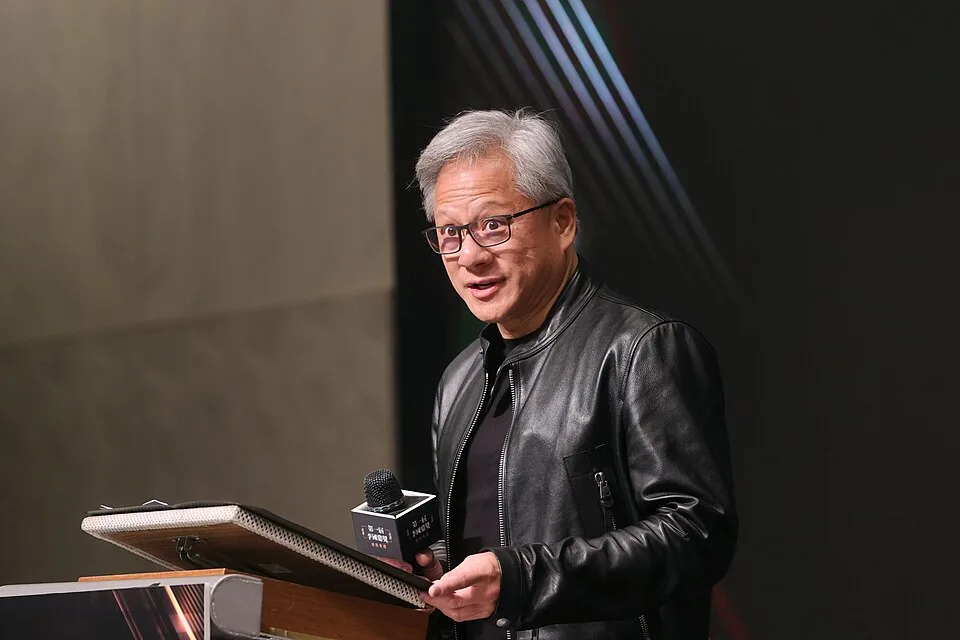
The CEO of the most powerful AI chip company on the planet just looked directly at Washington's growing campaign to ban Chinese artificial intelligence and said, respectfully, that it's a terrible idea. Jensen Huang told Axios on Tuesday that Chinese open-source models are 'excellent' and that American companies should 'absolutely' be allowed to use them. That sound you hear is a lot of people in D.C. choking on their coffee.
What Huang Actually Said
Huang made his position about as clear as a person can make a position. 'These Chinese models are excellent,' he told Axios' Mike Allen in an exclusive interview for the outlet's 'Behind the Curtain' video series. 'Open-source models that are excellent should be used.'
That's not hedging. That's not 'on one hand, on the other hand.' That is the CEO of Nvidia, the company that makes the chips powering virtually every serious AI operation on earth, telling the United States government that it is wrong about something it is currently trying to legislate into law.
Huang's point isn't complicated. If a model is good, you should be able to use it. The fact that it was built by people who live in China does not automatically make it a weapon. That's the argument. It's fairly straightforward. Watch Washington find a way to make it complicated anyway.
Who He's Fighting With
This is not a fight against some fringe group of China hawks on Twitter. According to Axios, the people pushing to shut out Chinese AI models include Trump administration officials and, in a detail that deserves its own moment of appreciation, some of Nvidia's own biggest customers: the major American AI labs.
Think about that geometry for a second. The companies buying billions of dollars worth of Nvidia hardware are lobbying the government to ban a competitor's product. And Nvidia's own CEO is publicly saying they're wrong to do it. That is a genuinely unusual corporate situation.
The American labs' self-interest here is not subtle. If Washington bans DeepSeek or any other Chinese open-source model, every American company that needs serious AI capabilities has to buy from... the American AI labs. The labs arguing for the ban would directly profit from the ban. Huang seems to have noticed this.
Why This Is a Much Bigger Deal Than It Looks
Jensen Huang is not a bomb-thrower. He is a careful, deliberate executive who has spent years threading the needle between Washington's China hawks and Nvidia's enormous Chinese market. When he says something this bluntly in a named interview, he means it and he's thought about it.
Nvidia's position in the AI world is genuinely without precedent. The company's H100 and successor chips are so dominant that entire national AI strategies get written around access to them. When Jensen Huang speaks about AI policy, he is not an outside observer offering an opinion. He is closer to a central bank governor commenting on interest rates. The man runs the infrastructure.
So when the infrastructure guy says banning Chinese open-source models is the wrong call, that is news. That's not a press release. That's a major industry figure drawing a line in public, knowing exactly what he's starting.
The Open-Source Wrinkle Nobody Wants to Talk About
Here's what makes the 'ban Chinese AI' push particularly messy: the models in question are open-source. That means the weights, the code, the guts of the thing are publicly available for anyone to download, modify, and run. You cannot un-release open-source software. It does not work that way.
Banning American companies from using a model that anyone can download from a public repository is a bit like banning Americans from knowing a recipe that's already been published in every cookbook in the world. The information is out. The ban would not make the model disappear. It would just make American companies less competitive while their foreign counterparts use it freely.
This is the practical reality that Huang is pointing at. The campaign to restrict Chinese AI isn't really about keeping the technology out of American hands, because that ship has sailed. It's about something else, and Huang, to his credit, is apparently not interested in pretending otherwise.
The Dingo Take
There is a version of AI policy that takes security concerns seriously and still engages with reality. That version asks hard questions about data, about access, about specific applications in sensitive contexts. It is a legitimate conversation that serious people can have.
What's being pushed in Washington right now is not that. It is a blanket campaign driven by a mix of genuine fear, industry protectionism, and the kind of reflexive techno-nationalism that sounds tough and achieves very little. Jensen Huang, who has more skin in this game than almost anyone alive, just said so out loud.
The fact that Huang had to be the one to say it, rather than, say, the administration's own technology advisors, tells you everything about where serious thinking has gone in this debate. The guy selling the shovels in the AI gold rush is out here doing more rigorous policy analysis than the people making the policy. That's where we are. Welcome to it.


Comments