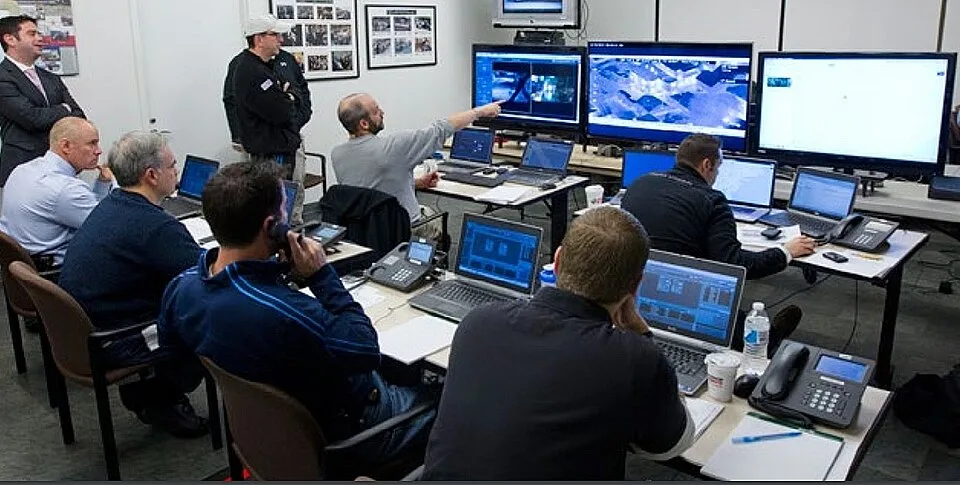
The Secret Service has opened roughly 10,000 protective intelligence cases since January, a nearly 40% jump from the same period last year, and the agency's director says he has never seen numbers like this in 24 years on the job. Mental health interventions involving people who made threats have gone up nearly ten times compared to last year. Ten times. This is not a blip. This is a country in crisis.
The Numbers Nobody Wants to Say Out Loud
CBS News reports that Secret Service Director Sean Curran said Wednesday, flat out, that the threat environment is unlike anything he has witnessed in his career. "The numbers are numbers that this agency and certainly I have never seen in my 24-year career," Curran said. That sentence deserves to sit alone for a moment.
Officials briefing reporters attributed the explosion in cases to a toxic cocktail: online threats, lone actors, ideological grievances, foreign threats, and mental health crises. And almost all of it, according to Secret Service officials, is coming from online now, not the handwritten-letter-from-a-guy-in-a-trailer era of threats. The internet radicalization pipeline is apparently working exactly as advertised.
"The environment has become very volatile, and that's just across the board," Curran said. Across the board. Every direction. The full 360. Just in case you thought this was a targeted problem with a targeted solution.
An Armed Guy at a Dinner Party and the Definition of 'Working'
All of this comes days before the rescheduled White House Correspondents' Dinner, which got moved after an armed individual was stopped at a security checkpoint outside the original event at the Washington Hilton. CBS News asked Curran directly about that incident, and his answer was something.
The magnetometers, he explained, were positioned approximately 120 yards from the podium. More than a football field away from the people the Secret Service is supposed to protect. He said stopping the armed person at that checkpoint proved the system worked. "That's where it happened, and that's where it ended. So it did work. The system worked."
Look. By that logic, catching a burglar as he climbs through your bathroom window means your home security is functioning perfectly. Technically accurate. Also terrifying. Curran did acknowledge the agency has to balance standoff distances against the reality of shutting down city blocks and businesses, which is a fair point. But "we caught the armed guy before he got to the room where the president was" is a remarkably low bar to declare victory.
Iran Is Still Very Much on the Board
CBS News pressed officials on the Iranian threat against Trump, and Secret Service deputy director Matt Quinn did not exactly put anyone at ease. "I don't think it's any secret that it's been in the media that Iran has publicly said they want to kill President Trump," Quinn said, confirming that the threat gets factored into protective planning constantly.
Curran declined to discuss specific protective measures connected to Iran or decisions involving the new Air Force One, citing operational security. "I don't want to tip our hand to the enemy," he said. Which is fair. What is less fair is that the American public is essentially being told: yes, there is an active foreign assassination plot against the sitting president, no we cannot tell you what we are doing about it, good luck with your Tuesday.
Quinn added that the publicly known Iranian threat is only part of what the agency is working with. The rest, he said, cannot be disclosed. Great. Cool. Everyone sleep well.
Drones: The Part Where It Gets Worse
A reporter asked deputy director Quinn how concerned the Secret Service is about the potential use of drones against protected sites and individuals. His answer was one word: "Very."
"The threat's real," Quinn said, pointing to Ukraine as a preview of what drone warfare against human targets looks like when it scales. "It's a matter of time before it comes to the United States." CBS News reports that Quinn said the Secret Service is deploying advanced detection and mitigation systems at the White House and other protected locations, and that no other federal agency is doing more to get ahead of the drone threat.
The problem, Quinn acknowledged, is that the technology keeps evolving. Fiber-optic-controlled drones, "dark" drones designed to evade detection, the whole arms race is accelerating. "It's a constant chase to keep up with it," he said. Curran added that counter-drone assets now travel with the president, and some systems have been deployed on American soil for the first time ever. History being made, every single day, in the most stressful way possible.
A Rescheduled Dinner and a Very Different Venue
Friday's rescheduled White House Correspondents' Dinner will be held at the Waldorf Astoria in Washington instead of the Washington Hilton, and Curran was careful to frame it not as a security do-over but as a completely fresh protective visit. "If the president goes to the same site 100 times, we will send an advance team there 100 times, because things change," he told CBS News.
That is probably the right posture. It is also a sentence that illustrates precisely how relentlessly demanding this work has become. Every venue, every visit, every event, assessed from scratch, in an environment where protective intelligence cases have jumped 40% in seven months and the agency's own director says he has never seen anything like it.
The Dingo Take
Here is what is easy to miss when you read the raw numbers. Ten thousand protective intelligence cases. Mental health interventions up tenfold. An armed person at a dinner where the president was present. Drone threats the agency describes as inevitable on American soil. A foreign government that has openly stated it wants to assassinate the sitting president. This is all happening simultaneously, right now, and the news cycle eats it like just another Wednesday briefing.
The Secret Service officials who spoke to CBS News deserve credit for being more candid than you usually get from federal security agencies. Curran and Quinn are not spinning this. They are saying, clearly, that the threat picture is unprecedented, that the technology is outpacing their defenses, and that they fully expect dangerous people to show up at the events they are protecting. That kind of honesty is either reassuring or deeply alarming depending on your tolerance for staring directly at an unsolved problem.
What is genuinely maddening is that we have spent years watching political leaders, particularly on the right, pour gasoline on exactly the kind of grievance-driven, online-radicalized, paranoia-soaked environment that the Secret Service is now describing as the primary driver of this explosion in threats. The people setting the fire keep acting surprised when the room gets hot. The agency tasked with standing in front of that fire has opened ten thousand cases since January. Do the math on where that trajectory goes.


Comments