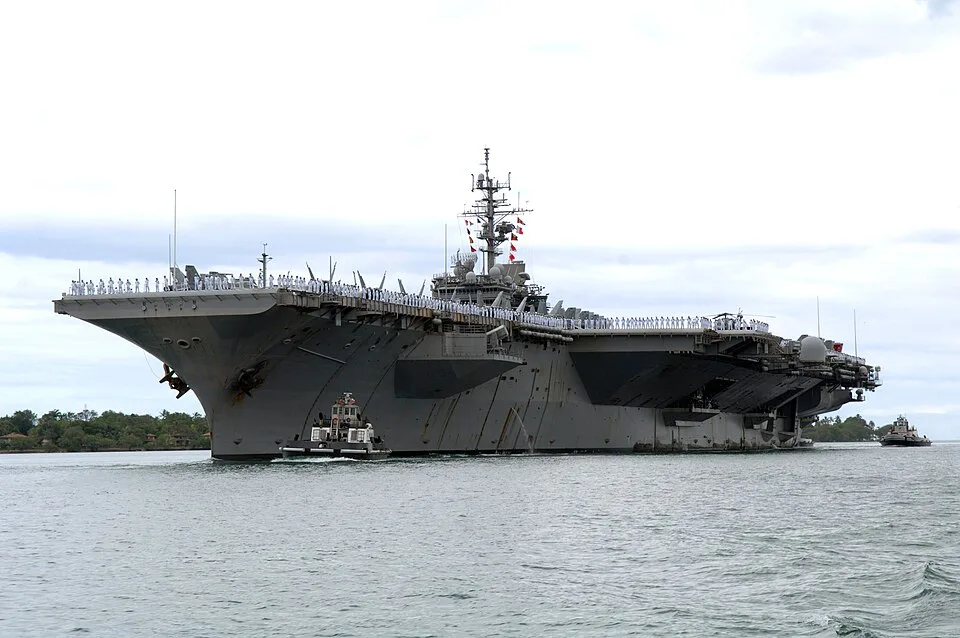
On election night 2024, Donald Trump told the country, 'I'm not going to start wars.' On February 28, 2026, he bombed Iran. Five months, $37.5 billion, three dead American service members, and eleven consecutive nights of airstrikes later, the Strait of Hormuz is closed, oil shipments are frozen, and the White House is now describing 'maybe we get back to how things were before we blew everything up' as a potential victory condition.
What 'Operation Epic Fury' Was Supposed to Look Like
The original plan, if you can call it that, was regime change. Trump and Benjamin Netanyahu launched coordinated strikes on Iran, and Pete Hegseth, the self-styled 'secretary of war,' announced that early US strikes had killed Supreme Leader Ali Khamenei and 'cut off the head of the snake.' The implication was clear: the Iranian government would crumble, the region would stabilize, and Trump would get a legacy moment.
Vali Nasr, professor of International Affairs and Middle East Studies and author of Iran's Grand Strategy, told The Guardian exactly what Trump was thinking. 'He thought he would go down in history as the American president who had resolved the Iran problem,' Nasr said. 'In his mind, this was a legacy-building transformation that would be quick and cost-free.' Those words, 'quick and cost-free,' should be tattooed somewhere visible on every war hawk in Washington as a permanent reminder of how this always goes.
The regime did not crumble. Iran, a country that endured eight years of war with Iraq in the 1980s and has been under crippling economic sanctions for decades, turned out to have some experience absorbing punishment. Trump, who gave 'seemingly no thought' to the fact that Iran would close the Strait of Hormuz the moment it came under attack, according to The Guardian's reporting, got a crash course in the concept of consequences.
The Strait, the Oil, and the Bill
Here is the specific geography of the catastrophe. The Strait of Hormuz is the narrow channel through which 20 percent of the world's oil was flowing before February 28. Was. Past tense. Right now, according to The Guardian, vessels carrying oil, gas, and fertilizer are sitting at a standstill. Both the US and Iran claim they are each preventing the other from controlling the strait, which is a creative way of describing a mutual blockade that neither side knows how to end.
Pete Hegseth told the Senate this week that the war has cost $37.5 billion so far, per The Guardian's reporting. He was facing lawmakers who are, apparently, furious about that number and about the deaths of three American service members last week. Thirty-seven and a half billion dollars to close the world's most important oil shipping lane. The economic shockwaves from that are not staying in the Persian Gulf.
Iran has also been hitting back in ways that go beyond US targets. Gulf states have accused Iran of deliberately striking their desalination plants, according to The Guardian. These are not symbolic targets. In a region where drinkable water doesn't fall from the sky, desalination infrastructure is genuinely essential to keeping people alive. This war stopped being a surgical strike on military assets a long time ago.
The Ceasefire That Lasted About Five Minutes
There was a brief moment in June that looked, from a certain squinting distance, like progress. The US and Iran signed a memorandum of understanding on June 17, a document The Guardian describes as 'vague' and 'short,' which created a 60-day negotiation window. Both sides were supposed to work toward a permanent agreement on the strait and related issues. Everyone got a few weeks off from bombing each other.
Then Iran fired on three commercial tankers that had used a shipping lane near Oman rather than a route Tehran had approved. The ceasefire fell apart. Nasr explained the decision tree to The Guardian with brutal clarity: 'When ceasefires are violated, you have two options; either react to preserve the ceasefire, or use the violation as an excuse to end it.' Trump called Iranian leaders 'scum,' declared the ceasefire 'over,' and the bombing resumed.
Now, eleven consecutive nights of US airstrikes later, energy secretary Chris Wright has announced that the mission objective has shifted to simply getting oil shipments moving through the strait again. To be clear about what that means: the US went to war to achieve regime change, killed Iran's Supreme Leader, spent $37.5 billion, lost American service members, and the current goal is getting back to the situation that existed before the US started the war. The Guardian noted this with the appropriate dryness, pointing out that ships had been sailing through the strait 'without obstruction' before February 28.
Where This Goes From Here, and None of the Options Are Good
Iran has made its position clear in ongoing negotiations: it wants permanent control of the strait, including the right to charge tolls on vessels passing through. The US position is that this is unacceptable. Nasr laid out the resulting trap for The Guardian in the starkest possible terms: the US either accepts a long, protracted war that keeps the strait closed, or keeps escalating in hopes of forcing a better outcome, with no guarantee that escalation doesn't pull in more of the region.
The Houthis are already threatening a maritime embargo on Saudi Arabia, which would expand the economic damage considerably. After just five months, The Guardian reports, the war is polling as unpopular with American voters as the Vietnam War was six years into that conflict. Six years in. Trump has managed to compress Vietnam-scale public exhaustion into a single spring and summer.
Andy Burnham, who became UK prime minister Monday and had his first call with Trump within two hours of entering Downing Street, spent part of that call discussing the strait, according to The Guardian. The two men apparently bonded over England's football tournament before pivoting to the crisis. Good to know the diplomacy is going great.
The Dingo Take
Let's be honest about what happened here. A president who explicitly promised not to start wars started a war, apparently without a serious plan for what Iran would do once attacked, without preparing the American public, and without a realistic theory of how it ends. The Trump Organization is currently building a skyscraper in Dubai, per The Guardian, so at some point someone in Trump's orbit presumably understood that the Gulf region has economic stakes worth protecting. That understanding did not make it into the war planning.
The current state of play is this: $37.5 billion spent, American troops dead, the world's most important oil chokepoint shut down, and the administration's definition of victory has quietly shrunk from 'we changed the Iranian regime' to 'maybe we can get the oil moving again like it was before we started.' That is not a strategy. That is a hostage negotiation with a country you just spent five months bombing, conducted by people who thought the hostage-taking wouldn't happen.
Nasr's phrase 'quick and cost-free' is going to echo for a long time. It always does. Every one of these misadventures comes wrapped in the same confident prediction that the other side will fold, that American military power will produce a clean result, that the complexity of the region won't matter this time. It always matters. The Strait of Hormuz is closed, twenty percent of the world's oil isn't moving, and Trump is on his eleventh consecutive night of bombing a country he underestimated. There is no version of this where the 'I'm not going to start wars' guy gets to be the hero.


Comments