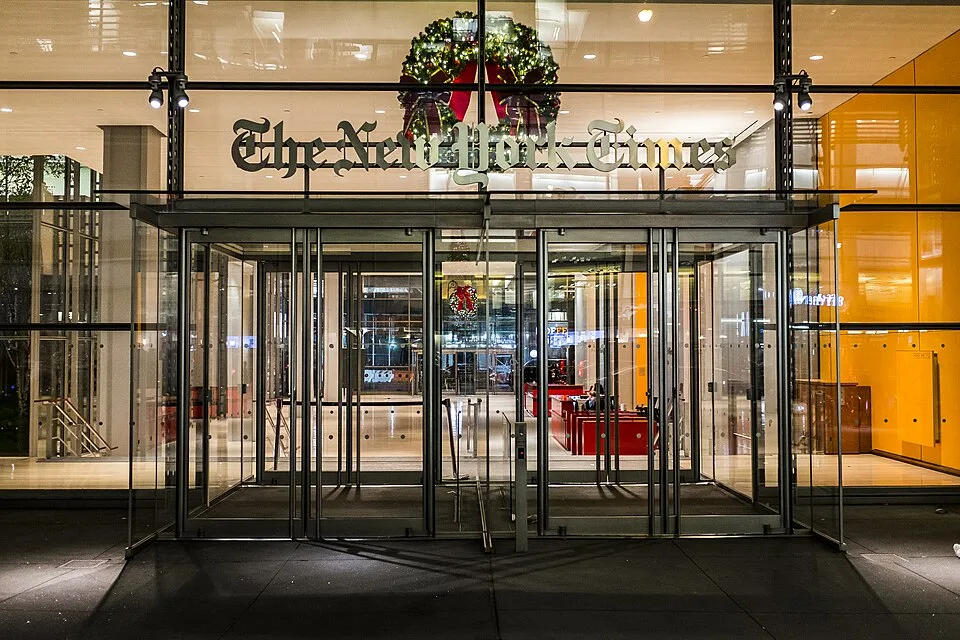
The Justice Department sent federal agents to journalists' homes, subpoenaed their phones, accidentally swept up their spouses, and in one case went after a reporter's mother. On Thursday, a federal judge made them put it all back. This is the story of the Trump administration trying to bully the press into silence, getting caught doing it badly and illegally, and then losing in open court while a judge made jokes about Hugh Jackman movies.
They Showed Up At People's Houses
Let's back up. A few weeks ago, the New York Times published a pair of stories that clearly got under Trump's skin. The first, according to NBC News, reported that the Secret Service urged Trump to fly home from a NATO summit in Turkey on the old Air Force One because Iran had resumed hostilities and the shiny new Qatari-gifted plane lacks antimissile capabilities. The second followed the next day, drilling deeper into the security gaps on that $400 million Boeing 747-8 that Qatar handed over as what Trump called an 'unconditional' gift.
The Trump administration's response was not to address the security concerns. It was to find out who talked. Federal agents showed up at journalists' homes, according to the Times's own reporting, serving grand jury subpoenas demanding testimony and records. The message was clear: tell us your sources, or else.
They Also Got Some Strangers' Phone Records
Here is where the government's case went from aggressive to farcical. At Thursday's hearing before U.S. District Judge Arun Subramanian in Manhattan, prosecutor Sean Buckley acknowledged that federal agents had obtained phone records belonging to the reporters' family members, including spouses and, in at least one case, a journalist's mother. How does that happen?
According to NBC News, Buckley explained that a public-source database had incorrectly linked those numbers to the subjects of the investigation. 'That was an error,' Buckley said in court. 'It was a mistake; it was not in furtherance of the investigation.' So they vacuumed up a reporter's mom's phone records by accident. And they issued subpoenas before checking whether their database was accurate. The government's position, stripped to its core, was: we meant well.
Judge Subramanian also warned that the government's incorrect and incomplete court submissions were serious enough that in a civil case he would normally require the parties to show cause why sanctions shouldn't be imposed. Buckley called the errors inadvertent. The judge was not visibly moved by this.
The Judge Had Some Questions
Subramanian did not go easy on the government. According to NBC News, he repeatedly pressed prosecutor Buckley on a fairly basic legal point: aren't subpoenas to journalists supposed to be the last resort, not the first move?
'Doesn't the law indicate that subpoenas are the last step? Not the first step but the last step?' Subramanian asked. Then he asked it again. 'Subpoenas issued to reporters for their records, they are not the first thing you do; they are the last thing you do,' he said, citing the 'profound First Amendment issues' involved. Buckley initially tried to argue that the subpoenas should simply be held in abeyance rather than withdrawn, so the government could preserve the records. Subramanian pointed out he could just quash them and let the government come back later if it had a real case. Eventually, the DOJ agreed to withdraw the subpoenas entirely.
The DOJ Statement Blamed the Judge
After losing in court, the Justice Department put out a statement that reads like it was written by someone who lost an argument on the internet and couldn't let it go. NBC News published the full text. The DOJ blamed Subramanian directly, claiming 'this judge threatened our attorneys with sanctions unless subpoenas were withdrawn, and blocked us from presenting the meticulous process of this investigation.'
The statement continued: 'The grand jury has a right to hear testimony from all material witnesses in a federal criminal investigation. This judge's conduct overrides clear longstanding principles and common sense.' They also promised the leak investigation is ongoing. A separate DOJ spokesperson told BBC News: 'Make no mistake, this investigation remains ongoing, and we will pursue justice against those threatening national security by leaking classified information, a serious federal crime.' So the message is: we lost today, but we're not done trying.
For its part, the Times was not subtle about what it thought of the whole episode. David McCraw, the paper's top newsroom lawyer, said in a statement quoted by the BBC: 'We are pleased that the government finally conceded that the subpoenas violated the law, but they should never have been issued in the first place.' Reporters Without Borders called Thursday's outcome 'a victory for The New York Times and for every journalist who relies on confidential sources to report in the public interest.'
The Qatari Plane Thing Is Still Genuinely Weird
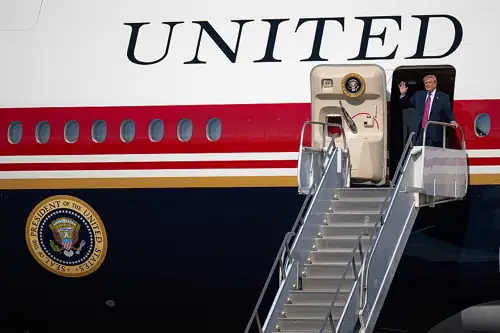
It is worth keeping the underlying story in focus here, because the administration's aggressive response to the Times's reporting almost buried it. Trump accepted a $400 million Boeing 747-8 jet from the government of Qatar. He unveiled it last month. According to BBC News, he has said the plane will eventually wind up in his presidential library, which has not yet been built.
The Times reported, using anonymous sources, that when Trump flew to Turkey for the NATO summit, he came home on the old plane because the new one doesn't have antimissile defenses. The Secret Service, per NBC News's account of the Times's reporting, had urged him not to use the Qatari aircraft, partially because of a resumption of hostilities with Iran. That is the story the administration is trying to suppress. A foreign government gave the president a $400 million plane, and it is reportedly not safe enough to protect him. The DOJ's response was to subpoena journalists and their family members rather than answer any of those questions.
The Dingo Take
The Trump administration went after reporters who covered a legitimate national security story, used a flawed database to accidentally sweep up innocent family members, served subpoenas without following basic legal procedure, lost in court, and then blamed the judge. That is the whole story. If you ran this plot through a screenwriter's room, they would send it back for being too on the nose.
What actually happened in that courtroom on Thursday matters beyond the specifics of this case. Judge Subramanian wasn't doing anything radical. He was applying existing law, the same law that says you go to reporters last, not first, and that the First Amendment is not a technicality to be worked around when the press publishes something inconvenient. The fact that this had to be litigated at all, that federal agents were showing up at journalists' houses serving subpoenas before exhausting any other options, tells you everything about how this administration views the press.
The DOJ says the leak investigation continues. Maybe it does. But they torched their credibility in that courtroom, and the chilling effect they were going for, the one Times attorney David O'Neil said had already taken hold, is now the story. Reporters nationwide watched the government show up at a colleague's mother's door over a news article. You don't need a grand jury subpoena to understand what message that was supposed to send.




Comments