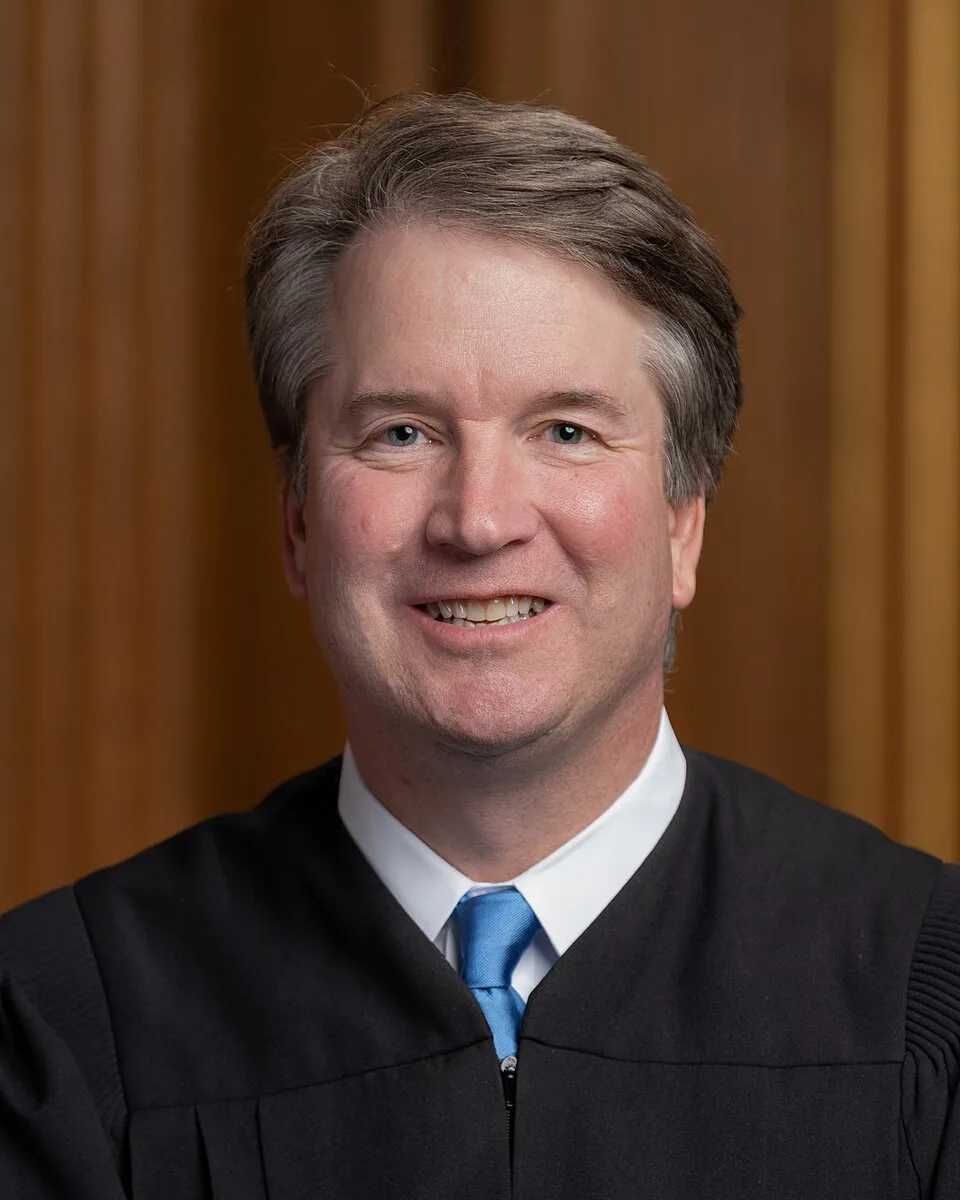
Brett Kavanaugh is not the most reliable vote for Trump on the Supreme Court — that honor goes to Clarence Thomas and Samuel Alito, who back the president at 89% and 88% respectively, according to the Wall Street Journal. But Kavanaugh, sitting at a comparatively modest 76%, has done something arguably more dangerous than loyal voting. He has been writing the legal permission slips. And people have died because of it.
The Opinion That Launched a Thousand Grabs
On September 8, 2025, Kavanaugh issued a solo concurring opinion in Noem v Vasquez Perdomo, lifting a lower court order that had restricted ICE from targeting people based primarily on race, language, or occupation. In plain English: he said stopping someone because they look Latino, speak Spanish, and appear to work a low-wage job was a "relevant factor" and "common sense" for establishing reasonable suspicion. That is a direct quote. From a sitting Supreme Court justice.
Justice Sonia Sotomayor responded with a dissent that reads like a warning from someone watching a country step off a ledge in slow motion. "We should not have to live in a country where the Government can seize anyone who looks Latino, speaks Spanish, and appears to work a low wage job," she wrote. She was not being hyperbolic. She was being prophetic.
Legal scholars shredded Kavanaugh's reasoning with a thoroughness usually reserved for first-year law students who haven't done the reading. Jennifer Chacon, professor and vice-dean at Stanford Law School, noted that his "common sense" invocations came "at the expense of facts and evidence" and pointed out that he had zero evidentiary citations supporting his factual assertions. Zero. Sherrilyn Ifill of Howard Law School was more direct: "Almost every word of this is preposterous."
What the 'Kavanaugh Stops' Actually Produced
The stops have a name now. That is how embedded this is. And what they produced, according to a ProPublica report, is this: within the first month after Kavanaugh's opinion, more than 170 U.S. citizens were detained, described in the report as having been "dragged, tackled, beaten, tased and shot."
Through July 2026, the Guardian reports that 32 American children have been detained. Thirty-one people have died in ICE detention camps. Six people have been shot and killed, including two U.S. citizens, Renee Good and Alex Pretti, in Minneapolis. In July 2026 alone, two men who were not even the targets ICE agents were looking for were killed. Two completely wrong people. Dead.
Now here is where this story curdles into something truly grim. The sharp public criticism of his September opinion apparently got to Kavanaugh, because in December 2025 he quietly inserted a footnote into an unrelated case, Trump v Illinois, repudiating his own previous language. "Officers must not make interior immigration stops or arrests based on race or ethnicity," he wrote. In a footnote. In an unrelated case. After the damage was done. Stephen Miller, who does not read discreet footnotes from embarrassed justices, kept right on going. The stops have continued into 2026, lately in Texas and Maine, with more fatal results.
The Tariff Roadmap Kavanaugh Drew for Trump
The ICE opinions were not a one-off. When the Supreme Court ruled six to three in February 2026 in Learning Resources, Inc v Trump that Trump could not unilaterally impose tariffs at will under the International Emergency Economic Powers Act, Kavanaugh wrote the principal dissent. Trump called the justices who ruled against him "fools" and "lap dogs." About Kavanaugh specifically, he said: "I'm so proud of him."
Kavanaugh's dissent, per the Guardian's analysis, again leaned heavily on what legal scholars are calling factual revisionism. He cited "history and precedent" to frame broad presidential tariff authority as "a traditional and common tool" and again appealed to "common sense." The problem is that no president before Trump had used IEEPA in its 49-year history to levy broad tariffs. Not one. Kavanaugh simply invented a historical pattern that does not exist and dressed it up in legal language.
He also did something judges are not really supposed to do: he speculated extensively about other non-litigated trade statutes that might give Trump what he wanted, essentially drawing the president a map around the court's own ruling. Trump took that map and announced a workaround within hours, a 10% global import surcharge under a different statute. That move was subsequently struck down as illegal by the U.S. Court of International Trade in May. Since then, Trump has threatened a 25% tariff on Brazil, 100% tariffs on Britain and European nations over digital services taxes, and a 50% tariff on most Canadian goods. More lawsuits incoming.
The Method Behind the Madness
What Sidney Blumenthal's analysis in the Guardian makes clear is that Kavanaugh is not just voting with Trump. He is doing something more operationally useful. Justices Thomas and Alito deliver reliable support. Kavanaugh delivers creative architecture. He finds the angle, invents the justification, and hands the executive branch a playbook while technically acknowledging some limits exist.
The pattern is consistent enough to have a name too: factual revisionism. It is a term academic fellow Duncan Hosie at Stanford's Constitutional Law Center used to describe Kavanaugh's approach, defining it as "a previously unrecognized form of precedent subversion that operates as a strategic tool to reshape legal doctrine while managing the Court's dwindling sociological legitimacy." Which is a very careful scholarly way of saying: he makes things up in a way that sounds legitimate long enough for the damage to occur.
The birthright citizenship case, Trump v Barbara, decided June 30, added another chapter. Kavanaugh reportedly dissented on the grounds that Trump's executive order violated federal law but then went sideways from there. The full implications of that opinion are still being parsed, but the pattern is established. He finds the workaround. He writes it down in official legal language. Trump uses it. People get hurt. Kavanaugh adds a footnote later.
The Dingo Take
Let's be very clear about what has happened here. Brett Kavanaugh wrote an opinion that effectively told federal agents it was fine to grab people who look a certain way and speak a certain language. Scholars called it preposterous. A colleague called it legitimizing racial profiling on a massive scale. Within months, two U.S. citizens who were not even the targets were dead in Minneapolis, 32 American children had been detained, and 31 people had died in ICE camps. Kavanaugh then hid a reversal in a footnote in an unrelated case and has offered no public accounting for any of it. This is not judicial philosophy. This is not originalism or textualism or any other -ism with a respectable name. This is cover. Legal cover, delivered with citations and Latin phrases, for a government that wanted permission to do things it was already doing.
The thing that should keep people up at night is not that Kavanaugh votes with Trump most of the time. It is that he has figured out how to be useful in the moments when the court says no. The court struck down the IEEPA tariffs six to three. Kavanaugh lost. And then he spent his dissent essentially writing Trump's next move. The court is supposed to be the check. Kavanaugh is turning the check into a suggestion and providing instructions on how to go around it. That is a different and in some ways more corrosive role than just being a reliable yes vote.
Thirty-two American children detained. Thirty-one deaths in ICE custody. Two people killed who were not even the right targets. Kavanaugh got embarrassed by the blowback, tucked a correction into a footnote, and moved on to the tariffs. Stephen Miller did not read the footnote. He never had to. The permission had already been granted, the template had already been set, and the machine was already moving. A footnote does not bring anyone back.



Comments