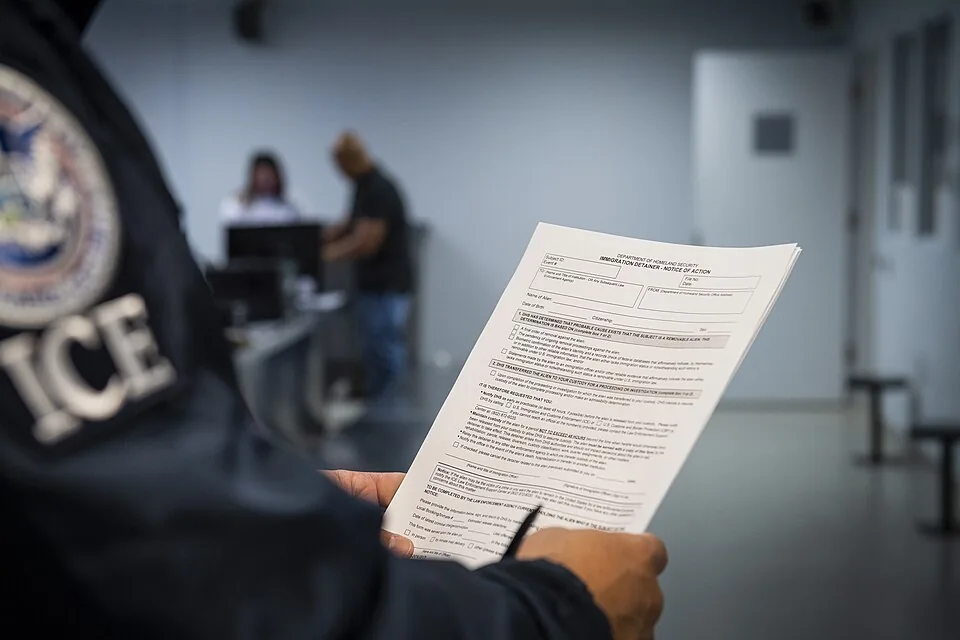
The Trump administration is holding roughly 1,900 migrant children in shelters and foster care, without their parents, for an average of six months, while family members in the United States sit and wait to take them home. Now, more than 50 legal organizations have quietly mobilized to fight back, one child at a time. They are calling it the Children's Due Process Project, and they are filing habeas corpus petitions in federal courts to force the government to either justify keeping these kids locked up or let them go.
Six Months. No Parents. No End in Sight.
Let's start with the numbers, because the numbers are damning. As of the end of August, according to the Guardian's reporting, around 1,900 children were held under federal government control across the United States. These are unaccompanied minors, kids who arrived at the border without a parent or guardian. Some are babies. Some are teenagers. The average stay in a shelter or long-term foster care is 183 days.
Six months. For a child. In a facility. While family members already living in the US wait anxiously to bring them home.
US law actually says these kids should be "promptly placed in the least restrictive setting that is in the best interest of the child." The operative word there is promptly. According to the Guardian, at least 65 children with ongoing immigration court proceedings had been held by the Office of Refugee Resettlement for over a year as of the end of July, based on data from the immigration research platform bklg.org.
The Government Built a Maze and Then Locked the Exit
The Office of Refugee Resettlement, known as ORR, is the agency legally responsible for the welfare of these children. During Trump's second term, the Guardian reports, officials have rolled out new restrictions that make it significantly harder for children to be released to sponsors, and in some states, effectively impossible.
The administration has also stripped away privacy protections for undocumented sponsors, allowing ORR to share information directly with Immigration and Customs Enforcement and Customs and Border Protection. Parents have reportedly been detained at the very appointments designed to process their sponsorship applications. You show up to get your kid. You get arrested instead. That is the system currently operating in the United States.
"There's just attempts from every single angle to harm the children that are in federal custody," Beth Baltimore, interim managing director of the legal services center at The Door, told the Guardian. "And I think because they're in federal custody, the government has more access to them." That last part is worth sitting with. The children being in government care does not protect them from the government. It gives the government more leverage over them.
50 Organizations, One Very Old Legal Tool
The Children's Due Process Project started quietly this summer, according to the Guardian's exclusive reporting. Over 50 legal organizations, firms, and law offices have now joined the effort, with lawyers working pro bono to file individual habeas corpus petitions for each child. Habeas corpus is one of the oldest legal protections in the Anglo-American tradition, a tool that forces the government to stand up in a court and explain why it is holding someone. It has rarely been needed for immigrant children in this country. Until now.
The project is co-managed by the National Center for Youth Law, the Acacia Center for Justice, The Door, and the Immigration and Human Rights Clinic at Loyola University Chicago School of Law. Becky Wolozin, a senior attorney at the National Center for Youth Law, was blunt about the stakes when speaking to the Guardian. "That's the race that we're in, is can we help children get to their families before they get chewed up and spit out by the child detention system?"
The answer to that question is genuinely uncertain. The administration has accelerated immigration hearings for these same children, with government lawyers pushing for their removal from the US before other legal protections can kick in. And last month, the Guardian reports, the administration defunded those children's existing attorneys. Cut off their lawyers, then race them to a hearing. That is the playbook.
The Government's Defense Is Breathtaking in Its Audacity
Asked for comment by the Guardian, a spokesperson for the Department of Health and Human Services offered a response that deserves to be read carefully. "The standards that ORR currently follows closely mirror those of the US foster care system. Once a sponsor completes their application, ORR releases children as quickly, or faster, than the US foster system. ORR is not slow, we are just more careful, as we should be: children's lives are at stake."
A few things. The US foster care system is not exactly a gold standard that anyone is racing to replicate. Using it as a benchmark for how you treat detained migrant children is a choice. A revealing one. The statement also notably does not address the part where the administration made the sponsorship process so difficult and legally treacherous that even willing, vetted family members can no longer complete it without risking deportation themselves.
The government also stated that ORR has "increased safety vetting measures" because, it claims, criminal smuggling organizations play a role in every case involving unaccompanied children. The Guardian notes that while many children do use smuggling networks to reach the US, that reality has little bearing on their legal situation or their safety once they arrive. It does, however, make for a very useful framing device.
What This Actually Looks Like on the Ground
Strip away the policy language and here is what the Guardian's reporting describes. A child arrives at the US border alone. They are placed in a shelter. A family member in the United States comes forward to take them in. That family member either cannot complete the new requirements, cannot risk the exposure to immigration enforcement, or gets arrested trying. The child stays in the shelter. Months pass. Their lawyer gets defunded. Their immigration hearing gets fast-tracked. Lawyers working for free, in federal courts, one petition at a time, are now the primary mechanism standing between these children and indefinite detention or deportation.
"This is the most immediate way to help the kids who are currently being harmed," Wolozin told the Guardian. That sentence should not be true in the United States in 2026. It is.
The Dingo Take
You are supposed to believe this is about child safety. The same administration that defunded these children's lawyers, that allows ICE to arrest parents at sponsorship appointments, that has made release to family members effectively illegal in some states, wants you to understand that all of it is being done very carefully, for the children. Six-month shelter stays. Accelerated removal hearings. Privacy protections for sponsors shredded. But yes, the careful administration is watching out for the kids.
What this is actually about is that children in federal custody are easier to control than children living with family in the community. Baltimore said it directly to the Guardian. The government has more access to them. More leverage. More ability to shape what happens next. Keeping kids in shelters does not protect them. It makes them available. Available for rapid deportation when the administration decides the moment is right, before any of the legal protections attorneys are scrambling to activate can actually land.
Fifty-plus legal organizations filing individual habeas corpus petitions in federal court, case by case, child by child, is an extraordinary act of legal resistance. It is also an indictment of every other institution that should have prevented this from becoming necessary. Congress. The courts. Anyone with oversight authority who looked at 1,900 children averaging six months in custody and decided that was fine. The lawyers showing up are doing the work. The question is whether they can move faster than a federal government that has already been sprinting.



Comments