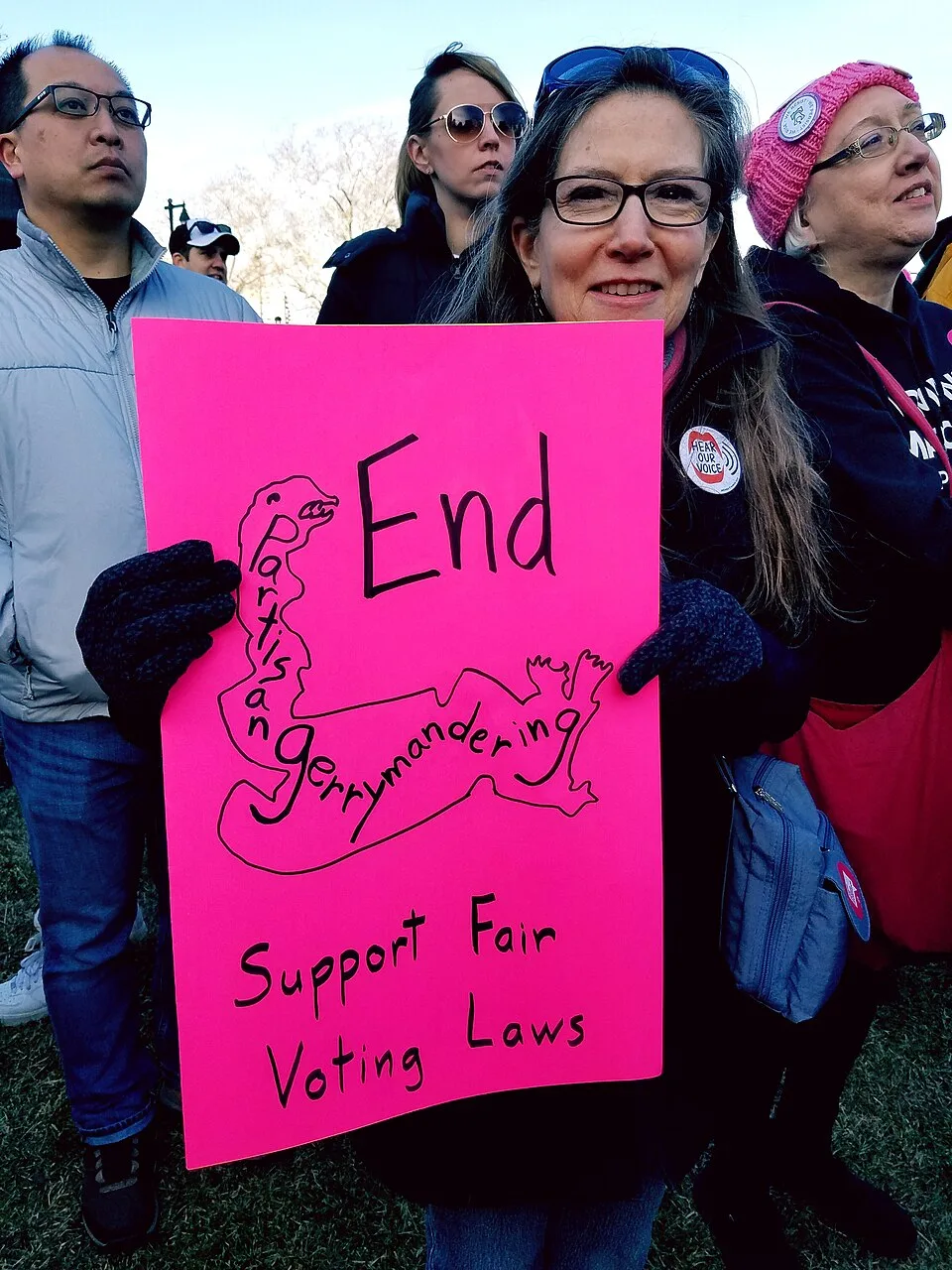
Six Republican-led states have spent the last year methodically chopping up majority-Black congressional districts, scattering Black voters into majority-white areas where their votes will count for considerably less. This is not a side effect. According to NPR's analysis, it is the whole point.
The Supreme Court Handed Them the Crowbar
Before you can understand what happened in Texas, Florida, Louisiana, Alabama, Tennessee, and North Carolina, you need to understand what happened at the Supreme Court. In late April, the Court's conservative majority struck down Louisiana's congressional map, ruling it an unconstitutional racial gerrymander. NPR reports that the decision substantially weakened the Voting Rights Act's protections against racial discrimination in redistricting.
That ruling was essentially a green light. Republicans in state after state had been waiting for exactly this kind of cover, and they used it immediately. The mid-decade redistricting push that Trump kicked off last year suddenly had legal armor. States started ripping up their maps within weeks.
The Voting Rights Act was passed in 1965 because states were doing exactly what they are doing right now. The Supreme Court just made it much harder to stop them.
Texas and Florida: The Opening Moves
Texas moved first. NPR reports that the new Texas map shifts five seats toward Republicans, and it has already cost Black voters a congressional seat in the Houston metro area. Black neighborhoods in Houston, including Sunnyside, Independence Heights, the Third Ward, and the Fifth Ward, were reshuffled between districts. The practical result was that two Black Democratic incumbents, Rep. Al Green and Rep. Christian Menefee, were drawn into the same district and forced to run against each other. Menefee won the May primary runoff. One Black representative is gone.
Florida Republicans followed in May, targeting the 20th District, which had the largest Black population in the state. Governor Ron DeSantis, citing the Supreme Court's VRA ruling as justification, declared the district an unconstitutional racial gerrymander. The new 20th District saw its Black population share drop from nearly 53% to 45%. Majority-Black neighborhoods in Belle Glade, Riviera Beach, and West Palm Beach, areas that went roughly 70 points toward Harris in 2024, were split off into neighboring districts with Black populations of 15% and 26%.
Louisiana, Alabama, and Tennessee: Same Play, Different Stadiums
Louisiana's new map eliminates one of its two majority-Black congressional districts entirely. The old 6th District had threaded across the state picking up Black voters along the way. Now, according to NPR, Shreveport, where Harris voters outnumbered Trump voters three to one, gets absorbed into the predominantly Republican, predominantly white northwest corner of the state. Baton Rouge gets sliced in two. The math is not subtle.
Alabama's situation is almost Kafkaesque. The state's old map was struck down by a lower court as intentionally discriminatory. Then the Supreme Court allowed it back into use anyway. NPR reports that the revived map eliminates one of Alabama's two majority-Black districts, separating the majority-Black cities of Mobile and Montgomery into districts that are only 27% and 42% Black, respectively. Montgomery, a city with deep ties to the civil rights movement, now shares a congressional district with precincts that went 70% to 80% for Trump.
Tennessee kept it simple. Republican lawmakers removed the state's only majority-Black district. The 9th District, which was 62% Black and centered on Memphis, got cracked into three separate districts. Memphis is now split between the 5th, 8th, and 9th districts. All three end up less than 33% Black. The formula, as NPR describes it, is consistent across cases: take a Black urban core that votes Democratic and merge it with white rural areas with strong Republican majorities until the Black voting bloc dissolves.
What They Say vs. What They Did
Republicans have been remarkably candid about one part of this. NPR reports that they have said openly that the new districts are about boosting their party ahead of crucial midterm elections. That is, at least, honest. What they have not said, but what the maps make clear, is that the specific mechanism for boosting their party is diluting Black voting power in states where, as NPR notes, nearly 78% of Black voters supported Kamala Harris in 2024.
These are not districts being drawn to be competitive. These are districts being drawn to be unwinnable. There is a difference between partisanship and targeted disenfranchisement, and these maps are doing both at the same time, using one as cover for the other.
North Carolina Completes the Set
North Carolina rounds out the six-state sweep, with redistricting that occurred in 2025. NPR reports that the 1st District, which had the highest Black population in the state, was redrawn to help Republicans gain a House seat. The pattern is identical to every other state on this list: find the district with the most concentrated Black voting power, crack it open, and pour those voters into districts where they will be consistently outvoted.
Six states. The same playbook. Executed in sequence. If this were one state doing this, it might look like a local political dispute. Across six states, in the same cycle, following the same Supreme Court decision, pushed by the same president, it looks like a coordinated national effort to restructure congressional representation away from Black voters. Because that is what it is.
The Dingo Take
Let's not pretend there is any ambiguity here. The Republican Party, with a significant assist from a Supreme Court that gutted the legal tool specifically designed to prevent this, has spent the last year systematically dismantling the congressional districts where Black Americans had the most political representation. They did it in Texas. Then Florida. Then Louisiana, Alabama, Tennessee, and North Carolina. They used the same technique in every single state: crack the majority-Black district, scatter the voters, and dilute them into whiter, redder areas until they cannot elect anyone who represents them.
The Supreme Court ruling is doing a lot of work in the political coverage of this story, often positioned as some abstract legal development about the technical interpretation of the Voting Rights Act. It is not abstract. It is the reason that Shreveport's Black voters now share a congressional district with the whitest, most Republican corner of Louisiana. It is the reason Memphis no longer has a majority-Black congressional district. The Court did not just interpret the law. It removed the enforcement mechanism that made the law real.
People keep asking when American democracy will face its real test. The answer increasingly looks like: it already is, and the scoreboard is not looking great. Six states. One election cycle. Dozens of majority-Black communities no longer capable of electing someone who looks like them or shares their political interests. If you want to call that something other than a voting rights crisis, you are going to need a better argument than the ones Republicans have been offering.



Comments