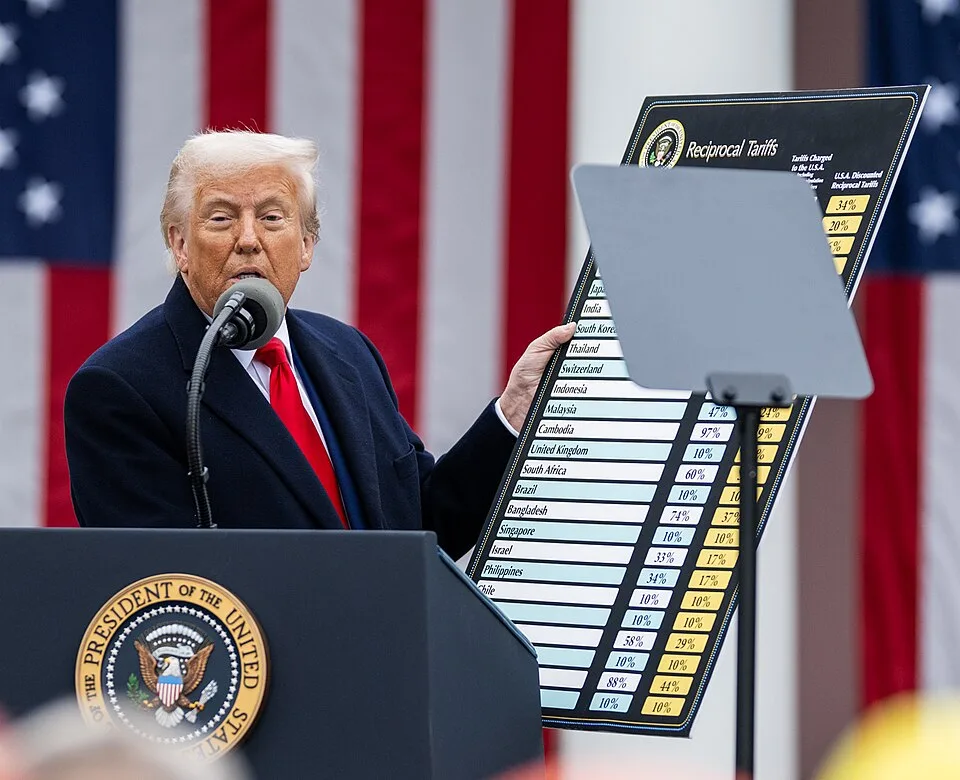
The Trump administration looked at the European Union, a bloc famous for six weeks of mandatory paid vacation and some of the strictest labor protections on the planet, and decided the real problem is that Europe enables forced labor. That is, officially, the legal justification for a new wave of tariffs hitting 60 countries that took effect at 12:01 a.m. Friday. Yes, they said that out loud.
What Actually Happened
The U.S. Trade Representative announced Thursday that 60 trading partners will face new tariffs ranging from 10% to 12.5%, replacing Trump's temporary 10% blanket tariff that expired at midnight ET. According to NBC News, the new duties took effect immediately, hitting basically every country that matters to American trade: Canada, Mexico, India, the United Kingdom, Taiwan, and the European Union all made the list.
The EU, the largest single U.S. trading partner, lands at the higher end with up to a 12.5% rate. That actually appears to be an improvement over the 15% cap Trump and European Commission President Ursula von der Leyen agreed upon last year, so the administration will probably want a trophy for that. Taiwan also faces the 12.5% rate. The UK comes in at 10%, which tracks with the deal Trump and then-Prime Minister Keir Starmer struck in 2025.
The tariffs are being enacted under Section 301 of the Trade Act of 1974. That is not an accident. In February, the Supreme Court struck down most of Trump's previous tariffs, which had been imposed under the International Emergency Economic Powers Act, ruling the administration had exceeded its authority. So they went looking for a different hook to hang them on, and after a monthslong investigation that started in mid-March, they landed on this one.
The 'Forced Labor' Justification Is Doing a Lot of Heavy Lifting
Here is the part where things get genuinely absurd. U.S. Trade Representative Jamieson Greer's office says the 60 affected economies have failed to "impose and effectively enforce a prohibition on the importation of goods produced with forced labor." That is the legal basis. That is what they went with.
Greer put out a statement saying, "The United States has had a forced labor import ban for nearly a century, and rigorously enforces it; it's well past time for our trading partners to do the same." Hard to argue with the general principle. Much easier to argue with applying it to Germany.
The EU's response was roughly what you'd expect from people being told their labor standards are the problem. "You can't say that for the European Union," Kaja Kallas, the bloc's foreign policy chief, told Reuters on the sidelines of ASEAN meetings in Manila. "If you compare our labor laws to the ones of the United States, I mean, we have paid vacations, we have very good labor conditions for our employees, so it's not really grounded." She said this with what one imagines was a deeply exhausted expression.
The Fine Print That Tells You Everything
The tariffs come loaded with exemptions, and the list of what got carved out is genuinely revealing. NBC News reports that fertilizers and some types of fuel are exempt, because both are already surging in price thanks to the war in Iran. Also off the table: some foods, autos, metals, and pharmaceuticals.
On Tuesday, Trump separately announced via social media that generic drugs coming into the U.S. will face zero tariffs for two years. So the administration looked at its own tariff regime, noticed it would make medicines more expensive for Americans, and quietly punched a hole in it. Which is good, actually. It is just worth sitting with the fact that the tariffs designed to protect American workers come pre-loaded with exceptions for the things American workers need to, you know, live.
The political logic here is not complicated. Some of these carve-outs exist because the administration knows full well that tariffs on fuel and food and medicine hurt the people who voted for them. The forced labor framing is the legal scaffolding. The exemptions are where reality pushed back.
Why Section 301 and Why Now
The switch to Section 301 of the Trade Act of 1974 is not just bureaucratic trivia. After the Supreme Court gutted the IEEPA tariffs in February, the administration needed a new legal vehicle that could survive a court challenge. Section 301 has a longer track record and gives the USTR broader investigative authority to respond to unfair trade practices. It is genuinely more legally durable.
The monthslong probe that started in March was the administration building its paper trail. Whether a court eventually buys the forced labor framing as applied to Canada or the EU is a different question entirely, but the administration is at least playing the game more carefully than it was six months ago. That is faint praise, but here we are.
The Dingo Take
Let's just sit with this for a second. The Trump administration's legal justification for tariffing the European Union is that Europe is soft on forced labor. The European Union, where workers are legally entitled to a minimum of four weeks of paid vacation, robust collective bargaining rights, and workplace protections that make OSHA look like a suggestion box. The administration looked at that and said: forced labor problem. The EU foreign policy chief had to explain to reporters, in public, that her continent has paid vacations. This is where we are.
The forced labor framing is not really about forced labor. It is about finding a statute that survives the next Supreme Court challenge while still letting the administration run the trade policy it has always wanted. Section 301 is legally sturdier than IEEPA, the investigations give them procedural cover, and the exemptions show they know exactly which parts of the tariff agenda would blow up in their faces at the ballot box. It is a cynical construction dressed up in the language of human rights, and the countries being tariffed are understandably not moved by the moral lecture.
The deeper problem is that tariff policy run this way, as a series of legal workarounds and rhetorical justifications retrofitted to whatever the president wants to do that week, creates exactly the kind of uncertainty that chills investment and strains alliances. Canada, the EU, India, the UK: these are not adversaries. They are the countries American farmers sell soybeans to and American manufacturers buy components from. Calling them forced labor enablers to justify a tariff regime is not trade policy. It is performance art with a 12.5% surcharge.




Comments