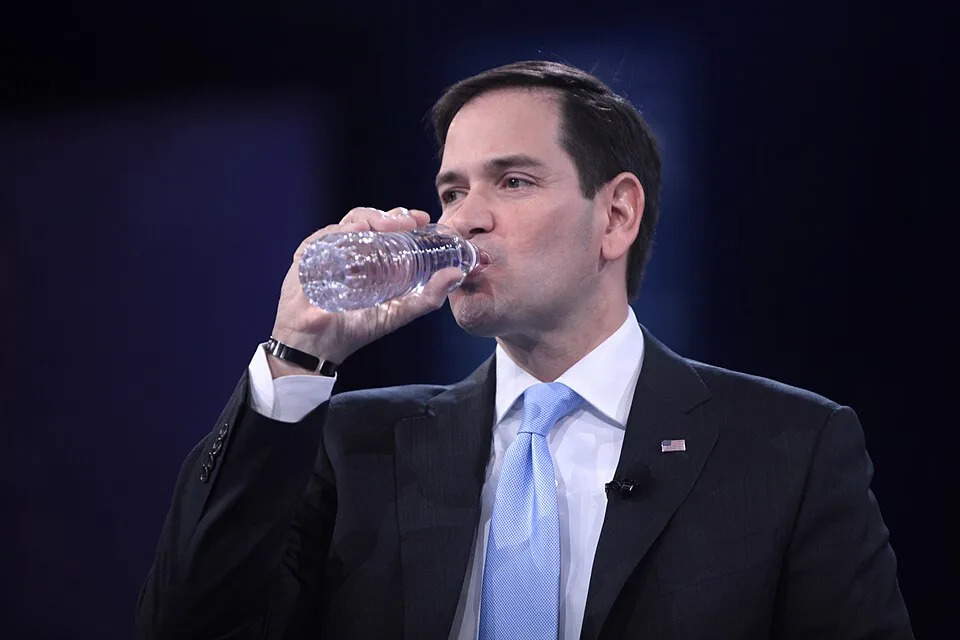
The Trump administration handed Saudi Arabia a commercial nuclear energy deal on Wednesday that skips the anti-enrichment safeguards Marco Rubio once co-sponsored legislation to require. That's not an editorial spin. That is just the sentence. Let it sit there for a second.
What the Deal Actually Says
The agreement, signed Wednesday and reviewed by NPR, gives American companies priority access to supply nuclear reactors and fuel to Saudi Arabia's nuclear energy program. Saudi Arabia is one of the largest oil producers on earth, so yes, this is partly about economics. The Gulf state wants to burn less petroleum at home and export more of it abroad. Fine.
But here is what the deal does not do. It does not ban Saudi Arabia from enriching uranium using American technology. It does not require stronger oversight from the International Atomic Energy Agency. And it does not include the provisions known in arms control circles as the "gold standard," which the U.S. required from the United Arab Emirates back in 2009 under the Obama administration.
Matthew Bunn, a nuclear proliferation expert at Harvard University, told NPR's All Things Considered that while Saudi Arabia's energy pivot is real, there is a second motive running underneath it. "But they also want to provide the foundation, over time, for having more options to move toward nuclear weapons, should they feel the need," Bunn said. That is a Harvard nuclear expert, not a Democratic senator, saying the quiet part loud.
Rubio's Greatest Hit, Played Backwards
In 2019, then-Senator Marco Rubio co-sponsored a bipartisan bill that would have prohibited nuclear cooperation with Saudi Arabia unless the kingdom was transparent about the killing of journalist Jamal Khashoggi and agreed to the gold standard provision, forgoing uranium enrichment. That bill had real teeth. Rubio put his name on it.
Now Rubio is Secretary of State. The deal has neither condition. Khashoggi remains dead. The enrichment language is gone. And Senator Ed Markey, who co-sponsored that 2019 bill alongside Rubio, is not taking it quietly. "Trump's and Secretary Rubio's hypocrisy is matched only by their recklessness," Markey wrote in a statement responding to the deal. "They are allowing Saudi Arabia, a belligerent and authoritarian nation, to develop nuclear weapons technologies while starting a war with Iran under the guise of preventing an Iranian nuclear bomb."
That is a sitting U.S. senator accusing the Secretary of State of hypocrisy on the exact bill they both signed. The Department of Energy, for its part, says the deal expands American technology exports. Sure. That is technically also true.
Israel Is Absolutely Losing Its Mind
Israel, which has spent decades treating its regional nuclear monopoly as a cornerstone of national security, did not receive this news well. That is putting it diplomatically, which is not normally our thing.
Israel's former defense minister and foreign minister Avigdor Lieberman went on Israeli public broadcasting Wednesday to say the deal risks pulling the entire Middle East into an escalating nuclear arms race. Former Prime Minister Ehud Barak told army radio it was evidence of the "loss of trust between Israeli Prime Minister Benjamin Netanyahu and President Trump." Opposition leader Yair Lapid was less measured. "I can't explain just how much this is a total failure of Netanyahu's," Lapid told an Israeli podcast. "That's his job. His job is to prevent a Saudi nuclear program."
With Israeli general elections scheduled for October, this is not a small moment for Netanyahu. His entire political brand rests on being the guy who keeps Israel safe and maintains the American relationship. He is currently watching Trump hand nuclear infrastructure to a neighboring country while Israel's opposition calls it a catastrophic personal failure. October is going to be something.
Meanwhile, the War Is Still Happening
While the nuclear deal was being signed and the diplomatic fallout was spreading, U.S. Central Command announced Wednesday it struck Iranian military and logistics sites in the latest round of exchanges. Iran responded by targeting three U.S. bases in Kuwait, plus American military infrastructure in Jordan and Qatar. Jordan's military said its air force shot down four missiles and six Iranian drones.
Iran's military spokesperson Mohammad Akraminia told state media that "the Islamic Republic of Iran's army has enhanced its preparations for every enemy scenario." In the Red Sea, Yemen's Houthi rebels said they attacked oil tankers, continuing their campaign against Saudi shipping.
Saudi Arabia is also absorbing real economic pain here. Iran closed the Strait of Hormuz, which has hammered Saudi oil exports. Houthi rebels are attacking Saudi oil vessels. The nuclear deal ties American companies and American prestige more tightly to a Gulf partner that is taking fire from multiple directions. The Department of Energy frames this as expanding exports. The other way to frame it is that the U.S. just handed nuclear infrastructure to a country whose crown prince once told a journalist that he'd pursue a nuclear weapon if Iran got one first.
The Dingo Take
Let's be precise about what happened this week. The United States, which launched a war against Iran specifically over nuclear weapons concerns, simultaneously gave Saudi Arabia a nuclear cooperation deal that omits the safeguards designed to prevent Saudi Arabia from pursuing nuclear weapons. Both things are true at the same time. The administration is not even pretending to resolve that contradiction. The Energy Department says it's about exports. That's the whole answer.
Rubio is the thing that really should not be allowed to slide. This is not a case of a politician evolving on an issue or new facts changing the calculus. He wrote the bill. He named the conditions. The conditions are gone. His name is on the new deal anyway. If the press is going to do anything useful in the next 90 days while Congress reviews this agreement, it should be asking Rubio, repeatedly and in public, which part of his 2019 reasoning he now believes was wrong.
Saudi Arabia has a crown prince on record saying he will pursue a nuclear weapon if Iran gets one. Iran is currently in an active shooting war with the United States. The gap between those two facts is exactly where this deal sits. Congress has 90 days to review it. Given recent congressional form, don't hold your breath for anyone to actually stop it.



Comments