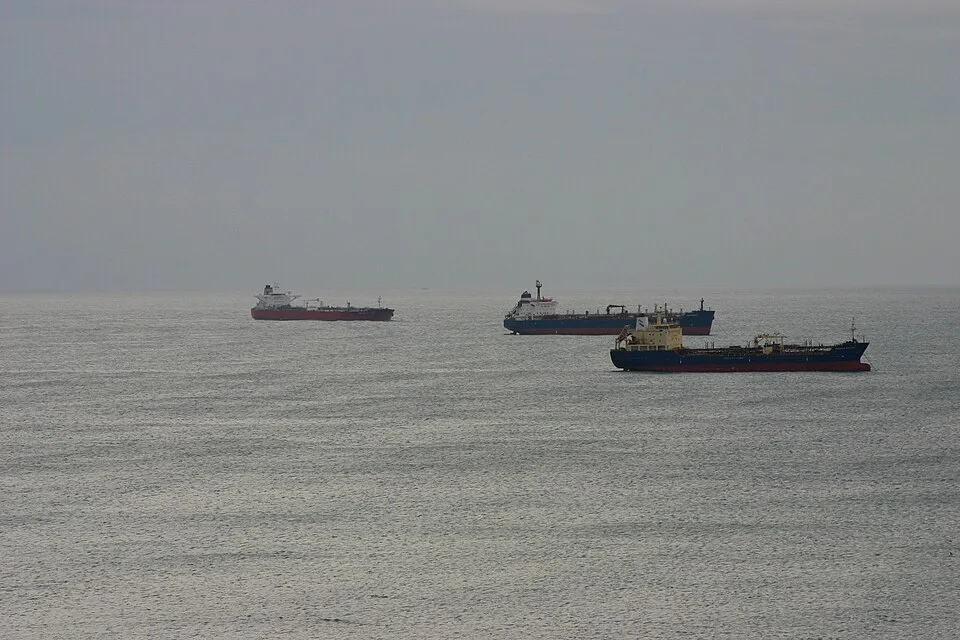
Saudi Arabia spent considerable effort routing oil through the Red Sea specifically to avoid the Iranian threat at the Strait of Hormuz. Iran's Houthi proxies just followed them there. The global oil market now has two maritime strangleholds lighting up at the same time, and the word everyone in energy and finance keeps reaching for is the same one: choke point.
What a Choke Point Actually Is, and Why Everyone Suddenly Cares
A choke point, in the maritime sense, is a narrow stretch of water that a disproportionate share of global shipping has to pass through. Think of it like the single checkout lane open at a supermarket that every person in the store is funneling toward. Except instead of milk and cereal, it's millions of barrels of crude oil, and instead of impatient shoppers, it's warships and militants with drones.
Axios reports that the term is exploding in usage as shorthand for the bottlenecks strangling the oil market, the AI infrastructure buildout, and broader economic flows as the post-Cold War global order continues its slow, messy collapse. The original choke point conversation centered on the Strait of Hormuz, the narrow waterway between Iran and Oman through which roughly a fifth of global oil supply passes on a good day. Saudi Arabia, aware that Iran could theoretically squeeze that passage, built out pipeline capacity to route oil westward through its own territory and out through the Red Sea instead. Smart move. Logical. Also, it turns out, insufficient.
Saudi Arabia Dodged One Problem and Walked Straight Into Another
Here is the situation as Axios describes it: Iranian-backed Houthi militants operating out of Yemen are now targeting Saudi ships in the Red Sea, specifically threatening traffic through the Bab el-Mandeb Strait. That is the narrow passage at the southern end of the Red Sea, connecting it to the Gulf of Aden and the broader Indian Ocean. The Saudi pipeline bypass was designed to sidestep Iranian leverage at Hormuz. The Houthis, who take their marching orders and weapons from Tehran, have simply repositioned the threat downstream.
This is not a subtle operation. The Houthis have been running drone and missile campaigns against commercial shipping in the Red Sea for the better part of two years now, originally framed around solidarity with Gaza. But the targeting of Saudi vessels specifically represents an escalation with direct implications for global energy supply. If you were hoping the Saudis had found a clever engineering solution to Iranian geopolitical leverage, the answer is: not quite.
Two Choke Points, One Very Unhappy Oil Market
The Strait of Hormuz has not gotten less dangerous while everyone was watching the Red Sea. Iran still sits on its northern shore. The Islamic Revolutionary Guard Corps still periodically seizes tankers for fun and diplomatic leverage. The background threat level there has not dropped to zero just because Saudi Arabia built some pipes.
So what we have now, per the Axios reporting, is a situation where both major western export routes for Gulf oil are under simultaneous pressure. The Hormuz route faces Iranian state-level threat. The Red Sea route faces Iranian proxy threat via the Houthis. The difference is mostly organizational. The effect on shipping insurance premiums, on oil prices, and on the nerves of energy traders in London and Houston is roughly the same.
Shipping companies that rerouted away from the Red Sea earlier in the Houthi campaign have been going around the Cape of Good Hope instead, adding weeks to transit times and significant costs to every voyage. That math does not get better when the alternative Hormuz route is also problematic. The global shipping industry is essentially being asked to run laps around Africa indefinitely, and that cost lands somewhere. Usually on consumers.
The Bigger Picture Nobody Wants to Say Out Loud
Axios frames the choke point moment as a symptom of something larger: the old global economic order, built on relatively stable trade routes and the assumption that great-power competition would stop short of actually breaking things, is giving way to something messier and more dangerous. The rules that kept major shipping lanes open, maintained by U.S. naval supremacy and backed by decades of diplomatic scaffolding, are under real stress.
Iran does not need to formally declare war on Saudi Arabia to make Saudi oil expensive and unreliable. It just needs to keep the Houthis supplied with drones and intelligence, which it has been doing with considerable dedication. The Houthis, for their part, have proven remarkably resistant to the U.S. and British airstrikes that were supposed to degrade their capabilities. The campaign to suppress them has been running for over a year. The attacks on shipping have not stopped.
What we are watching is asymmetric warfare being applied directly to the global energy supply chain, and it is working better than most analysts thought it would. Small actors with cheap drones and short supply lines are making life genuinely difficult for one of the most heavily defended commercial shipping corridors on the planet. That should disturb people significantly more than it currently seems to.
The Dingo Take
Let's be clear about what is happening here. Saudi Arabia, one of the wealthiest and most militarily equipped states in the Middle East, built an entire pipeline infrastructure to route around Iranian pressure at Hormuz. And Iran's answer was to send its proxy fighters 1,500 miles to stand at the other end of the pipe. If you are keeping score at home, that is Iran 1, Saudi infrastructure investment 0. The Houthis are not some spontaneous expression of Yemeni grievance at this point. They are a forward-deployed element of Iranian regional strategy, and they are doing exactly what they were equipped to do.
The American public largely stopped paying attention to the Red Sea shipping crisis sometime around the sixth or seventh month of it. The airstrikes got some coverage. The carrier deployments got some coverage. The fact that none of it meaningfully reduced the threat got less coverage. There is a pattern there that applies to a lot of foreign policy reporting, where the initial dramatic action gets the headline and the grinding, inconclusive follow-through disappears into the back pages.
Here is the part that should keep anyone who buys gasoline or cares about inflation up at night: we are not talking about a temporary disruption. Two of the most critical oil export corridors in the world are under coordinated pressure from actors who have every incentive to keep the pressure on and very little reason to stop. The global economy has been improvising around this problem for over a year. At some point, improvisation runs out.



Comments