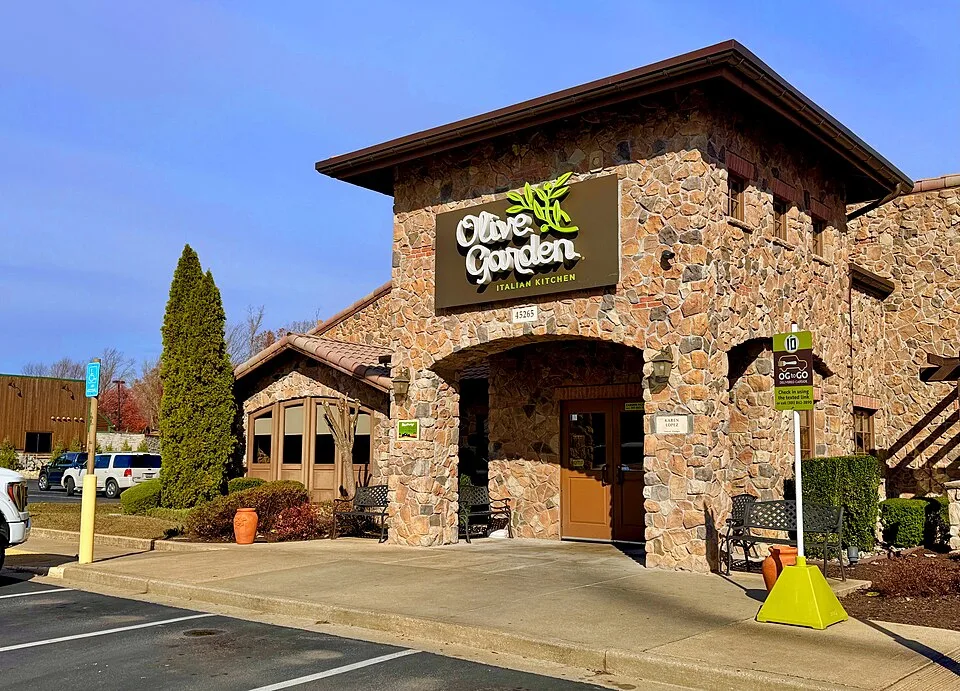
House Majority Leader Steve Scalise went on Fox News this week to make the case that American democracy deserves at least the same level of identity verification as a $100 unlimited pasta pass at Olive Garden. He was not joking. Nobody stopped him.
The Pasta Pass Heard 'Round the World
Olive Garden, the chain restaurant best known for breadsticks and the quiet desperation of suburban birthday dinners, recently launched a "Never-ending Pasta Pass." For $100, 10,000 lucky customers get 13 weeks of unlimited dine-in pasta. The catch, per the Olive Garden website, is that passholders must show a photo ID at time of ordering. You know, so one guy can't share his pasta pass with his whole family.
Republicans have decided this is the hill American democracy will be defended on. Scalise, speaking to Fox News Digital, pointed to the promotion as proof that voter ID requirements are not just reasonable but practically intuitive. "If you want to go buy unlimited pasta at the Olive Garden, they said you have to show your ID," Scalise said, with the energy of a man who just closed the debate. House Administration Committee Chairman Bryan Steil, who told the chamber he used to work at Olive Garden, called it hitting "close to home."
This is the argument. A fettuccine alfredo loyalty program is now the rhetorical anchor of the Republican Party's push for federal voting restrictions. File that one away.
What the SAVE America Act Actually Does
To be clear about what's actually at stake here, because the pasta framing is designed specifically to make you forget: the Safeguarding American Voter Eligibility Act would mandate proof of citizenship during voter registration and require a federal photo ID to vote in U.S. elections. It has passed the House multiple times. It has stalled in the Senate. A separate measure requiring photo ID for mail-in ballots passed the House this week with the help of just 13 Democrats.
Democrats opposing the bill aren't arguing that pasta should flow ID-free. Their objections are more specific. They say the law would make it harder for married women who've changed their names to vote, would burden absentee voters, and would hand the Department of Homeland Security sweeping access to state voter rolls. Those are not nothing concerns. Republicans say none of that is true. Somebody is wrong, and the pasta comparison does not help us figure out who.
Scalise also invoked boarding planes, buying beer, and, in a nice flourish, the 2024 Democratic National Convention, which required attendees to show ID to enter. "Democrats themselves wouldn't even let you go to their convention without showing ID," he said. A convention is not an election, but sure, the metaphor parade continues.
The Polling Argument Republicans Keep Making
Republicans are not wrong that voter ID polls well. It does. Consistently. Across racial groups, party affiliations, and income levels, majorities of Americans tell pollsters they support some form of voter ID requirement. Scalise said as much: "If you're Black, if you're White, if you are Hispanic, if you're Republican, or Democrat, or Independent, you understand that an ID makes sense because it protects your right to vote."
The problem is that polling support for a concept and polling support for a specific piece of legislation are very different things. People who say they support "voter ID" in the abstract are not necessarily endorsing DHS access to voter rolls or the particular citizenship documentation standards the SAVE Act would impose. The Republican Party has spent years running the "everyone supports this in polls" argument while quietly attaching provisions that go considerably further than what the poll question describes. That gap between the vibe of a policy and the text of a bill is where the real argument lives. It's also, notably, not where the pasta is.
How We Got Here, Rhetorically Speaking
Look, political analogies are as old as politics. Comparing complicated policy to everyday life is Communications 101. If you want people to understand a wonky legislative debate, you find something they already know and you draw a line between the two things. Fine. That's fair.
But the Olive Garden gambit is worth examining for what it actually reveals. The reason the analogy resonates with Scalise and Steil isn't because voting and pasta are logically comparable. It's because the argument is designed to make opposition sound ridiculous. "You need ID for pasta but not for voting" is engineered to make anyone who pushes back sound like they're defending anarchy. It's a rhetorical trap, not a policy argument. The White House, Fox News reports, has also been serving up "election security jabs" over the promotion. This thing has been coordinated. Olive Garden did not ask for this.
The Dingo Take
Here is what's genuinely maddening about this entire episode. There is a legitimate, serious debate to be had about federal voter ID requirements. What forms of ID are acceptable? How do you handle people who don't have them and can't easily get them? What does it cost states to implement? Who bears that burden? What oversight is appropriate? These are real questions with real consequences for real voters. They deserve a real argument.
Instead, the majority leader of the United States House of Representatives went on television to talk about pasta. The rhetorical strategy here is to make the issue feel so obvious, so commonsense, so "even Olive Garden gets it" that anyone raising substantive concerns gets laughed out of the room before they can finish a sentence. It's effective. It's also completely corrosive to the kind of actual lawmaking this country is supposed to be doing.
Scalise closed his Fox News appearance by asking, "How about the franchise of American democracy?" Which is a fine question. The franchise of American democracy deserves better than being argued by analogy to a promotional pasta pass. But here we are. Unlimited breadsticks, limited patience, and a Congress that just passed a major voting bill on the strength of a restaurant promotion. Eat up.



Comments