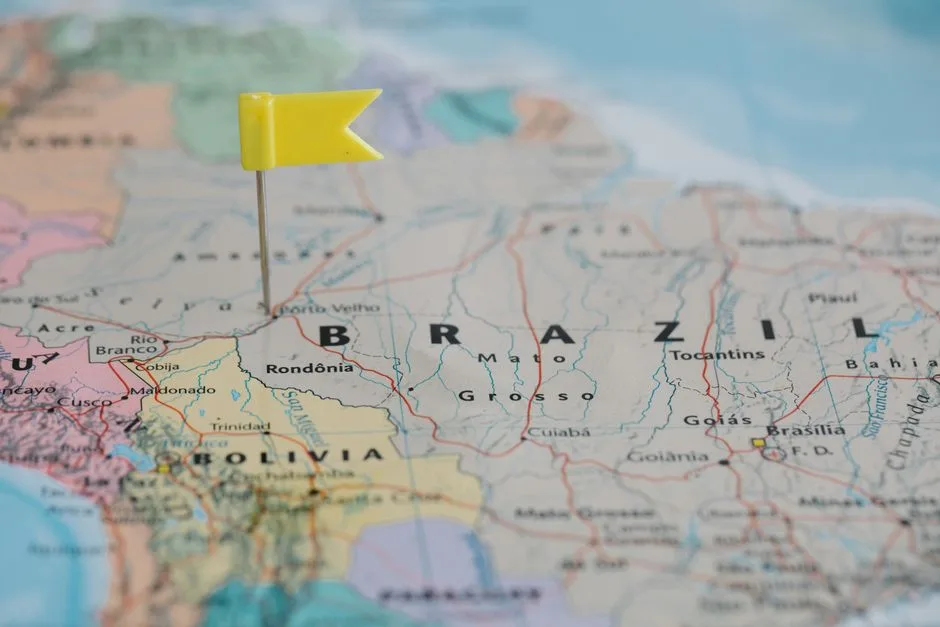
Brazil just told two U.S. State Department officials to stay home, denying their visa requests days before a planned trip to Brasilia to discuss 'election integrity' ahead of Brazil's October vote. The timing alone would make a stone laugh. The administration insists it was routine. Brazil disagrees, loudly.
The Trip Nobody Believes Was Innocent
According to CBS News, Riley M. Barnes, an assistant secretary at the State Department, and Samuel Samson, a deputy assistant, applied for Brazilian visas on July 20. They got their answer on Friday: no. Brazil's Foreign Ministry declined to explain why, which is diplomatic speak for 'you know exactly why.'
The State Department, responding to an Associated Press query, called the planned July 27-30 visit to Brasilia a routine trip to meet government officials, religious leaders, and others about election integrity, religious freedom, and freedom of expression. Standard stuff. Perfectly normal. Nothing to see here. Except that Brazil's presidential election is in October, the son of a coup-attempting former president is the main opposition candidate, and the Trump administration has spent the past several months doing everything short of mailing Lula a horse's head.
The Bolsonaro Connection Nobody Is Hiding
Here is what makes the 'routine visit' framing so staggeringly brazen. As CBS News reports, Senator Flávio Bolsonaro, son of imprisoned former president Jair Bolsonaro, is running against incumbent President Luiz Inácio Lula da Silva in October. Flávio and his brother Eduardo visited Washington in late May, including a meeting with President Trump. Shortly after that visit, the Trump administration designated Brazil's two largest drug trafficking organizations as foreign terrorist organizations, a decision Lula's government has publicly described as a political maneuver to help the Bolsonaro campaign.
Then, effective this past Friday, a tariff hike of up to 37.5% on thousands of Brazilian exports kicked in. The U.S. government claims Brazil engages in unfair competition and fails to stop forced labor. The Lula administration calls both charges fabricated political pressure. You can draw your own line between those dots, but the line is not subtle. It is the width of a four-lane highway.
The Family Business of Election Doubt
The 'election integrity' framing carries particular weight in Brazil, and not in a good way. Jair Bolsonaro spent years insisting that Brazil's electronic voting machines, which the country has used for twenty-five years without a credible documented instance of fraud, were rigged. He never provided evidence. He did, however, inspire a mob that stormed Brazil's Congress, Supreme Court, and presidential palace on January 8, 2023, in a scene that should have felt familiar to Americans watching their television sets exactly two years earlier.
Bolsonaro is now serving a 27-year sentence under house arrest for his role in the attempted coup, CBS News reports. His son Flávio has picked up some of the voting machine skepticism, though he was careful to leave that particular talking point on the shelf when his Liberal Party formally confirmed him as a presidential candidate in Sao Paulo on Saturday. Smart move. The brand is already radioactive enough.
What 'Election Integrity' Means When You Say It Like That
The State Department called Brazil's characterization of the visit a 'baseless lie,' insisting that any suggestion the officials were there to undermine a democratic election was unfair. And sure, maybe Barnes and Samson had nothing but pure intentions. Maybe they just really wanted to talk about religious freedom over brigadeiros in Brasilia in late July.
But the Washington Post reported that Brazil said explicitly the officials were seeking to cast doubt on the upcoming elections, and Brazil's government decided that framing was credible enough to deny the visas outright. These are not inexperienced diplomats misreading the situation. Brazil knows what it is doing and it is saying, clearly and on the record, that it does not trust what the Trump administration is selling.
The Dingo Take
Let's be precise about what has happened here in the span of a few weeks. The son of a convicted coup plotter visits Trump in Washington. The Trump administration immediately designates Brazil's biggest criminal organizations as terrorists, a designation Lula's government says is designed to destabilize the country ahead of an election. Massive tariffs land on Brazilian goods. And then two State Department officials try to fly down to have a little chat about election integrity. Brazil said no. Good for Brazil.
The Trump administration's response, that this is all routine and any other interpretation is a lie, would be more persuasive if the administration had any track record of staying out of other countries' elections when a friendly candidate was in the running. It does not. What it has is a pattern so consistent and so brazen that even calling it an 'open secret' gives it too much credit for subtlety. This is not a secret. This is a strategy.
And here is the rich irony nobody should let slide. The American government, which watched its own Capitol get ransacked by people who believed a lie about electronic voting machines, is now sending officials to Brazil to raise concerns about electronic voting machines, in an election where the main opposition candidate is the son of the man who told that exact lie and ended up under house arrest for it. The audacity has gone beyond audacity. It has achieved a kind of performance art.
Comments