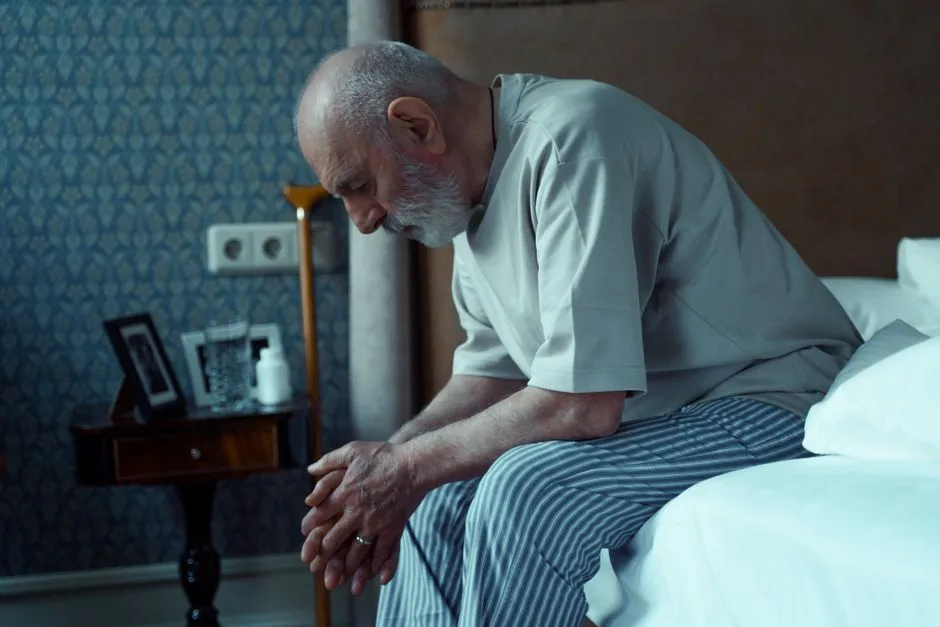
The number of counties where at least one in five residents is over 65 has nearly tripled since 2010, according to the USDA. Those same counties are where loneliness and social isolation do the most damage to people's health. And this Sunday, while the rest of television is running ads for reverse mortgages, CBS News Sunday Morning is actually going to talk about it.
The Numbers Nobody Wants to Talk About
Let's just sit with the USDA figure for a second. Nearly tripled since 2010. That is not a slow creep. That is a generational wave crashing into communities that already had fewer doctors, fewer transit options, fewer everything, and the federal response has been, to be generous, underwhelming.
CBS News Sunday Morning correspondent Lee Cowan is heading to North Dakota this weekend to look at a program called Aging in Community, which takes what the show describes as a grassroots approach to building connections between rural neighbors. It is not a government mandate or a billion-dollar tech solution. It is people deciding to notice each other. Which, in 2026, apparently qualifies as radical innovation.
What Loneliness Actually Does to a Human Body
This is not a feelings story. Loneliness and social isolation among older adults are associated with higher rates of dementia, heart disease, depression, and early death. The research on this has been accumulating for years. The U.S. Surgeon General issued an advisory on the loneliness epidemic back in 2023. Doctors have been raising the alarm longer than that.
And yet here we are, in the summer of 2026, with a federal government busy dismantling agencies, slashing Medicaid, and picking fights with universities, while the rural elderly quietly disappear into a silence that nobody in power seems to find urgent. North Dakota State University gerontology specialist Jane Strommen has been working on this. Centers for Medicare and Medicaid Services has a Rural Health Transformation program that exists. These are not secret resources. They are just chronically underfunded and undervalued compared to literally anything else on the national agenda.
The Rest of Sunday's Show, Because It's Actually Worth Your Time
CBS News Sunday Morning this week, with Mo Rocca guest hosting, is stacking a genuinely interesting lineup around the rural aging story. Artist Derrick Adams, 56, gets a profile with correspondent Nancy Giles ahead of his mid-career retrospective at the Institute of Contemporary Art in Boston, running through September 7. Adams is known for paintings that capture Black joy in vibrant, kaleidoscopic color, which is the kind of art that tends to make certain people deeply uncomfortable for reasons they struggle to articulate out loud.
Corinne Bailey Rae, two-time Grammy winner, is also on the show talking with correspondent Seth Doane. It has been 20 years since "Put Your Records On" made her an international name, and she is touring to celebrate the anniversary of her debut album. The conversation reportedly covers Billie Holiday, Kurt Cobain, the death of her first husband, and what it means to rebuild a life. That is a lot of emotional real estate for a Sunday morning, and it sounds like she handles it.
Worms, Sharks, and a Supermodel Walk Into a Sunday Show
Look, not everything has to be a crisis. Correspondent Conor Knighton is revisiting a piece on worm grunting, which is exactly what it sounds like: a method of drawing earthworms out of the ground using vibrations. The town of Sopchoppy, Florida, apparently holds an annual Worm Gruntin' Festival and calls itself the Worm Capital of the World. Sopchoppy is doing fine. Sopchoppy knows who it is.
Lauren Hutton is also getting a profile rebroadcast. Hutton, who became the highest-paid model in history as the face of Revlon and still holds the record for most cover appearances on American Vogue, is the kind of person who makes you feel like you have wasted your life. She lived among the bushmen of the Kalahari. She survived a near-fatal motorcycle accident in 2000. When asked about the low points, she reportedly says, "I'd do it again in a second." Incredible. Iconic. Slightly exhausting.
Remembering Peter Lassally and a Life That Spanned Horrors and Laughter
The show's web extras include a tribute to Peter Lassally, the legendary late-night television producer who died July 19, 2026 at age 93. Lassally worked with Johnny Carson and David Letterman and was described as a mentor to generations of comedians. CBS News is re-airing a 2018 profile Mo Rocca did with him, in which Lassally discussed working with the kings of late-night and also his childhood, part of which was spent in Nazi concentration camps.
That last detail lands like a punch to the stomach, as it should. A man who survived that, and then spent his life in a room helping make people laugh. There is something worth thinking about there, even if Sunday morning television is not always the place where the thinking gets done.
The Dingo Take
Here is what sticks with you after reading through Sunday's lineup. The cover story is about a crisis that is invisible because the people experiencing it are old and rural and not particularly useful to anyone trying to win a news cycle. They are not marching. They are not trending. They are sitting alone in farmhouses in counties where the nearest neighbor is three miles away and the nearest specialist is three hours, quietly becoming statistics that the USDA will report in another decade and everyone will say they had no idea.
The Aging in Community program in North Dakota is a good thing. Grassroots connection-building among neighbors is a good thing. But it is also the kind of solution you arrive at when the larger systems have already failed. You do not build a neighborhood watch program because everything is fine. You build it because the police aren't coming. The fact that seniors in rural America are solving their loneliness crisis by literally knocking on each other's doors is heartwarming and also a quiet indictment of every level of government that should have gotten there first.
CBS News Sunday Morning has been doing this for decades: finding the stories that fall between the algorithmic cracks, the ones that do not generate outrage but generate something slower and more corrosive, which is the feeling that a country is quietly failing people it promised to take care of. Set your alarm. Watch the North Dakota piece. Then maybe call someone who lives alone.




Comments