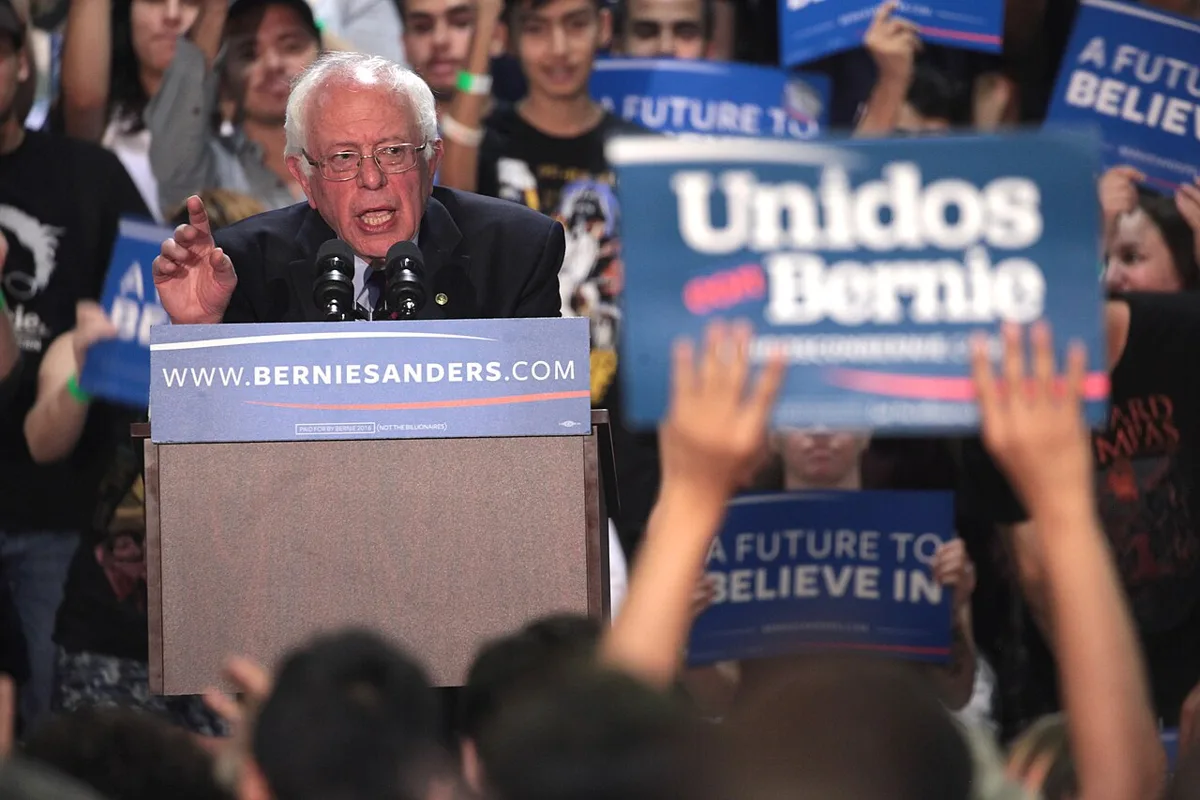
Bernie Sanders went on national television Sunday to pump up his slate of progressive 2026 candidates, declare war on the billionaire class for the ten thousandth time, and explain why he has absolutely no regrets about backing a Senate candidate who had to quit the race over a sexual assault allegation. Classic Bernie. Consistent to a fault.
The Pitch Has Not Changed. Not Even A Little.
CBS News reports that Sanders appeared on Face the Nation with Margaret Brennan and delivered what was, in essence, the same speech he has been giving since approximately 2015. The billionaire class is rigging the economy. Working people are living paycheck to paycheck. The establishment is terrified. The grassroots are rising.
To be clear, he is not wrong about any of that. The man has found a groove and he is staying in it. He specifically highlighted two Senate candidates he is backing: Abdul El-Sayed in Michigan and Minnesota Lt. Gov. Peggy Flanagan, both heading into August primaries. Sanders called the energy around their campaigns proof of "grassroots excitement and enthusiasm" and a nationwide hunger for change.
"Whether it's Michigan, Minnesota, Vermont, or anyplace else in this country, the polling indicates this, the people are sick and tired of the status quo," Sanders told Brennan. Which is either a rousing call to arms or the same voicemail greeting he has had for a decade, depending on your tolerance for repetition.
Fifty Million Dollars Against One Guy Is, In Fact, A Lot Of Money
Here is where the story gets genuinely ugly, and Sanders is right to be furious about it. According to CBS News, super PACs have poured $50 million into the Michigan Senate race specifically to defeat El-Sayed, who is running against moderate Democratic Rep. Haley Stevens. Fifty million dollars. In a Democratic primary. To stop one progressive candidate.
El-Sayed is not some fringe figure. He is a former public health commissioner and a physician. The fact that the party's donor class is spending nine figures to kneecap him in a primary tells you everything about who the Democratic establishment is actually protecting and why.
Sanders acknowledged the math is brutal. "Whether we could overcome that remains to be seen," he said. Which is a rare moment of Sanders hedging, and honestly more honest than his usual full-throttle optimism. That kind of money does not get spent without results. The billionaires did not get to be billionaires by losing.
Rahm Emanuel, Still Being Rahm Emanuel
CBS News notes that Rahm Emanuel recently published an op-ed warning that progressive primary challenges could fracture the Democratic base and hand seats to Republicans in November. He has made this argument before. He made it in 2018. He made it in 2020. He will make it from whatever ambassadorship or cable news contract he lands next.
Sanders was asked to respond and did not take a breath before going for the jugular. "People are sick and tired of the Rahm Emanuels and Democratic establishment and Republican establishment," he said. It landed exactly as intended.
The Rahm Emanuel argument is not crazy on its face. There are real examples of progressive candidates running in districts they could not win in a general election and handing the seat to Republicans. But it is also a convenient argument for people who prefer a Democratic Party that does not actually challenge the donor class, healthcare industry, or financial sector. Rahm knows which side his bread is buttered on, and he has never been shy about it.
The Maine Situation Is a Mess and Sanders Kind of Owns Part of It
This is where the interview got uncomfortable, and Brennan deserves credit for pushing on it. As CBS News reports, Sanders had been backing progressive Senate candidate Graham Platner in Maine. Platner suspended his campaign after a sexual assault allegation surfaced, ending a bid that had already survived other personal controversies Sanders glossed over. State Democrats have since selected Troy Jackson as the replacement candidate.
Brennan asked Sanders directly if he regretted backing Platner. Sanders said no. He said that when the allegation emerged, he called Platner and told him to get out of the race, which Platner did. Sanders seemed to think that handling was sufficient.
When Brennan pressed him on whether his other endorsed candidates had been properly vetted, Sanders said, "I don't know who has been 'fully vetted,'" before pivoting immediately to how much they care about working people. That is not a great answer. That is, in fact, a terrible answer dressed up in class-struggle language. Caring about the working class does not retroactively constitute a background check.
Troy Jackson Enters The Chat With About Five Minutes Left
Sanders did pivot to genuine optimism about Jackson, Maine's new progressive Senate candidate who landed on the ballot under chaotic circumstances after Platner's exit. According to CBS News, Sanders said he has known Jackson for years and believes he can still win despite the compressed timeline.
"I think he stands an excellent chance to win," Sanders said, adding that Jackson understands the economic anxieties of Maine voters and can speak to them directly. Whether that translates to a winning campaign with weeks left before the primary and a mess of headlines about his predecessor is an open question.
Sanders also made the argument that progressive candidates can peel off working-class Republican voters by speaking directly to economic pain. "They can't afford to send their kids to college. They can't afford decent retirements. More than a few of them will be voting for Peggy Flanagan and Abdul in Michigan," he predicted. Maybe. Cross-party economic populism is real. It is also historically easier to promise than to deliver at the ballot box.
The Dingo Take
Here is what is true: Bernie Sanders is not wrong about the economic conditions he keeps describing. Sixty percent of Americans living paycheck to paycheck is real. The $50 million being spent by super PACs to crush a progressive Senate candidate in a Democratic primary is real and obscene. The fact that Rahm Emanuel gets to play wise elder statesman while cheerleading for the same donor-friendly party apparatus that has been hemorrhaging working-class voters for twenty years is genuinely rich.
Here is what is also true: "I don't know who has been fully vetted" is not the answer a movement leader should give when asked why he backed someone who had to drop out over a sexual assault allegation. The working class deserves champions who do basic due diligence, not just people who can give the right speech about income inequality. Sanders has been in politics long enough to know that movements get defined by their worst moments as much as their best ones, and Platner was a bad moment that got answered with a shrug and a pivot.
The 2026 midterms are shaping up to be a genuine test of whether the progressive wing of American politics has built something durable or whether it is still just a very loud, very principled protest movement inside a party that does not want it there. El-Sayed and Flanagan's August primaries will tell us something real. Whether anyone in the Democratic establishment is paying honest attention to what those results mean is a separate question entirely, and probably a sadder one.




Comments