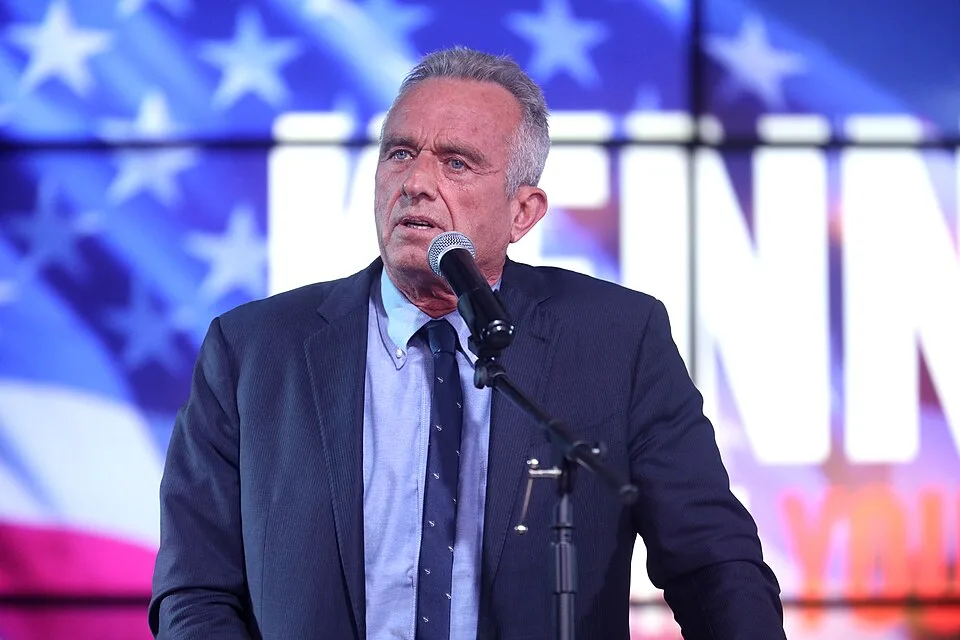
Robert F. Kennedy Jr. went before Congress and called the lack of Alzheimer's screening 'almost regulatory malpractice.' He said this while his own department had spent more than a year preventing the exact federal panel responsible for developing screening recommendations from meeting. The level of self-awareness required to clock that contradiction appears to be beyond the current capacity of HHS leadership.
The Panel That Isn't Allowed to Panel
The US Preventive Services Task Force is a group of expert volunteers whose job is to assess preventive health services and issue recommendations that shape what insurance actually covers. It had plans to issue a recommendation on cognitive decline screening this year, along with 13 other topics. It cannot do that because the Trump administration stopped it from meeting in March 2025 and hasn't let it resume.
According to The Guardian, the administration has also failed to fill at least eight vacancies on a panel that normally has 16 members. Then, in May, a political appointee named Roger Klein, director of the Agency for Healthcare Research and Quality, fired two of the taskforce's chairs. So to recap: no meetings, half the seats empty, leadership decapitated. The administration has effectively put the panel in a coma and is now publicly complaining that it isn't doing enough.
John Ruiz, a professor of clinical psychology at the University of Arizona who recently served on the taskforce, told The Guardian that USPSTF recommendations don't just affect insurance coverage. They shape future research, because the draft recommendations go out for public comment and researchers engage with them heavily. Kill the panel, and you don't just stall policy. You slow down the science.
Kennedy Goes to Congress and Says the Quiet Part Loud
In April, Kennedy testified before the House energy and commerce subcommittee and called the absence of early Alzheimer's screening 'almost regulatory malpractice.' He told Congress: 'Screening for prevention is absolutely critical.' He also called the USPSTF 'lackadaisical and negligent for 20 years' in separate congressional testimony.
Here's the thing. At the exact moment Kennedy was delivering that diagnosis of federal negligence, his department had been sitting on the panel's neck for thirteen months. The taskforce was 'lackadaisical' because HHS had canceled its meetings, hollowed out its membership, and fired its leadership. Kennedy wasn't describing a pre-existing failure. He was describing the consequences of his own administration's choices and apparently didn't notice, or didn't care.
When The Guardian asked HHS about it, spokesperson Emily Hilliard responded with a list of other things the federal government is doing on Alzheimer's, including NIH funding, a CMS care coordination model, and FDA oversight of new therapies. All of which may be true. None of which is the USPSTF doing its actual job.
The Science Is Complicated, and That's Exactly Why the Panel Matters
Part of what makes this so maddening is that Alzheimer's screening is genuinely hard. The Guardian spoke to researchers who are blunt about the current state of the evidence. 'The evidence for cognitive screening for dementia is not great,' Ruiz said. 'You get 10 neurologists, you get 10 approaches on how they're going to assess that. The evidence is mixed at best.'
Right now, screening typically works by waiting for symptoms to appear, then running cognitive tests and potentially imaging. There is no mammogram equivalent for Alzheimer's, as Columbia University professor Allison Aiello told The Guardian. Unlike breast cancer, where there's an established screening infrastructure, Alzheimer's doesn't have that. Building it requires sustained research, coordinated effort, and yes, guidance from bodies like the USPSTF.
Kennedy appears to have a specific test in mind. The Guardian reports he may be referencing a blood biomarker test for something called P-Tau217, approved in May 2025 for people over 50 who are already showing symptoms. Not for screening healthy people. Ann Cohen, co-director of the University of Pittsburgh Alzheimer's Disease Research Center, told The Guardian she disagrees with rolling those tests out broadly, noting they have 'very good diagnostic, not prognostic, value.' One study also found the tests could generate significant false positives in real-world conditions. Kennedy, characteristically, was not specific about any of this when he talked about it in Congress.
The Research Is Getting Hit From Multiple Directions
The USPSTF paralysis isn't happening in isolation. The Guardian reported back in March 2025 that Alzheimer's researchers across the country said their work had been 'slowed' by Trump administration policies, including funding disruptions from NIH. Cohen's own research on Alzheimer's screening tools was killed by those same policies.
So the full picture looks like this: the panel that coordinates screening recommendations is frozen, the researchers who would generate the evidence those recommendations need are losing funding, and the health secretary is standing in front of Congress calling the whole situation negligent. The 7.4 million Americans 65 and older currently living with Alzheimer's, plus the roughly 200,000 Americans in middle age with the disease, are somewhere in the background of all this, not a priority so much as a rhetorical prop.
The Dingo Take
There is a specific kind of Washington maneuver where you destroy something, then give a speech about how broken it is. It's not new. But Kennedy has refined it to a strange art form. He stood before elected representatives, called the lack of Alzheimer's screening 'almost regulatory malpractice,' then went back to an agency that had spent more than a year making sure the screening panel couldn't function. The audacity is almost impressive if you can get past the actual consequences for actual sick people.
The HHS response to The Guardian's questions was a masterclass in deflection. Yes, NIH funds Alzheimer's research. Yes, CMS has a care coordination model. None of that is what the question was about. The question was: why did you stop the USPSTF from meeting, fire its chairs, and leave half its seats empty? The answer, which HHS did not provide, is that the administration views independent scientific panels as obstacles rather than assets, regardless of what Kennedy says in committee rooms.
Seven and a half million older Americans have Alzheimer's. Two hundred thousand more are diagnosed in middle age. There is no major treatment. The urgency of better screening tools is real, and the researchers working on it know it. What they do not need is a health secretary who talks about the problem in public while his department quietly dismantles the infrastructure designed to solve it. That's not health policy. That's theater with a body count.

Comments