
A woman called 911 because she was in mental health crisis and wanted to go to the hospital. The last time she'd tried to get help on her own, a cop arrested her for acting erratically and put her in a jail cell. Baltimore looked at that story and decided to try something different.
What Actually Happened in That McDonald's Parking Lot
In March, mental health clinician Michala Williams drove out to a McDonald's parking lot off a busy Baltimore street to meet a 38-year-old woman who was sobbing in her car. The woman had kids ranging from age 2 to 22, a sick body, a jailed fiancé, and a head so full of it all she couldn't eat. She'd called 911.
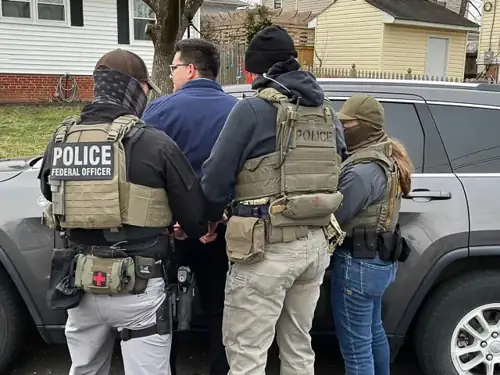
The month before, she'd tried to drive herself to the hospital. A cop pulled her over for expired registration, decided she was acting erratically, and arrested her. She ended up sitting in a cold jail cell instead of a hospital bed. So this time she called 911, and this time the dispatcher recognized she didn't need a squad car. She needed one of Baltimore's mobile crisis teams.
By the end of an hour with Williams, the woman had referrals to a psychiatrist, a therapist, legal assistance, and a case manager to look into services for her child with autism. That's the full difference between the two outcomes: one involved handcuffs, one involved actual help. As NPR reports, that's the whole point.
1.68 Million Calls and Most of Them Don't Need a Gun
Here is a number worth sitting with: Baltimore received 1.68 million calls to 911 in 2024. According to Tahir Duckett, a community safety expert at Georgetown Law, tens of thousands of those calls were about a homeless person asleep in a store, someone who seemed confused in a park, a person yelling on a sidewalk. None of those situations require, as Duckett put it, "a badge, a gun, and handcuffs to resolve."
What they typically get anyway is exactly that. And what often follows is an arrest rather than any meaningful help. A recent study out of Durham, North Carolina found that when non-law enforcement teams responded to 911 calls, they produced fewer arrests than police responses did, particularly for Black callers, men, and people between ages 25 and 39. Fewer arrests, more actual problem-solving. The data is not subtle.
Police responses to mental health and social crises don't just fail to fix the problem. According to Duckett, they frequently create new trauma on top of whatever drove the original call. That's a lot of work, a lot of taxpayer money, and a lot of human suffering in exchange for making things worse.
Where the Money Comes From
Back in 2018, Baltimore made a bet. While other cities accepted a global settlement with opioid manufacturers and distributors, Baltimore opted out and sued them independently. That gamble is now paying out in the form of roughly $400 million in opioid-related settlement funds flowing into the city, according to NPR.
City officials tied those funds to drug-related harms and prevention services, including housing support, healthcare, and education. So far, $15 million of that money has been earmarked for expanding 911 response capacity, according to Sara Whaley, Baltimore's director of overdose response. The expanded service will run around the clock and cover a wider range of crises than the existing mobile crisis teams, which focus specifically on mental health emergencies.
One other program funded by the same settlement money will place naloxone, the overdose reversal drug, in boxes at every subway stop. Baltimore lost approximately 1,000 people per year to overdoses every year from 2020 to 2023. The city is spending its legal winnings trying to not keep doing that.
The Part Where Baltimore's Homicide Numbers Get Weird
Here is a fact that deserves more attention than it usually gets: Baltimore's homicide rate dropped 60 percent between 2021 and 2025, setting records. That is a genuinely extraordinary public safety achievement, and it happened alongside this broader investment in non-police crisis response infrastructure.
NPR doesn't draw a straight causal line between those two facts, and neither will we. But the city that is making the biggest reductions in violent crime is also the city choosing to route mental health crises away from police and toward clinicians. That's at least worth keeping in mind the next time someone tells you that any reduction in police involvement is a one-way ticket to chaos.
What the Woman in the Parking Lot Got vs. What She Got Before
Williams, the clinician who met with the woman at McDonald's, described the job plainly to NPR: take everything someone has been through and figure out steps one, two, and three to give them "a little bit of sliver of something" that shows help exists.
That is the whole program. That is the pitch. Someone is in crisis, they call 911, and instead of a patrol car they get a person whose only tool is problem-solving. No arrest powers, no weapons, no reason to treat a sobbing woman in a parking lot as a threat to be managed.
The previous month, that same woman got arrested for wanting to go to the hospital. The system Baltimore is building is a direct rebuke to that outcome, funded by money extracted from the pharmaceutical companies that created the addiction crisis in the first place. There is a grim poetry to that, if you squint.
The Dingo Take
The conversation about policing in America has been stuck in a stupid loop for years now, bouncing between "defund the police" as a slogan and "back the blue" as a counter-slogan, while actual people in actual crises keep getting arrested for the crime of not having anywhere else to turn. Baltimore is doing something that cuts through all of that noise: it is simply asking which calls actually need a cop and routing the rest to someone better equipped to help. This is not radical. It is almost embarrassingly obvious.
What makes it notable is that it is working, it is funded, and it is scaling. This isn't a pilot program being run on vibes and optimism. It is $15 million in opioid settlement money, a nonprofit mental health infrastructure that has been operating for years, and a city that looked at 1.68 million 911 calls and asked which ones were actually emergencies. That is governance. Actual, functional governance, aimed at outcomes rather than optics.
The woman in the McDonald's parking lot is the whole story. She needed a psychiatrist and a case manager and a lawyer. She got those things when the right person showed up. A month earlier, she needed a hospital and she got a jail cell because the wrong person showed up. Baltimore is trying to make sure more people get the first outcome. Other cities should be taking notes instead of waiting to see how it goes.


Comments