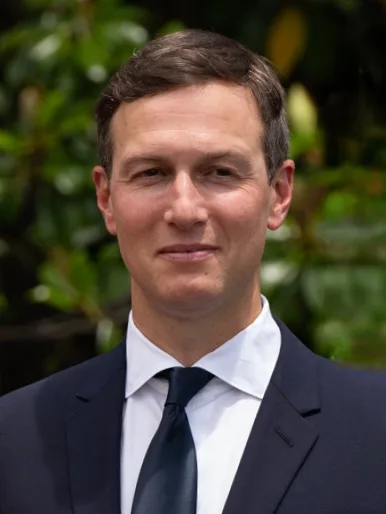
The United States has paused its military strikes on Iran, and the man now helping steer the diplomatic fallout is Jared Kushner. Yes, that Jared Kushner. The son-in-law is back in the room where it happens, and this time the room is one bad negotiating session away from a resumed bombing campaign.
What Trump Actually Said
In an interview published Monday, Axios asked Trump directly why U.S. strikes on Iran had stopped. His answer was about as reassuring as a smoke detector with dead batteries. He said the pause exists to give negotiations another chance, but made clear that expanded military operations are right back on the table if diplomacy collapses.
That is not a ceasefire. That is a timeout with a gun pointed at the clock. Trump has essentially told Iran: talk fast, talk well, and hope Steve Witkoff and Jared Kushner are having a good week.
The Talks Themselves Are a Geopolitical Fever Dream
According to Axios, the current negotiations are focused on two things: reopening the Strait of Hormuz, through which something like a fifth of the world's oil supply moves on any given day, and relaunching broader talks on a comprehensive nuclear deal. Both of those objectives are, to use a technical term, enormous.
The talks are being conducted primarily between Iran and Oman, which has historically played the quiet intermediary role in U.S.-Iran back-channels. But Qatar, Pakistan, and Egypt are also actively involved, per Axios. That is a lot of countries with a lot of competing interests sitting around a table trying to prevent a war from restarting before the ink dries on anything.
And threading through all of it, on the American side, are Trump's envoys Steve Witkoff and Jared Kushner. Witkoff is a real estate developer Trump has deployed on multiple high-stakes diplomatic missions. Kushner is Kushner. The two of them are now the faces of American foreign policy in one of the most volatile standoffs on the planet.
The Strait of Hormuz Is Not a Minor Detail
It is worth spending a moment on just how much is riding on getting the Strait of Hormuz reopened, because the stakes here are almost cartoonishly high. The strait is a narrow chokepoint between Oman and Iran, and roughly 20 percent of global oil trade passes through it. When it gets disrupted, oil prices spike, shipping costs jump, and economies that were already wobbling start to shake harder.
A prolonged closure is not just a Middle East problem. It is a gas prices problem, a supply chain problem, a grocery bill problem. The kind of problem that shows up in polling numbers six months later and makes incumbents very, very unhappy. So yes, Trump has a personal political incentive to get this resolved quickly, which may explain why Kushner is involved at all.
How Did We Get Here
The Axios report drops into an ongoing situation without a full recap, but the context matters. The U.S. conducting strikes on Iran is not a minor escalation. It is the kind of military action that would have dominated every news cycle for months in any previous era of American politics. The fact that we are now in the "pause and negotiate" phase suggests the strikes happened, caused damage, and both sides decided the next step needed to be something other than more strikes.
That is, in a narrow and extremely dark sense, progress. But it is progress measured against the baseline of active American bombing of an Iranian country, which is a baseline that would have been unthinkable to a lot of people not very long ago.
The Jared Kushner Factor
Look, people have been underestimating Jared Kushner for years, and to be fair, he did help broker the Abraham Accords, which were a genuine diplomatic achievement regardless of what you think about the people involved. He is not incompetent. He is, however, a person with no formal diplomatic training, no government experience before his father-in-law won the presidency, and a business background that overlaps in uncomfortable ways with several of the Gulf states now involved in these talks.
Kushner's firm, Affinity Partners, received a two billion dollar investment from Saudi Arabia's sovereign wealth fund after he left the White House the first time around. Qatar has also been an investor in Kushner-linked real estate ventures. Qatar is now one of the countries at the table. These are the kinds of facts that do not prove anything corrupt on their own, but they are the kinds of facts that a functioning oversight apparatus would be asking about loudly and in public.
The Dingo Take
Here is the situation as it stands: the United States bombed Iran, then paused, and is now relying on a team that includes the president's son-in-law and business partner to negotiate a deal that would reopen a global oil chokepoint and lay the groundwork for a nuclear agreement. The margin for error is essentially zero. The consequences of failure, by Trump's own admission, are a return to military strikes. This is the foreign policy equivalent of defusing a bomb while also trying to close on a commercial real estate deal.
What makes this particularly maddening is the complete absence of congressional engagement in any of this. War powers, oversight, hearings, any of it. The strikes apparently happened, the pause apparently happened, and the negotiations are apparently happening, all through the narrow aperture of a Trump interview with Axios. The American public is learning about the status of a potential war with Iran the same way they learn about a celebrity breakup.
Maybe Kushner and Witkoff pull this off. Stranger things have happened, and the Abraham Accords were not nothing. But the entire architecture here, a pause in bombing contingent on talks run by people with financial entanglements in the region, with no public accountability mechanism and the threat of resumed strikes as the only leverage, is genuinely terrifying. Not in a hyperbolic way. In a reading-the-actual-facts-out-loud way.


Comments