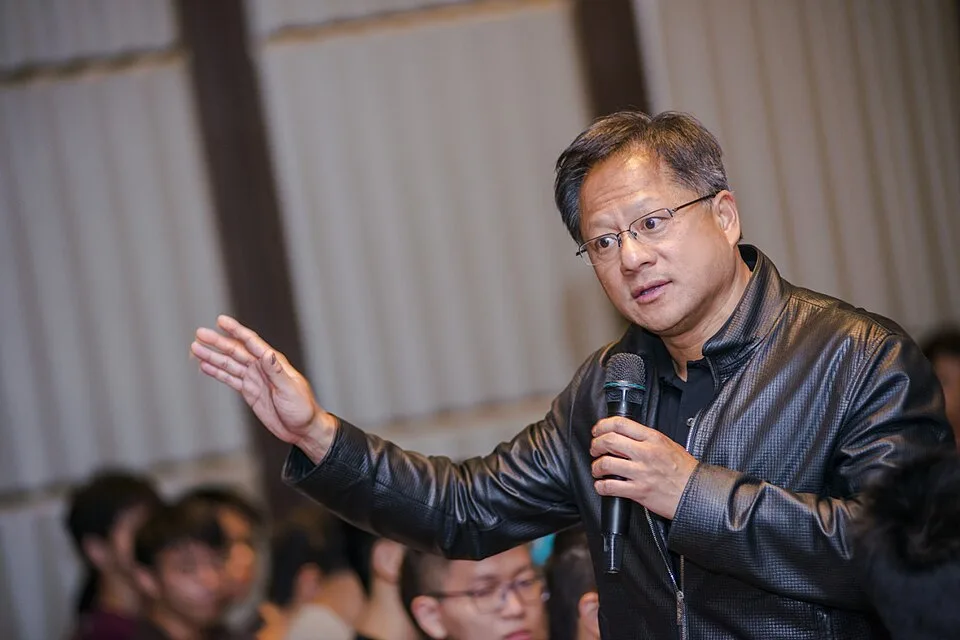
Jensen Huang, the leather-jacket-wearing CEO of the most valuable semiconductor company on Earth, spent his Tuesday in Washington getting grilled by the Trump administration over whether his company has been sneaking advanced chips into China. According to Axios, Huang met with Commerce Secretary Howard Lutnick as federal officials investigate potential export control violations involving Nvidia hardware. When the government starts scheduling meetings with your CEO, it is usually not to give him an award.
What Actually Happened This Week
Axios reports that Huang flew into Washington for a full slate of meetings, including a sit-down with Commerce Secretary Howard Lutnick on Tuesday. The Commerce Department is currently investigating whether Nvidia chips made their way to China in violation of U.S. export restrictions. That is not a routine check-in. That is a flashing red light.
Huang also met with Senator Mark Warner of Virginia, the top Democrat on the Senate Intelligence Committee, according to Axios. Warner has been one of the more hawkish voices in Congress on exactly this issue, namely the risk that American AI hardware ends up powering Chinese military systems. Huang's Washington tour is starting to look less like a networking trip and more like damage control with a very expensive itinerary.
The Chip Export Problem Nobody Wants to Say Out Loud
Here is the uncomfortable truth sitting in the middle of all of this. Nvidia makes chips that are, without exaggeration, the central nervous system of the global AI boom. The H100, the A100, the Blackwell series, these are not consumer products. They are the industrial machinery of artificial intelligence, and every serious AI lab on the planet wants as many of them as possible.
The U.S. government has spent years trying to keep the most advanced versions of these chips out of Chinese hands, through export control rules that have been updated, tightened, and litigated repeatedly since 2022. The problem is that chip smuggling is a real and documented phenomenon. Hardware gets rerouted through third countries, sold through front companies, and repackaged until it crosses a border it was never supposed to cross. Whether Nvidia bears direct legal responsibility for any of that is exactly what investigators appear to be trying to figure out.
The Government Wants a Look at Your AI Before You Ship It
The chip export probe is not the only thing that brought Huang to Washington. Axios also reports that the Trump administration is finalizing a framework that would give the government early access to the most advanced AI models before they are publicly released. Read that sentence again slowly. The federal government wants a pre-release review window for cutting-edge AI systems.
Officials are also weighing their approach to open-source AI and to China more broadly, which means the entire strategic direction of American artificial intelligence policy is being hammered out in meetings that Nvidia's CEO is apparently attending. Huang is not just a tech executive right now. He is a principal in a geopolitical negotiation about who gets to build the future and under what rules.
Why Lutnick Is the Guy Making These Calls
Howard Lutnick runs the Commerce Department, which means he controls the Bureau of Industry and Security, the agency that actually writes and enforces export control rules. He came to the job from Cantor Fitzgerald, where he spent decades as a Wall Street operator, and he has positioned himself as one of the Trump administration's more transactional dealmakers on trade and technology.
Lutnick meeting personally with Jensen Huang signals that this is not getting delegated to mid-level bureaucrats. Either the investigation is serious enough to warrant that level of attention, or someone in the administration is trying to negotiate something, or both. With this White House, it is almost always both.
What Nvidia Has at Stake
Nvidia's market cap has been hovering in the multi-trillion dollar range, built almost entirely on the global appetite for AI computing power. China was, until the export restrictions started biting, one of its biggest markets. The company reportedly generated billions from Chinese customers before successive rounds of controls forced it to develop watered-down export versions of its chips specifically designed to comply with the rules.
If investigators conclude that full-power chips reached China through channels Nvidia knew about or should have stopped, the legal and financial consequences could be severe. Export control violations can result in massive fines, loss of export licenses, and the kind of reputational damage that makes every future government contract a fight. Huang is smiling in every photo op, but the stakes of this particular Washington road trip are genuinely enormous.
The Dingo Take
Let's be clear about what the larger picture looks like here. The United States is locked in a technology cold war with China, and Nvidia's chips are the single most strategically important piece of hardware in that conflict. The company has gotten extraordinarily rich selling the infrastructure that makes AI possible. The government has been trying to keep the most powerful versions of that infrastructure out of Chinese hands. And now federal investigators are looking at whether those two things are actually compatible.
The Trump administration's instinct to pre-screen advanced AI models before release is the kind of policy that would have generated four hundred think pieces about government overreach if Obama had floated it. Under this White House it will probably get announced via a Truth Social post and then argued about for three years in federal court. That is just where we are.
Jensen Huang built one of the most consequential companies in modern history. He deserves credit for that. He also sold a staggering volume of chips during a period when everyone in the industry knew that export controls were the law and that the law was being tested constantly. Whatever investigators find, the meeting with Lutnick was not optional, and the fact that it happened at all tells you something important about how this story ends.

Comments