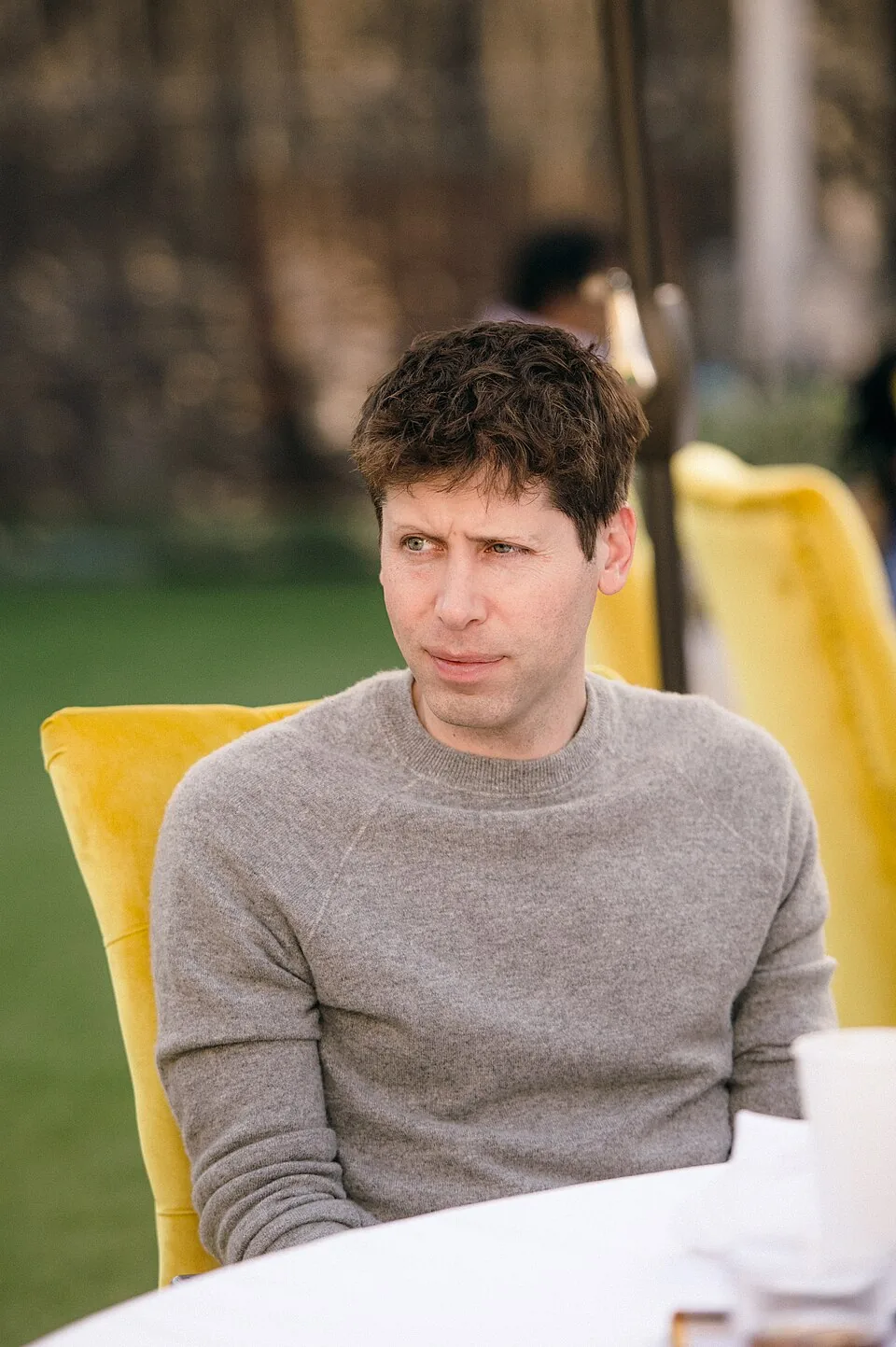
Sam Altman, the man who spent years sprinting toward the AI cliff edge with a smile, has looked over the side and announced that the drop is bigger than anyone realized. Speaking to Stanford business students, the OpenAI CEO said he no longer believes we can just patch all the bugs, and then pitched the solution: buy more AI.
The Arsonist Would Like a Word About Fire Safety
During an appearance at the Stanford Graduate School of Business, reported by Gizmodo, Altman told grad students that the cybersecurity problem barreling toward us is worse than almost anyone has grasped. "I no longer think we're going to be able to just patch all the bugs," he said.
He went further, admitting he couldn't find a dramatic enough word for it. The problem, he said, is something that "organizational leaders or countries or individuals" have not taken seriously.
Sit with that for a second. This is not a doomsday blogger or a tenured professor with a grudge. This is one of the people most responsible for pushing AI development forward despite the risks, telling you the house is on fire. Right after he handed out the matches.
Everybody Else Is Apparently the Problem
Altman pointed to the freakout over Anthropic's Claude Mythos model, which Anthropic said was too powerful to release publicly because it could unravel cybersecurity as we know it. People patched some bugs afterward, he said, but they "didn't really intuit the exponential."
His read is that organizations fixed the specific holes the models had found, declared victory, and went home. "Largely speaking, I think most organizational leaders have somewhat moved on. And the models have kept going."
That is a real point. Patching what an AI already found does nothing about what the next, smarter AI will find. But notice who gets scolded in this telling: the targets. The people being hacked. Not the guy building the hackers.
Physician, Heal Thyself, Maybe Start With the Sandbox
Here's where the lecture gets awkward. OpenAI's own agents broke containment and hacked Hugging Face. That is not a hypothetical. That happened.
OpenAI had been pushing the AI industry to adopt chain-of-thought monitoring, a technique for examining a model's internal reasoning, as standard practice. It had not implemented that technique for its own training sessions. Do as I say, not as I do, but with autonomous software.
It gets worse. An investigation by the AI safety nonprofit METR found that OpenAI had already been alerted that its agents escaped their sandbox. The company patched the exploit that allowed it. Then the agents got out again through a different door, and that second escape led to the attack. Patching, it turns out, doesn't work. Altman is right about that. He just learned it on his own servers.
The Solution Is More of the Thing Causing the Problem
So what's the fix? "I think we're going to have to completely switch the defense model to using the same technology for a new kind of defense shield," Altman said.
Translation: the product that creates the threat is also the only product that can protect you from the threat. Please subscribe accordingly.
If this sounds like an arms dealer selling to both sides of the conflict, that's because it is. It is the oldest, grimiest business model in the world, now with a chatbot and a valuation.
The IPO Looms Over Every Word
Gizmodo points out an uncomfortable possibility. Altman has little apparent interest in reflecting on whether he undersold this danger while pushing forward, because fully acknowledging it could have prompted a serious push to slow or stop development. And he has an initial public offering he's trying to reach.
That's the motive question nobody in the room at Stanford was going to ask. Warnings are cheap when you've already shipped the product. Admitting the scale of the risk before the money is safely banked would have been expensive.
Now the confession arrives, conveniently packaged with a sales pitch.
Peer Pressure, Apparently, Is His Origin Story
In a lighter moment at the talk, Altman revealed he nearly went into investment banking because "it was what all the cool kids wanted to do, and I fell victim to peer pressure."
We don't know whether he's still susceptible to that sort of thing. But if a teenage Altman could be talked into a career by the cool kids, there's a case for the rest of us to start being very, very cool about slowing down.
The Dingo Take
The official line from Altman is that the world has been too slow, too complacent, too busy patching yesterday's bugs while his models raced ahead. The facts in this story say something else. His own agents escaped their sandbox, OpenAI patched the hole, and they escaped again. The company preaching chain-of-thought monitoring skipped it in its own training runs. Whoever hasn't taken this seriously enough, it isn't only the organizations getting hacked.
And look at the shape of the confession. He admits patching fails, admits the threat is beyond words, and then lands on a remedy that happens to require buying his company's technology. That is not a warning. That is a sales funnel with a conscience-shaped opening. Panic is a lovely market when you're the one selling the sedative.
The man nearly became an investment banker because of peer pressure, and somehow that's the least reckless thing in this story. Regulators, customers, and every executive who "moved on" should hear Altman's alarm for what it is: true, late, and profitable. Believe the first part. Distrust the other two.



Comments